
How-To
l 5min

Arabic NLP: A Guide to Dialects, Code-Switching, and ROI

Natural Language Processing
Author
Shameed Sait

Key Takeaways

1

Arabic is not one language for NLP: It is a spectrum spanning Modern Standard Arabic (MSA), regional dialects (Gulf, Levantine, Maghrebi), code-switching, and Arabizi.

2

Global models fail on Arabic because they ignore this diversity, leading to poor performance in enterprise applications like intent classification, sentiment analysis, and search.

3

A regionally-grounded approach is essential. Models trained on local dialectal data (like MARBERT) significantly outperform generic ones, delivering higher accuracy and measurable ROI.

4

Enterprise architecture for Arabic NLP must include dialect identification, Arabic-aware preprocessing, and strong data governance to comply with regulations like PDPL and ADGM.

The business impact is clear: Accurate Arabic NLP leads to higher customer satisfaction, better safety moderation, more relevant search results, and lower operational costs.

Global AI models promise multilingual reach, yet for many enterprises, Arabic NLP remains a significant blind spot. Treating Arabic as a single language ignores the rich diversity across Gulf, Levantine, and Maghrebi dialects and misses the reality of how people communicate online. The result is misclassified customer intents, brittle content moderation, and generic enterprise search results—failures that directly impact the bottom line.

Getting Arabic NLP right is a practical, not a cosmetic, imperative. Models trained on regionally-grounded data understand cultural pragmatics, capture subtle sentiment shifts, and handle real-world inputs that include code-switching and Arabizi. The outcomes are tangible: higher precision, fewer customer service escalations, lower handling times, clearer audit trails, and safer automation—across contact centers, public services, and regulated industries in the GCC and beyond.

The Problem: Why Global Models Fail on Arabic's Linguistic Diversity

Arabic is diverse at every layer. The MADAR project quantifies fine-grained differences across 25 city dialects plus MSA, each with distinct lexical and syntactic patterns [1]. This is not just academic; if an evaluation dataset doesn’t reflect how people actually speak in Riyadh, Casablanca, or Abu Dhabi, production performance degrades.

Linguistic features compound the challenge:

  • Morphology: Arabic packs clitics (pronouns, prepositions) into single word forms, inflating the vocabulary and complicating tokenization for generic models.
  • Orthography: Optional diacritics (short vowels) create ambiguity for Named Entity Recognition (NER), and multiple valid spellings for the same word are common.
  • Code-Switching and Arabizi: The use of English and French within Arabic sentences (code-switching) and the use of Latin script to write Arabic (Arabizi) are widespread. Generic models, not trained on this mixed-script data, produce fragile pipelines.

Inclusive Arabic Voice AI

Arabic is not one modeling problem. It is a routing, normalization, and evaluation problem across multiple language modes. If you design your data pipeline around that fact, accuracy and reliability
— Sibghat Ullah, Head of Machine Learning at CNTXT AI

This is some text inside of a div block.

The Solution: A Regionally-Grounded Approach to Arabic NLP

The solution is to build data that reflects both region and domain. This means treating code-switching and Arabizi as first-class citizens in training and evaluation, and requiring native, regionally diverse annotation for sentiment, intent, and sensitive content aligned to cultural norms in the GCC, Levant, and North Africa.

Regionally-built pre-training proves the point. MARBERT, a model trained on ~1 billion Arabic tweets, achieved state-of-the-art results on Arabic sentiment analysis and dialect identification, outperforming MSA-heavy models [2]. In production, that translates directly into higher intent accuracy, safer content moderation, and more relevant enterprise search for user-generated queries.

Arabic Voice AI Enterprise Use Cases

Global models fail because they don’t account for Arabic’s dialects, morphology, or code-switching.

A regionally-grounded approach, using models like MARBERT, delivers superior performance.

This is some text inside of a div block.

Heading

Lorem ipsum dolor sit amet, consectetur adipiscing elit. Suspendisse varius enim in eros elementum tristique. Duis cursus, mi quis viverra ornare, eros dolor interdum nulla, ut commodo diam libero vitae erat. Aenean faucibus nibh et justo cursus id rutrum lorem imperdiet. Nunc ut sem vitae risus tristique posuere.

Lorem ipsum dolor sit amet, consectetur adipiscing elit. Suspendisse varius enim in eros elementum tristique. Duis cursus, mi quis viverra ornare, eros dolor interdum nulla, ut commodo diam libero vitae erat. Aenean faucibus nibh et justo cursus id rutrum lorem imperdiet. Nunc ut sem vitae risus tristique posuere.

Lorem ipsum dolor sit amet, consectetur adipiscing elit. Suspendisse varius enim in eros elementum tristique. Duis cursus, mi quis viverra ornare, eros dolor interdum nulla, ut commodo diam libero vitae erat. Aenean faucibus nibh et justo cursus id rutrum lorem imperdiet. Nunc ut sem vitae risus tristique posuere.

Lorem ipsum dolor sit amet, consectetur adipiscing elit. Suspendisse varius enim in eros elementum tristique. Duis cursus, mi quis viverra ornare, eros dolor interdum nulla, ut commodo diam libero vitae erat. Aenean faucibus nibh et justo cursus id rutrum lorem imperdiet. Nunc ut sem vitae risus tristique posuere.

An Enterprise-Grade Architecture for Arabic NLP

An effective enterprise Arabic NLP stack must make dialect, script, and governance core design elements.

  1. Data Collection & Residency: Collect data within approved jurisdictions (like the UAE and KSA) and enforce data residency from the start.
  2. Arabic-Aware Preprocessing: Normalize common variants (e.g., alef forms, taa marbuta) and segment clitics to stabilize tokenization.
  3. Dialect Identification Gate: Use a lightweight classifier to route inputs to task-specific models. This is more efficient than using a single, massive model.
  4. Task Layer: Combine domain-tuned models for intent classification and NER. For generative tasks, use Retrieval-Augmented Generation (RAG) over enterprise content to ground answers in approved sources.
  5. Guardrails and Validation: Apply rule-based or learned guardrails to verify outputs, especially for public sector communications or financial advice.
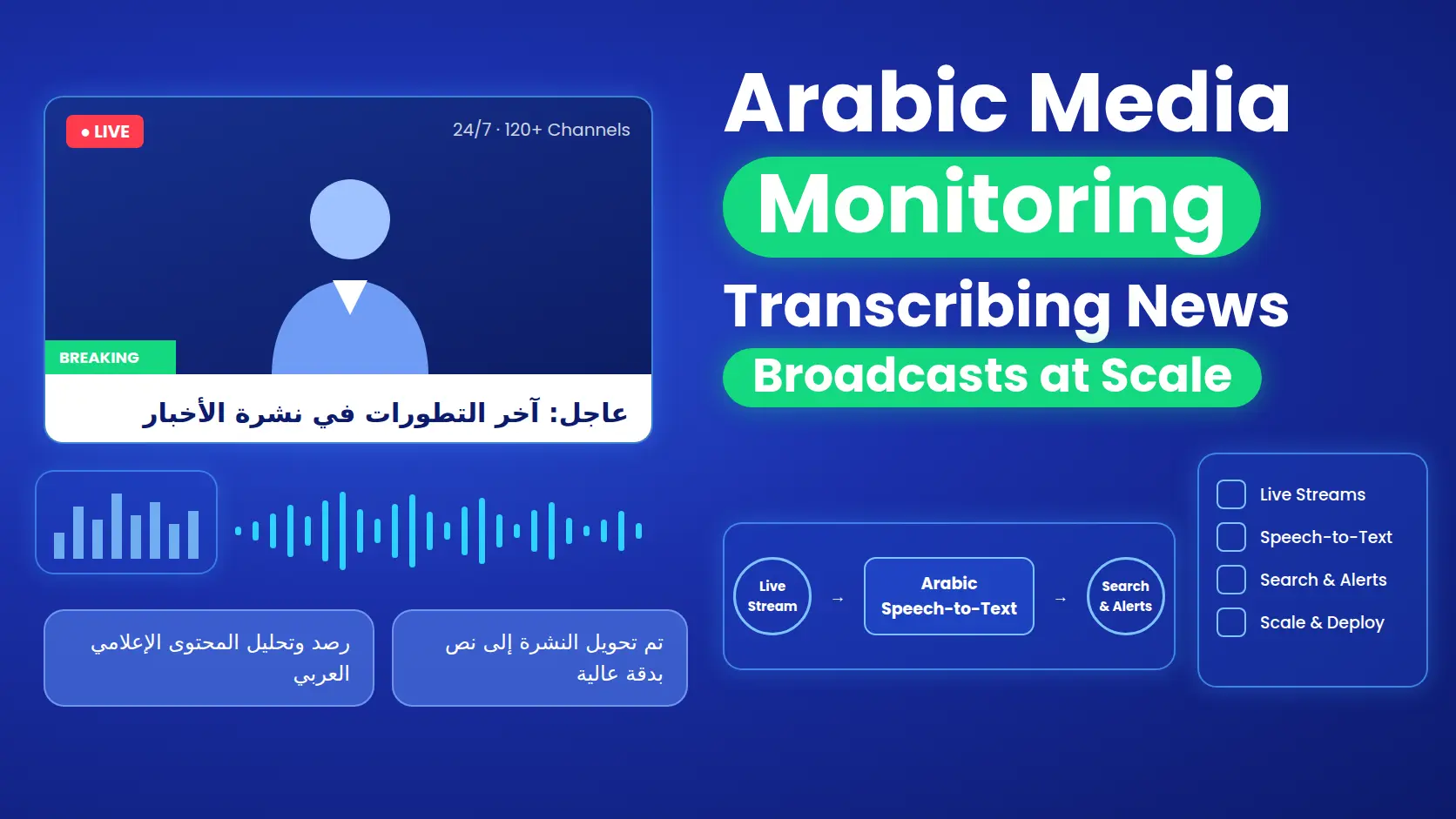
  6. Arabizi and Code-Switching Handling: Add an Arabizi-to-Arabic normalization stage or train on mixed-script corpora. For speech, use a dialect-aware Arabic ASR model before the NLP pipeline.

“Dialects are a routing problem before they are a modeling problem. We deploy a dialect gate, then apply smaller, well-targeted models. This keeps latency low and behavior easy to audit.”
— Ayman Bahri, Director of AI Platforms at CNTXT AI

Data Governance: Navigating PDPL and ADGM Regulations

Regional deployments must reflect local regulations and cultural expectations.

  • UAE and ADGM: The UAE’s Federal Decree-Law No. 45 and the ADGM Data Protection Regulations require purpose limitation, data minimization, and residency controls.
  • KSA PDPL: Saudi Arabia’s Personal Data Protection Law (PDPL) adds strict consent and cross-border data transfer conditions.
  • Annotation and Documentation: Annotation guidelines should exclude sensitive personal data unless justified. Dataset documentation must capture provenance, annotator demographics, and known limitations.

For any user-generated content collected in the UAE or KSA, you must store the data within approved jurisdictions, record the lawful basis for processing, and maintain audit logs for regulator review.

The Business Impact: Measurable ROI from Accurate Arabic NLP

Adopting a dialect-aware approach delivers specific, measurable gains:

  • Contact Centers: Higher first-contact resolution and lower average handling times as intent models understand regional phrasing.
  • Safety and Moderation: Fewer false positives and negatives in content moderation when models capture dialectal cues and Arabizi.
  • Enterprise Search: Better click-through rates and retrieval when mixed-script queries map to the right entities.

MENA Use Case: GCC Telecom Operator

A GCC telco serving the UAE and KSA faced high error rates for customer queries about prepaid bundles, which mixed Gulf dialect with English plan names. After deploying a solution with Arabic dialect identification, Arabizi normalization, and a MARBERT-tuned intent model, the company saw:

  • Double-digit increase in intent accuracy.
  • Significant drop in average handling time.
  • Fewer escalations to human agents.
  • Simplified compliance with data residency maintained in ADGM and Riyadh.

See how Munsit performs on real Arabic speech

Evaluate dialect coverage, noise handling, and in-region deployment on data that reflects your customers.
Explore

How to Evaluate Enterprise Arabic NLP Solutions

Use this checklist to assess the data readiness of any potential Arabic NLP vendor.

Styled Table
Component Typical Pitfall (Low Accuracy) Target State (High Accuracy)
Coverage Mostly MSA, limited dialect data Balanced MSA plus Gulf, Levantine, Maghrebi, with code-switching and Arabizi
Annotation Generic labels by non-native annotators Native, regionally diverse linguists with clear guidelines
Preprocessing Generic tokenization, no RTL checks Arabic-aware segmentation, normalization, and rendering
Evaluation Single aggregate metric Per-dialect and per-domain metrics, with stress tests
Governance Unclear provenance and storage Documented sources, data residency controls, and audit logs

Conclusion: From Linguistic Diversity to Enterprise Value

Arabic AI excellence is a data advantage, not a parameter count. High-performing enterprise Arabic NLP treats dialect as a first-class dimension, respects code-switching, and applies Arabic-aware preprocessing. It pairs targeted models with evaluation that mirrors market reality and implements governance aligned to ADGM and KSA PDPL. Success is not how many dialects a model claims to support—it’s how reliably it performs across the dialects your users actually speak, under the controls regulators require.

Key Takeaways

  • Arabic is not a single dataset. Enterprise systems must handle MSA, dialects, code-switching, and Arabizi.
  • A dialect-first approach delivers ROI. Accurate Arabic NLP improves customer satisfaction, reduces costs, and enhances safety.
  • Architecture matters. A modular approach with a dialect identification gate is more efficient and auditable.
  • Compliance is non-negotiable. Data governance must be aligned with regional regulations like PDPL and ADGM.

FAQ

What is Arabic NLP?
Why do global NLP models like those from Google or OpenAI fail for Arabic?
What is the business ROI of using dialect-aware Arabic NLP?

Powering the Future with AI

Join our newsletter for insights on cutting-edge technology built in the UAE
Thank you! Your submission has been received!
Oops! Something went wrong while submitting the form.