





Key Takeaways
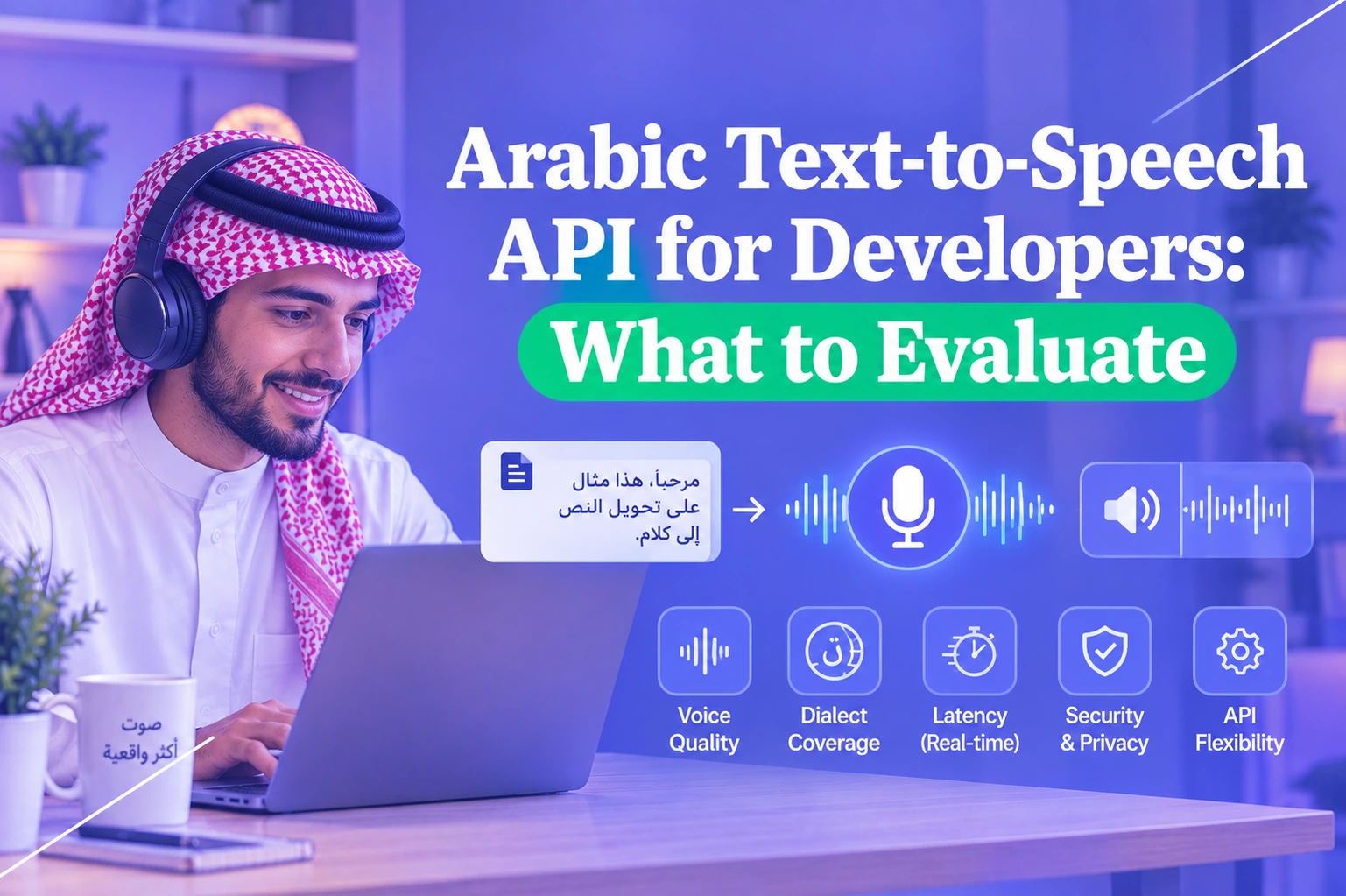
Natural Arabic Text-to-Speech (TTS) is not just about correct pronunciation; it depends on three pillars: prosody (rhythm and melody), waveform generation (audio quality), and overall voice quality (clarity and data).
Prosody for Arabic, this means accurately modeling duration, stress, and intonation to avoid a flat, robotic sound.
Waveform generation has been revolutionized by neural vocoders like HiFi-GAN, which create high-fidelity, human-like audio from abstract linguistic features.
The biggest challenges remaining for Arabic TTS are the lack of high-quality, public datasets for regional dialects and the complexity of modeling dialect-specific prosody.
Text-to-Speech (TTS) technology has evolved from robotic monotones into a sophisticated tool capable of generating nuanced, human-like speech. For a language as complex and widespread as Arabic, the quest for naturalness in synthesized speech is a formidable technical challenge. Achieving a voice that is not just intelligible but also pleasant and engaging depends on a delicate interplay of linguistic knowledge and advanced machine learning.
The naturalness of an Arabic TTS system rests on three foundational pillars: the accurate modeling of prosody, the high-fidelity generation of waveforms, and the overall quality and clarity of the voice. This article explores these three dimensions, detailing the technical hurdles and innovative approaches used to make synthesized Arabic sound human.





.webp)




.webp)












.webp)


















%20for%20Arabic%20Conversational%20AI%20%20%20.png)









.svg)
.svg)