
Case Studies
l 5min

Arabic Voiceover at Scale: How a MENA Broadcaster Integrated TTS Into Its Production Workflow

Arabic Voice AI
Author
Rym Bachouche

Powering the Future with AI

Join our newsletter for insights on cutting-edge technology built in the UAE

Key Takeaways

1

Production turnaround dropped from 5–7 days to same-day or next-day delivery for short-form Arabic social content

2

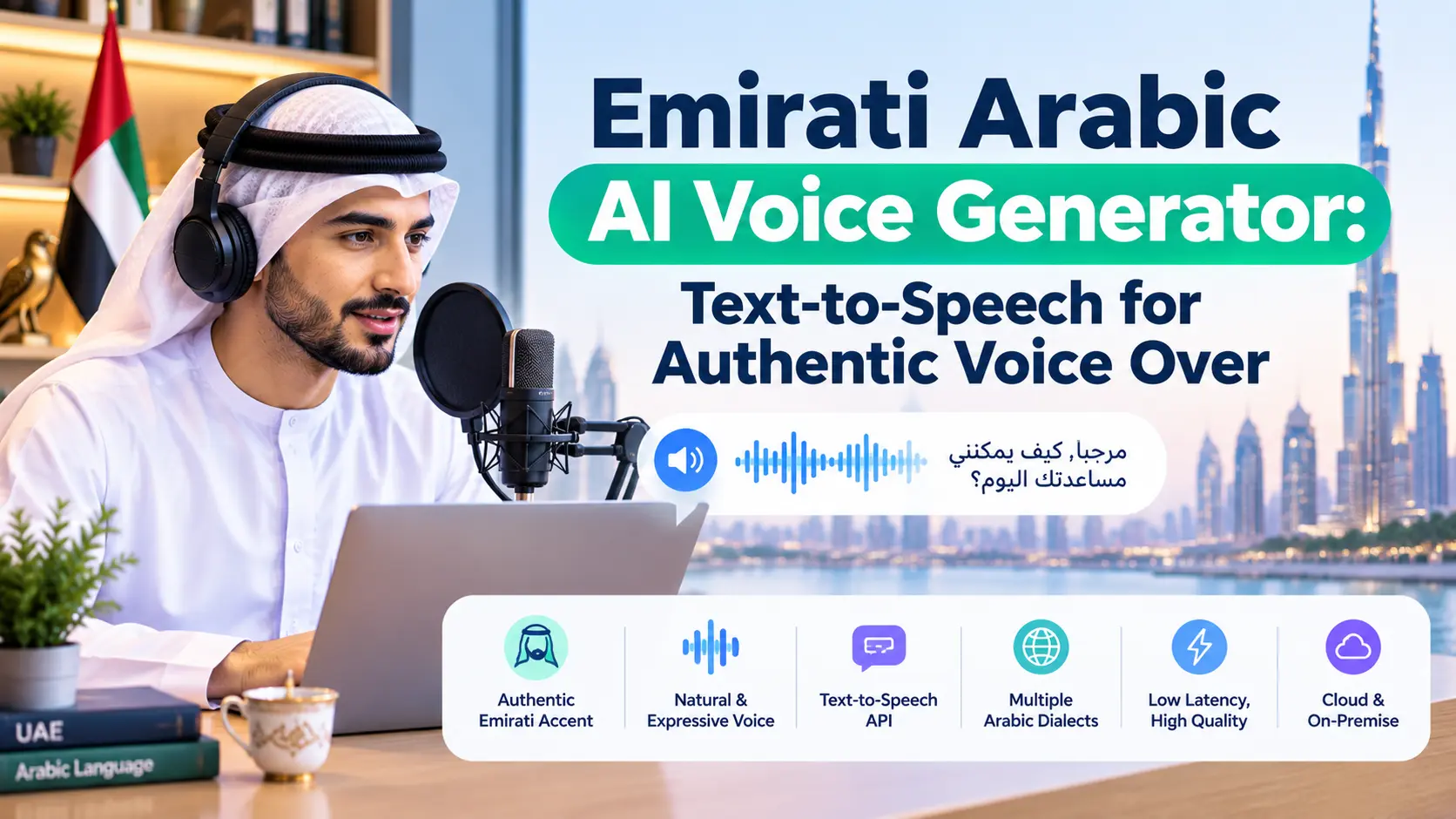
Faseeh Arabic TTS met native-speaker quality expectations, making it suitable for branded social media narration.

3

Voice talent costs for high-volume social content were significantly reduced, freeing budget for premium long-form productions.

4

Munsit API integration fit into the existing production workflow, allowing producers to generate and review narration without changing core processes.

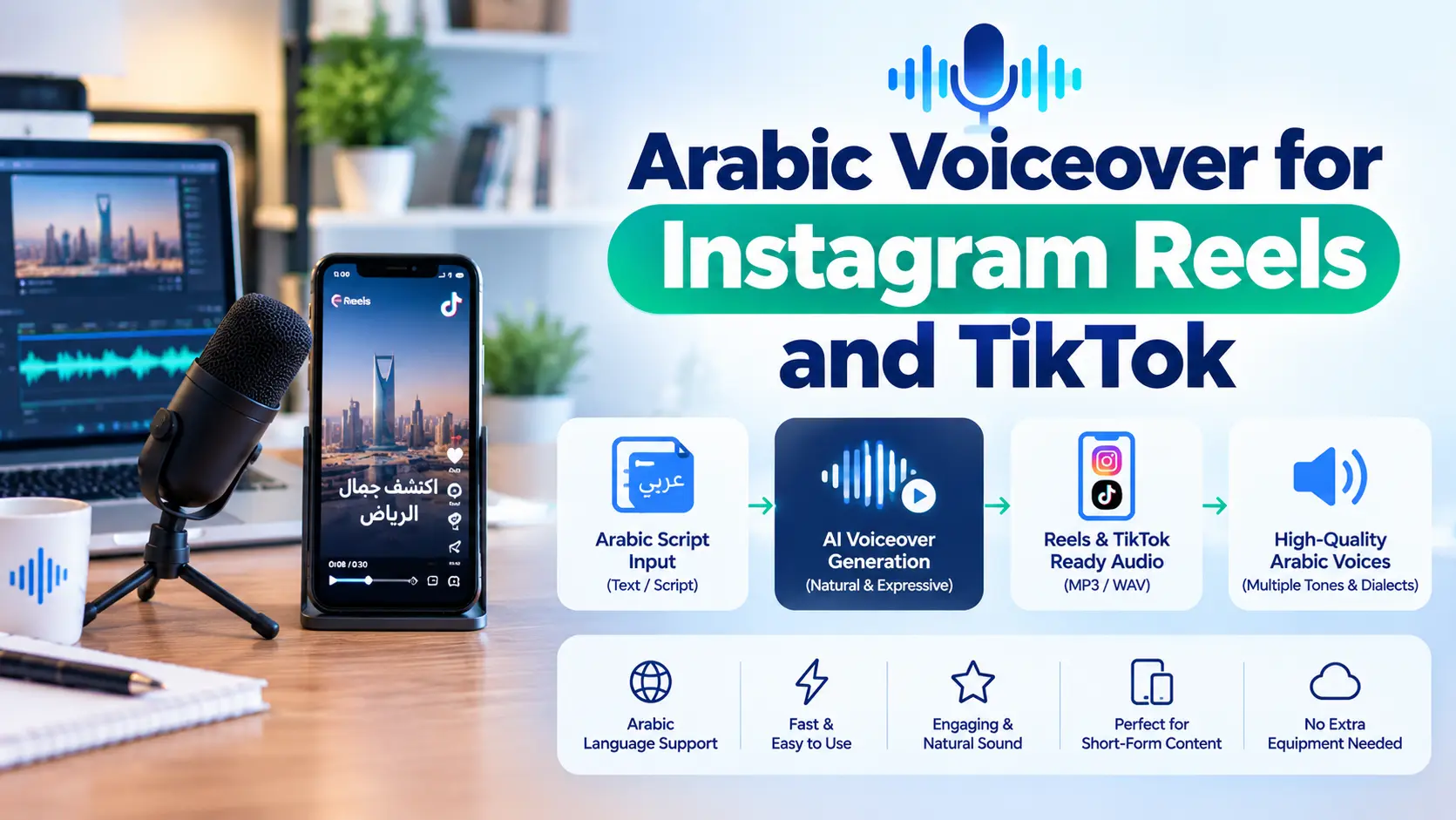
A MENA broadcaster transformed its Arabic content production workflow with Faseeh Arabic TTS, reducing voiceover turnaround times from up to seven days to same-day delivery. By integrating TTS through the Munsit API, the team scaled social video output, reduced production costs, and maintained the audio quality standards expected by Arabic-speaking audiences. 

The Challenge

Short-form Arabic video content has become central to how MENA broadcasters reach audiences on social platforms. For a mid-size broadcaster, keeping a consistent social presence typically means producing 30 to 60 assets per month, a volume that creates real pressure on cost and logistics when every piece requires professional voice talent.

This broadcaster had built its production workflow around a roster of Arabic voice artists. For long-form programming, that remained the right call. But for the high volume of shorter promotional, explainer, and news summary content made for social channels, the workflow was slow and expensive relative to what the content needed to deliver. Each piece required a brief, a booking, a recording session, and post-production. Lead time ran five to seven business days from copy approval to final audio.

This created two concrete problems:

  • Voice talent costs were consuming a disproportionate share of the digital production budget.
  • The five-to-seven-day lead time made it structurally impossible to respond to breaking news with narrated video content fast enough to stay relevant.
This is some text inside of a div block.

The Quality Question

The broadcaster's reputation depended in part on the quality of its Arabic presentation. Arabic voice in broadcasting is held to a high standard by native audiences; this was not a context where "good enough" would work. The team would only deploy TTS audio under its brand if the quality held up at normal listening speed on a mobile device.

Before working with CNTXT AI, the digital team had tested two widely available Arabic TTS APIs. Both failed internal review. Prosody on longer sentences was unnatural, pauses appeared in the wrong places, and certain consonant clusters common in Arabic were rendered awkwardly. The team had concluded that Arabic Text-to-speech was not ready for broadcast use.

Faseeh changed that conclusion. The team tested it on ten representative scripts across different content types. The listening review conducted by producers and editors who work with Arabic voices came back differently: several segments were rated as indistinguishable from studio narration, and the rest were rated as acceptable for social content with minor timing tweaks.

This is some text inside of a div block.

Heading

Lorem ipsum dolor sit amet, consectetur adipiscing elit. Suspendisse varius enim in eros elementum tristique. Duis cursus, mi quis viverra ornare, eros dolor interdum nulla, ut commodo diam libero vitae erat. Aenean faucibus nibh et justo cursus id rutrum lorem imperdiet. Nunc ut sem vitae risus tristique posuere.

Lorem ipsum dolor sit amet, consectetur adipiscing elit. Suspendisse varius enim in eros elementum tristique. Duis cursus, mi quis viverra ornare, eros dolor interdum nulla, ut commodo diam libero vitae erat. Aenean faucibus nibh et justo cursus id rutrum lorem imperdiet. Nunc ut sem vitae risus tristique posuere.

Lorem ipsum dolor sit amet, consectetur adipiscing elit. Suspendisse varius enim in eros elementum tristique. Duis cursus, mi quis viverra ornare, eros dolor interdum nulla, ut commodo diam libero vitae erat. Aenean faucibus nibh et justo cursus id rutrum lorem imperdiet. Nunc ut sem vitae risus tristique posuere.

Lorem ipsum dolor sit amet, consectetur adipiscing elit. Suspendisse varius enim in eros elementum tristique. Duis cursus, mi quis viverra ornare, eros dolor interdum nulla, ut commodo diam libero vitae erat. Aenean faucibus nibh et justo cursus id rutrum lorem imperdiet. Nunc ut sem vitae risus tristique posuere.

The Approach

CNTXT AI integrated Faseeh into the broadcaster's content production workflow via the Munsit API. The integration was practical and low-friction: once a script was approved inside the team's existing workflow tool, a producer could generate Arabic narration audio directly from that interface. Audio came back in seconds, formatted for the team's video editing software.

The scope was set deliberately:

  • Faseeh was positioned as the default option for short-form social video under 90 seconds, where the quality bar was "credible for social" rather than "broadcast master".
  • For flagship long-form content, the existing talent roster stayed in place.
  • Every Faseeh-generated audio track was reviewed by a producer before handoff to the video editor. In practice, most tracks needed one or two text adjustments for pacing or emphasis, after which the regenerated audio was signed off.

What Changed

The results were immediate and measurable across three areas:

Faster production

Production time for social content dropped from five to seven days to same-day or next-day for the categories handled through Faseeh. The team could now respond to breaking news with narrated video within hours, something that had been operationally impossible before.

Redirected budget

Voice talent bookings for social content were almost entirely eliminated. That budget was redirected to longer-form productions where human voice adds clear value. Monthly social output increased as the production bottleneck was removed, without adding headcount.

No audience drop-off

Audience metrics for content produced with Faseeh narration were indistinguishable from those produced with talent narration across the same content types. That internal benchmark was the team's quality validation, and it held.

The broadcaster is now evaluating a second use case: generating Arabic audio versions of long-form articles on its digital news platform, giving readers the option to listen rather than read. This requires asynchronous generation and file storage rather than on-demand workflow integration and is currently in the scoping phase.

See how Munsit performs on real Arabic speech

Evaluate dialect coverage, noise handling, and in-region deployment on data that reflects your customers.
Explore

Result

Arabic TTS in media has a specific quality threshold: it either passes a native speaker review or it does not. Below that threshold, it is not deployable in a branded content context.

Faseeh clears that threshold for social content narration. Once it does, the operational case is simple:

  • Same-day production instead of week-long lead times
  • No talent logistics for high-volume short-form content
  • The ability to scale content volume without scaling production cost
  • API integration inside the existing production workflow; the call is a second-level operation

See what Faseeh can do for your Arabic content workflow; try it free on Munsit.

FAQ

What is Faseeh Arabic TTS?
How does Munsit integrate Arabic TTS into media production workflows?
Can Faseeh replace human voice talent for all media content?

Powering the Future with AI

Join our newsletter for insights on cutting-edge technology built in the UAE
Thank you! Your submission has been received!
Oops! Something went wrong while submitting the form.
Last update :
June 24, 2026

Arabic Voiceover at Scale: How a MENA Broadcaster Integrated TTS Into Its Production Workflow

Case Studies
Arabic Voice AI
Author
Sarra Turki
Rym Bachouche
5min read

Bring Arabic Voice AI to production

Native‑level Arabic STT & TTS
Built for GCC gov & enterprises
Sovereign and on‑prem deployment
Contact Sales
Thank you! Your submission has been received!
Oops! Something went wrong while submitting the form.

Key Takeaways

Production turnaround dropped from 5–7 days to same-day or next-day delivery for short-form Arabic social content

Faseeh Arabic TTS met native-speaker quality expectations, making it suitable for branded social media narration.

Voice talent costs for high-volume social content were significantly reduced, freeing budget for premium long-form productions.

Munsit API integration fit into the existing production workflow, allowing producers to generate and review narration without changing core processes.

A MENA broadcaster transformed its Arabic content production workflow with Faseeh Arabic TTS, reducing voiceover turnaround times from up to seven days to same-day delivery. By integrating TTS through the Munsit API, the team scaled social video output, reduced production costs, and maintained the audio quality standards expected by Arabic-speaking audiences. 

The Challenge

Short-form Arabic video content has become central to how MENA broadcasters reach audiences on social platforms. For a mid-size broadcaster, keeping a consistent social presence typically means producing 30 to 60 assets per month, a volume that creates real pressure on cost and logistics when every piece requires professional voice talent.

This broadcaster had built its production workflow around a roster of Arabic voice artists. For long-form programming, that remained the right call. But for the high volume of shorter promotional, explainer, and news summary content made for social channels, the workflow was slow and expensive relative to what the content needed to deliver. Each piece required a brief, a booking, a recording session, and post-production. Lead time ran five to seven business days from copy approval to final audio.

This created two concrete problems:

  • Voice talent costs were consuming a disproportionate share of the digital production budget.
  • The five-to-seven-day lead time made it structurally impossible to respond to breaking news with narrated video content fast enough to stay relevant.
Lorem ipsum dolor
Lorem ipsum dolor
Lorem ipsum dolor
Lorem ipsum dolor
Lorem ipsum dolor
Lorem ipsum dolor
Lorem ipsum dolor
Lorem ipsum dolor
Lorem ipsum dolor
Lorem ipsum dolor
Lorem ipsum dolor
Lorem ipsum dolor
Lorem ipsum dolor
Lorem ipsum dolor
Lorem ipsum dolor
Lorem ipsum dolor
Lorem ipsum dolor
Lorem ipsum dolor
Lorem ipsum dolor
Lorem ipsum dolor
Lorem ipsum dolor
Lorem ipsum dolor
Lorem ipsum dolor
Lorem ipsum dolor
Lorem ipsum dolor
Lorem ipsum dolor
Lorem ipsum dolor
Lorem ipsum dolor
Lorem ipsum dolor
Lorem ipsum dolor
Lorem ipsum dolor
Lorem ipsum dolor

The Quality Question

Understanding the origins of AI hallucinations is the first step toward mitigating them. The phenomenon is not a single problem but rather a complex issue with multiple contributing factors.

1

Training Data Deficiencies

The broadcaster's reputation depended in part on the quality of its Arabic presentation. Arabic voice in broadcasting is held to a high standard by native audiences; this was not a context where "good enough" would work. The team would only deploy TTS audio under its brand if the quality held up at normal listening speed on a mobile device.

Before working with CNTXT AI, the digital team had tested two widely available Arabic TTS APIs. Both failed internal review. Prosody on longer sentences was unnatural, pauses appeared in the wrong places, and certain consonant clusters common in Arabic were rendered awkwardly. The team had concluded that Arabic Text-to-speech was not ready for broadcast use.

Faseeh changed that conclusion. The team tested it on ten representative scripts across different content types. The listening review conducted by producers and editors who work with Arabic voices came back differently: several segments were rated as indistinguishable from studio narration, and the rest were rated as acceptable for social content with minor timing tweaks.

2

Training Data Deficiencies

The most significant contributor to AI hallucinations is the data on which the models are trained. LLMs learn from vast datasets scraped from the internet, which contain a mixture of factual information, opinions, misinformation, and biases. Several specific data-related issues can lead to hallucinations:

Enterprise Use Cases for Arabic Voice AI in 2025

The move to dialect-aware Arabic ASR is unlocking a new wave of enterprise applications across the GCC and MENA regions. Organizations are moving beyond basic transcription to sophisticated Arabic speech analytics.

Arabic speech technology is rapidly advancing in 2025, driven by massive multilingual models and new Arabic-centric foundation models.

Arabic speech technology is rapidly advancing in 2025, driven by massive multilingual models and new Arabic-centric foundation models.

Arabic speech technology is rapidly advancing in 2025, driven by massive multilingual models and new Arabic-centric foundation models.

Arabic speech technology is rapidly advancing in 2025, driven by massive multilingual models and new Arabic-centric foundation models.

The Approach

Understanding the origins of AI hallucinations is the first step toward mitigating them. The phenomenon is not a single problem but rather a complex issue with multiple contributing factors.

1

Training Data Deficiencies

CNTXT AI integrated Faseeh into the broadcaster's content production workflow via the Munsit API. The integration was practical and low-friction: once a script was approved inside the team's existing workflow tool, a producer could generate Arabic narration audio directly from that interface. Audio came back in seconds, formatted for the team's video editing software.

The scope was set deliberately:

  • Faseeh was positioned as the default option for short-form social video under 90 seconds, where the quality bar was "credible for social" rather than "broadcast master".
  • For flagship long-form content, the existing talent roster stayed in place.
  • Every Faseeh-generated audio track was reviewed by a producer before handoff to the video editor. In practice, most tracks needed one or two text adjustments for pacing or emphasis, after which the regenerated audio was signed off.
2

Training Data Deficiencies

The most significant contributor to AI hallucinations is the data on which the models are trained. LLMs learn from vast datasets scraped from the internet, which contain a mixture of factual information, opinions, misinformation, and biases. Several specific data-related issues can lead to hallucinations:

Enterprise Use Cases for Arabic Voice AI in 2025

The move to dialect-aware Arabic ASR is unlocking a new wave of enterprise applications across the GCC and MENA regions. Organizations are moving beyond basic transcription to sophisticated Arabic speech analytics.

Arabic speech technology is rapidly advancing in 2025, driven by massive multilingual models and new Arabic-centric foundation models.

Arabic speech technology is rapidly advancing in 2025, driven by massive multilingual models and new Arabic-centric foundation models.

Arabic speech technology is rapidly advancing in 2025, driven by massive multilingual models and new Arabic-centric foundation models.

Arabic speech technology is rapidly advancing in 2025, driven by massive multilingual models and new Arabic-centric foundation models.

Building better AI systems takes the right approach

We help with custom solutions, data pipelines, and Arabic intelligence.

What Changed

Understanding the origins of AI hallucinations is the first step toward mitigating them. The phenomenon is not a single problem but rather a complex issue with multiple contributing factors.

1

Training Data Deficiencies

The results were immediate and measurable across three areas:

Faster production

Production time for social content dropped from five to seven days to same-day or next-day for the categories handled through Faseeh. The team could now respond to breaking news with narrated video within hours, something that had been operationally impossible before.

Redirected budget

Voice talent bookings for social content were almost entirely eliminated. That budget was redirected to longer-form productions where human voice adds clear value. Monthly social output increased as the production bottleneck was removed, without adding headcount.

No audience drop-off

Audience metrics for content produced with Faseeh narration were indistinguishable from those produced with talent narration across the same content types. That internal benchmark was the team's quality validation, and it held.

2

Training Data Deficiencies

The most significant contributor to AI hallucinations is the data on which the models are trained. LLMs learn from vast datasets scraped from the internet, which contain a mixture of factual information, opinions, misinformation, and biases. Several specific data-related issues can lead to hallucinations:

The broadcaster is now evaluating a second use case: generating Arabic audio versions of long-form articles on its digital news platform, giving readers the option to listen rather than read. This requires asynchronous generation and file storage rather than on-demand workflow integration and is currently in the scoping phase.

Enterprise Use Cases for Arabic Voice AI in 2025

The move to dialect-aware Arabic ASR is unlocking a new wave of enterprise applications across the GCC and MENA regions. Organizations are moving beyond basic transcription to sophisticated Arabic speech analytics.

Arabic speech technology is rapidly advancing in 2025, driven by massive multilingual models and new Arabic-centric foundation models.

Arabic speech technology is rapidly advancing in 2025, driven by massive multilingual models and new Arabic-centric foundation models.

Arabic speech technology is rapidly advancing in 2025, driven by massive multilingual models and new Arabic-centric foundation models.

Arabic speech technology is rapidly advancing in 2025, driven by massive multilingual models and new Arabic-centric foundation models.

Result

Understanding the origins of AI hallucinations is the first step toward mitigating them. The phenomenon is not a single problem but rather a complex issue with multiple contributing factors.

1

Training Data Deficiencies

Arabic TTS in media has a specific quality threshold: it either passes a native speaker review or it does not. Below that threshold, it is not deployable in a branded content context.

Faseeh clears that threshold for social content narration. Once it does, the operational case is simple:

  • Same-day production instead of week-long lead times
  • No talent logistics for high-volume short-form content
  • The ability to scale content volume without scaling production cost
  • API integration inside the existing production workflow; the call is a second-level operation

See what Faseeh can do for your Arabic content workflow; try it free on Munsit.

2

Training Data Deficiencies

The most significant contributor to AI hallucinations is the data on which the models are trained. LLMs learn from vast datasets scraped from the internet, which contain a mixture of factual information, opinions, misinformation, and biases. Several specific data-related issues can lead to hallucinations:

Enterprise Use Cases for Arabic Voice AI in 2025

The move to dialect-aware Arabic ASR is unlocking a new wave of enterprise applications across the GCC and MENA regions. Organizations are moving beyond basic transcription to sophisticated Arabic speech analytics.

Arabic speech technology is rapidly advancing in 2025, driven by massive multilingual models and new Arabic-centric foundation models.

Arabic speech technology is rapidly advancing in 2025, driven by massive multilingual models and new Arabic-centric foundation models.

Arabic speech technology is rapidly advancing in 2025, driven by massive multilingual models and new Arabic-centric foundation models.

Arabic speech technology is rapidly advancing in 2025, driven by massive multilingual models and new Arabic-centric foundation models.

Understanding the origins of AI hallucinations is the first step toward mitigating them. The phenomenon is not a single problem but rather a complex issue with multiple contributing factors.

1

Training Data Deficiencies

2

Training Data Deficiencies

The most significant contributor to AI hallucinations is the data on which the models are trained. LLMs learn from vast datasets scraped from the internet, which contain a mixture of factual information, opinions, misinformation, and biases. Several specific data-related issues can lead to hallucinations:

Enterprise Use Cases for Arabic Voice AI in 2025

The move to dialect-aware Arabic ASR is unlocking a new wave of enterprise applications across the GCC and MENA regions. Organizations are moving beyond basic transcription to sophisticated Arabic speech analytics.

Arabic speech technology is rapidly advancing in 2025, driven by massive multilingual models and new Arabic-centric foundation models.

Arabic speech technology is rapidly advancing in 2025, driven by massive multilingual models and new Arabic-centric foundation models.

Arabic speech technology is rapidly advancing in 2025, driven by massive multilingual models and new Arabic-centric foundation models.

Arabic speech technology is rapidly advancing in 2025, driven by massive multilingual models and new Arabic-centric foundation models.

Understanding the origins of AI hallucinations is the first step toward mitigating them. The phenomenon is not a single problem but rather a complex issue with multiple contributing factors.

1

Training Data Deficiencies

2

Training Data Deficiencies

The most significant contributor to AI hallucinations is the data on which the models are trained. LLMs learn from vast datasets scraped from the internet, which contain a mixture of factual information, opinions, misinformation, and biases. Several specific data-related issues can lead to hallucinations:

Enterprise Use Cases for Arabic Voice AI in 2025

The move to dialect-aware Arabic ASR is unlocking a new wave of enterprise applications across the GCC and MENA regions. Organizations are moving beyond basic transcription to sophisticated Arabic speech analytics.

Arabic speech technology is rapidly advancing in 2025, driven by massive multilingual models and new Arabic-centric foundation models.

Arabic speech technology is rapidly advancing in 2025, driven by massive multilingual models and new Arabic-centric foundation models.

Arabic speech technology is rapidly advancing in 2025, driven by massive multilingual models and new Arabic-centric foundation models.

Arabic speech technology is rapidly advancing in 2025, driven by massive multilingual models and new Arabic-centric foundation models.

Understanding the origins of AI hallucinations is the first step toward mitigating them. The phenomenon is not a single problem but rather a complex issue with multiple contributing factors.

1

Training Data Deficiencies

2

Training Data Deficiencies

The most significant contributor to AI hallucinations is the data on which the models are trained. LLMs learn from vast datasets scraped from the internet, which contain a mixture of factual information, opinions, misinformation, and biases. Several specific data-related issues can lead to hallucinations:

Enterprise Use Cases for Arabic Voice AI in 2025

The move to dialect-aware Arabic ASR is unlocking a new wave of enterprise applications across the GCC and MENA regions. Organizations are moving beyond basic transcription to sophisticated Arabic speech analytics.

Arabic speech technology is rapidly advancing in 2025, driven by massive multilingual models and new Arabic-centric foundation models.

Arabic speech technology is rapidly advancing in 2025, driven by massive multilingual models and new Arabic-centric foundation models.

Arabic speech technology is rapidly advancing in 2025, driven by massive multilingual models and new Arabic-centric foundation models.

Arabic speech technology is rapidly advancing in 2025, driven by massive multilingual models and new Arabic-centric foundation models.

Understanding the origins of AI hallucinations is the first step toward mitigating them. The phenomenon is not a single problem but rather a complex issue with multiple contributing factors.

1

Training Data Deficiencies

2

Training Data Deficiencies

The most significant contributor to AI hallucinations is the data on which the models are trained. LLMs learn from vast datasets scraped from the internet, which contain a mixture of factual information, opinions, misinformation, and biases. Several specific data-related issues can lead to hallucinations:

Enterprise Use Cases for Arabic Voice AI in 2025

The move to dialect-aware Arabic ASR is unlocking a new wave of enterprise applications across the GCC and MENA regions. Organizations are moving beyond basic transcription to sophisticated Arabic speech analytics.

Arabic speech technology is rapidly advancing in 2025, driven by massive multilingual models and new Arabic-centric foundation models.

Arabic speech technology is rapidly advancing in 2025, driven by massive multilingual models and new Arabic-centric foundation models.

Arabic speech technology is rapidly advancing in 2025, driven by massive multilingual models and new Arabic-centric foundation models.

Arabic speech technology is rapidly advancing in 2025, driven by massive multilingual models and new Arabic-centric foundation models.

Understanding the origins of AI hallucinations is the first step toward mitigating them. The phenomenon is not a single problem but rather a complex issue with multiple contributing factors.

1

Training Data Deficiencies

2

Training Data Deficiencies

The most significant contributor to AI hallucinations is the data on which the models are trained. LLMs learn from vast datasets scraped from the internet, which contain a mixture of factual information, opinions, misinformation, and biases. Several specific data-related issues can lead to hallucinations:

Enterprise Use Cases for Arabic Voice AI in 2025

The move to dialect-aware Arabic ASR is unlocking a new wave of enterprise applications across the GCC and MENA regions. Organizations are moving beyond basic transcription to sophisticated Arabic speech analytics.

Arabic speech technology is rapidly advancing in 2025, driven by massive multilingual models and new Arabic-centric foundation models.

Arabic speech technology is rapidly advancing in 2025, driven by massive multilingual models and new Arabic-centric foundation models.

Arabic speech technology is rapidly advancing in 2025, driven by massive multilingual models and new Arabic-centric foundation models.

Arabic speech technology is rapidly advancing in 2025, driven by massive multilingual models and new Arabic-centric foundation models.

FAQ
What is Faseeh Arabic TTS?
How does Munsit integrate Arabic TTS into media production workflows?
Can Faseeh replace human voice talent for all media content?
How quickly can teams generate Arabic voiceovers using Faseeh?
Is Faseeh suitable for large-scale Arabic content production?

Bring Arabic Voice AI to production

Native‑level Arabic STT & TTS
Built for GCC gov & enterprises
Sovereign and on‑prem deployment
Contact Sales
Thank you! Your submission has been received!
Oops! Something went wrong while submitting the form.

Start free.  
Pay when you are ready.

10,000 credits. Test Munsit with your own audio, in your own dialect, and see the accuracy for yourself.