




الوجبات السريعة الرئيسية
Arabic Dialect Identification (ADI) is a critical technology that automatically determines the regional dialect of a speaker from their speech or text.
ADI is challenging due to three core factors: phonetic diversity (different pronunciations), morphological variation (different grammar), and diglossia (mixing dialects with Modern Standard Arabic).
AI models identify dialects by analyzing phonetic fingerprints, such as the pronunciation of the letter qāf (ق), which can be a [g], [ʔ], or [q] sound depending on the region.x
Morphological signatures, like the use of prefixes for future tense verbs (b- in the Levant vs ḥa- in Egypt), provide strong grammatical clues. Modern ADI systems use deep learning models like Transformers and CNNs to analyze these patterns, often using i-vectors to create a low-dimensional representation of a speaker's voice.
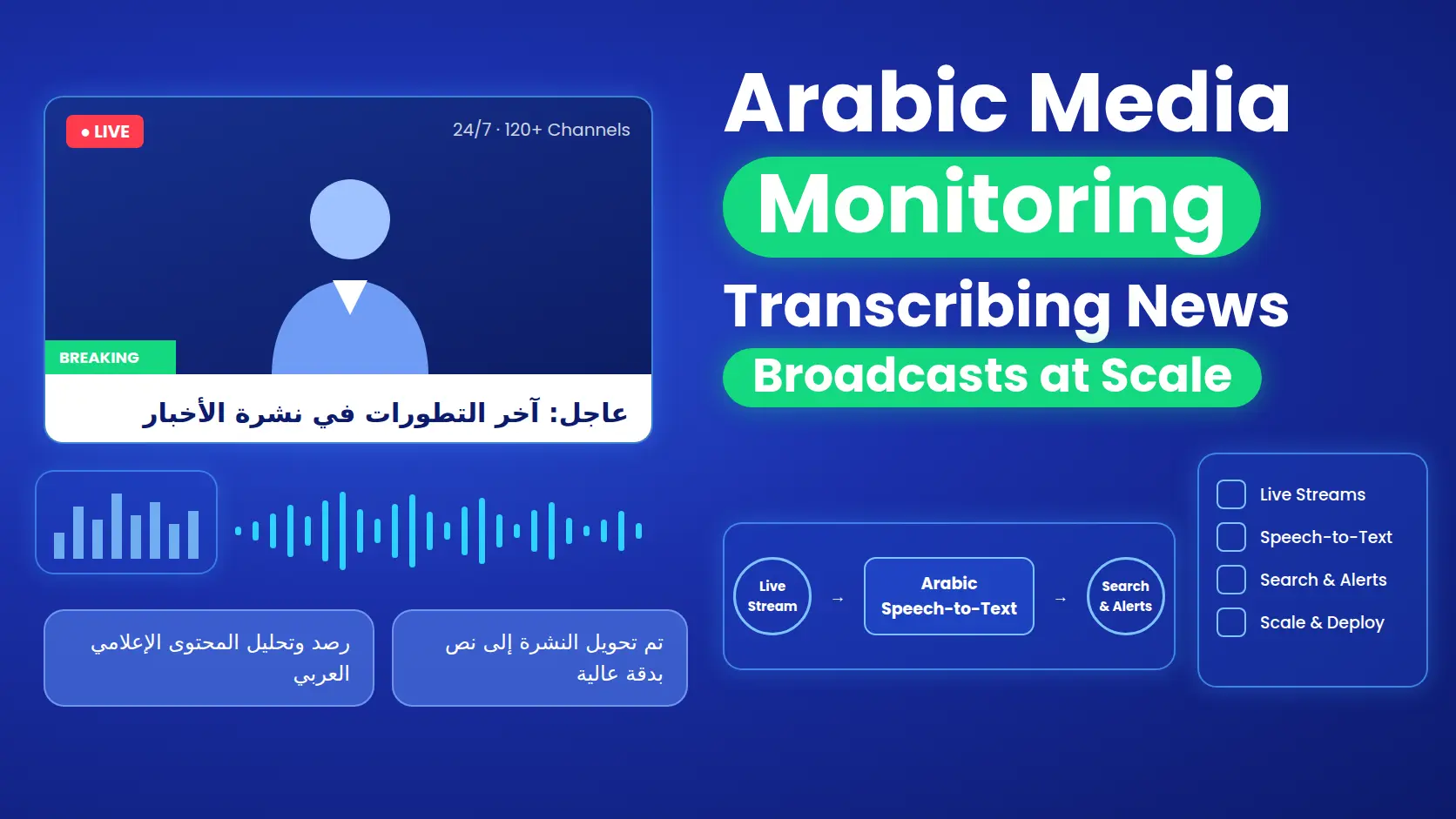
Arabic Dialect Identification (ADI) is a specialized field of AI that automatically determines the regional dialect of a given segment of speech or text.
It is a critical foundational step for a wide range of enterprise applications, from routing customers to the correct call center agent to delivering regionally appropriate content and enabling accurate machine translation.
As the digital footprint of the Arabic-speaking world expands, the ability to accurately identify dialects becomes increasingly important. This article explores the intricate mechanisms behind Arabic dialect recognition, detailing the phonetic, morphological, and sociolinguistic factors that make it a complex technical challenge.




.webp)





.webp)










.webp)














%20for%20Arabic%20Conversational%20AI%20%20%20.png)









.svg)
.svg)