
دراسات الحالة
لتر 5 دقيقة

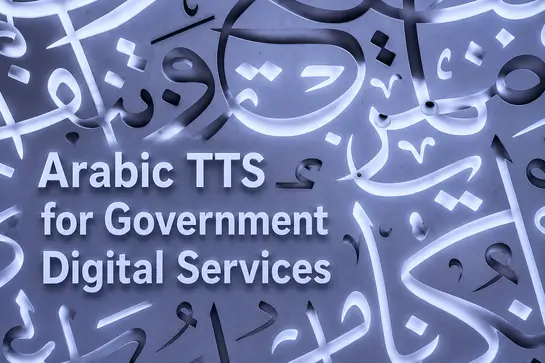
Arabic TTS for Government Digital Services: How Natural Voice Closed an Accessibility Gap

صوت عربي بتقنية الذكاء الاصطناعي
المؤلف
Rym Bachouche

تعزيز المستقبل باستخدام الذكاء الاصطناعي

انضم إلى النشرة الإخبارية للحصول على رؤى حول أحدث التقنيات المبنية في الإمارات العربية المتحدة

الوجبات السريعة الرئيسية

1

Arabic-speaking populations in the GCC face a real accessibility gap when TTS quality is poor, and poor quality leads to the feature being disabled entirely

2

A natural-sounding Arabic voice AI is the threshold between a feature that functions and one that doesn't; it is not a cosmetic upgrade

3

Faseeh integrates via the Munsit API at the component level, with no front-end rebuild required

4

Measurable outcomes included improved service completion rates on complex transactions and a reduction in error-related support calls

A GCC government authority improved access to digital services with clear Arabic voice guidance, helping more citizens complete applications independently while reducing confusion, drop-offs, and support requests.


The Problem: Arabic Audio That Nobody Used

Government digital platforms across the GCC have come a long way. Residents can now handle a wide range of public services online, permit applications, utility management, and more. But most of these platforms were built around one assumption: that users are comfortable reading and navigating text-heavy interfaces. For many residents, that assumption does not hold.

One government digital services team noticed a clear pattern. Completion rates for complex, multi-step transactions were dropping among older residents and users whose primary relationship with Arabic is spoken, not written. Exit surveys and support call data kept pointing to the same thing: the interfaces worked, but they weren't accessible. Users wanted to hear instructions and confirmations, not read them.

The team had already deployed an English TTS voice that performed well. Arabic was a different story. The available Arabic TTS was mechanical, produced stilted phrasing on longer sentences, and used Modern Standard Arabic (MSA) pronunciation patterns that felt distant from how residents actually speak. User feedback was negative enough that the feature had been quietly switched off.

This is some text inside of a div block.

What They Needed

The platform team needed Arabic TTS that could do two things well:

  • Narrate interface instructions for users who prefer audio guidance while navigating the platform
  • Read back confirmation text, application summaries, submitted values, and reference numbers, in a natural, clear voice

This is some text inside of a div block.

Heading

Lorem ipsum dolor sit amet, consectetur adipiscing elit. Suspendisse varius enim in eros elementum tristique. Duis cursus, mi quis viverra ornare, eros dolor interdum nulla, ut commodo diam libero vitae erat. Aenean faucibus nibh et justo cursus id rutrum lorem imperdiet. Nunc ut sem vitae risus tristique posuere.

Lorem ipsum dolor sit amet, consectetur adipiscing elit. Suspendisse varius enim in eros elementum tristique. Duis cursus, mi quis viverra ornare, eros dolor interdum nulla, ut commodo diam libero vitae erat. Aenean faucibus nibh et justo cursus id rutrum lorem imperdiet. Nunc ut sem vitae risus tristique posuere.

Lorem ipsum dolor sit amet, consectetur adipiscing elit. Suspendisse varius enim in eros elementum tristique. Duis cursus, mi quis viverra ornare, eros dolor interdum nulla, ut commodo diam libero vitae erat. Aenean faucibus nibh et justo cursus id rutrum lorem imperdiet. Nunc ut sem vitae risus tristique posuere.

Lorem ipsum dolor sit amet, consectetur adipiscing elit. Suspendisse varius enim in eros elementum tristique. Duis cursus, mi quis viverra ornare, eros dolor interdum nulla, ut commodo diam libero vitae erat. Aenean faucibus nibh et justo cursus id rutrum lorem imperdiet. Nunc ut sem vitae risus tristique posuere.

The Approach

CNTXT AI integrated Faseeh, Munsit's Arabic TTS model, into the platform's web interface via the Munsit API. Audio is generated on demand when a user triggers the audio guidance function on a given screen.

Faseeh was deployed across three specific use cases:

  • Step-by-step narration: With audio guidance enabled, each on-screen instruction is read out in sequence with natural pacing between steps
  • Form confirmation readback: Before submission, the platform reads key entered values back to the user in clear Arabic, giving them a chance to catch errors
  • Status and reference number screens: Completion screens are narrated in full, which proved especially useful for users completing transactions on mobile in environments where reading a screen was impractical


Before full deployment, the platform team tested Faseeh with a focus group across several age groups. The feedback was noticeably different from every previous Arabic TTS experience they had tested.

Results

Service completion rates for the platform's most complex multi-step transactions improved among users who engaged with audio guidance. Drop-off at confirmation screens fell; the team attributed this in large part to users verifying their submissions by listening, rather than re-reading dense text.

The support center saw a measurable drop in calls from users who had submitted forms with errors they hadn't caught. The readback function was cited repeatedly in support call transcripts as something users relied on to check their entries before hitting submit.

Since launch, the team has extended the Faseeh integration to additional service categories. Work is ongoing to add Arabic audio to outbound notification output, a use case that requires asynchronous TTS generation rather than real-time response.

شاهد أداء Munsit في الكلام العربي الحقيقي

قم بتقييم تغطية اللهجة ومعالجة الضوضاء والنشر داخل المنطقة على البيانات التي تعكس عملائك.
اكتشف

التعليمات

How does Munsit's Faseeh TTS improve accessibility in government digital services?
Can Faseeh read back application details before submission?
Does integrating Munsit Faseeh require rebuilding an existing government platform?

Powering the Future with AI

Join our newsletter for insights on cutting-edge technology built in the UAE
Thank you! Your submission has been received!
Oops! Something went wrong while submitting the form.
آخر تحديث :
June 22, 2026

Arabic TTS for Government Digital Services: How Natural Voice Closed an Accessibility Gap

دراسات الحالة
صوت عربي بتقنية الذكاء الاصطناعي
المؤلف
سارة تركي
Rym Bachouche
5 دقائق قراءة

اطرح الذكاء الاصطناعي الصوتي العربي في الإنتاج

تحويل الكلام إلى نص والنص إلى كلام باللغة العربية بمستوى أصلي
مصمم لحكومات وشركات دول مجلس التعاون الخليجي
نشر سيادي ومحلي
احجز عرضًا توضيحيًا
شكرًا لك! لقد تم استلام طلبك!
عذرًا! حدث خطأ ما أثناء إرسال النموذج.

النقاط الرئيسية

Arabic-speaking populations in the GCC face a real accessibility gap when TTS quality is poor, and poor quality leads to the feature being disabled entirely

A natural-sounding Arabic voice AI is the threshold between a feature that functions and one that doesn't; it is not a cosmetic upgrade

Faseeh integrates via the Munsit API at the component level, with no front-end rebuild required

Measurable outcomes included improved service completion rates on complex transactions and a reduction in error-related support calls

A GCC government authority improved access to digital services with clear Arabic voice guidance, helping more citizens complete applications independently while reducing confusion, drop-offs, and support requests.
The Problem: Arabic Audio That Nobody Used

Government digital platforms across the GCC have come a long way. Residents can now handle a wide range of public services online, permit applications, utility management, and more. But most of these platforms were built around one assumption: that users are comfortable reading and navigating text-heavy interfaces. For many residents, that assumption does not hold.

One government digital services team noticed a clear pattern. Completion rates for complex, multi-step transactions were dropping among older residents and users whose primary relationship with Arabic is spoken, not written. Exit surveys and support call data kept pointing to the same thing: the interfaces worked, but they weren't accessible. Users wanted to hear instructions and confirmations, not read them.

The team had already deployed an English TTS voice that performed well. Arabic was a different story. The available Arabic TTS was mechanical, produced stilted phrasing on longer sentences, and used Modern Standard Arabic (MSA) pronunciation patterns that felt distant from how residents actually speak. User feedback was negative enough that the feature had been quietly switched off.

Lorem ipsum dolor
لوريم إيبسوم ألم
لوريم إيبسوم ألم
لوريم إيبسوم ألم
لوريم إيبسوم ألم
لوريم إيبسوم ألم
لوريم إيبسوم ألم
لوريم إيبسوم ألم
لوريم إيبسوم ألم
لوريم إيبسوم ألم
لوريم إيبسوم ألم
لوريم إيبسوم ألم
لوريم إيبسوم ألم
لوريم إيبسوم ألم
لوريم إيبسوم ألم
لوريم إيبسوم ألم
لوريم إيبسوم ألم
لوريم إيبسوم ألم
لوريم إيبسوم ألم
لوريم إيبسوم ألم
لوريم إيبسوم ألم
Lorem ipsum dolor
Lorem ipsum dolor
Lorem ipsum dolor
Lorem ipsum dolor
Lorem ipsum dolor
Lorem ipsum dolor
Lorem ipsum dolor
Lorem ipsum dolor
Lorem ipsum dolor
Lorem ipsum dolor
Lorem ipsum dolor

What They Needed

فهم أصول هلوسات الذكاء الاصطناعي هو الخطوة الأولى نحو التخفيف منها. هذه الظاهرة ليست مشكلة واحدة، بل هي قضية معقدة ذات عوامل متعددة تساهم فيها.

1

أوجه القصور في بيانات التدريب

The platform team needed Arabic TTS that could do two things well:

  • Narrate interface instructions for users who prefer audio guidance while navigating the platform
  • Read back confirmation text, application summaries, submitted values, and reference numbers, in a natural, clear voice

2

أوجه القصور في بيانات التدريب

العامل الأكثر أهمية في هلوسات الذكاء الاصطناعي هو البيانات التي تُدرّب عليها النماذج. تتعلم النماذج اللغوية الكبيرة (LLMs) من مجموعات بيانات ضخمة مجمعة من الإنترنت، والتي تحتوي على مزيج من المعلومات الواقعية والآراء والمعلومات المضللة والتحيزات. يمكن أن تؤدي العديد من المشكلات المحددة المتعلقة بالبيانات إلى الهلوسات:

حالات استخدام الذكاء الاصطناعي الصوتي العربي في الشركات لعام 2025

يفتح التحول نحو أنظمة التعرف التلقائي على الكلام (ASR) العربية التي تراعي اللهجات، آفاقاً جديدة لتطبيقات الشركات في جميع أنحاء منطقة الخليج والشرق الأوسط وشمال إفريقيا. تتجاوز المؤسسات الآن النسخ الأساسي لتصل إلى تحليلات كلام عربية متطورة.

تشهد تقنية الكلام العربية تطوراً سريعاً في عام 2025، مدفوعة بالنماذج اللغوية الضخمة متعددة اللغات والنماذج الأساسية الجديدة التي تركز على اللغة العربية.

تتقدم تقنية الكلام العربية بسرعة في عام 2025، مدفوعة بالنماذج اللغوية الضخمة متعددة اللغات ونماذج الأساس الجديدة المرتكزة على اللغة العربية.

تتقدم تقنية الكلام العربية بسرعة في عام 2025، مدفوعة بالنماذج اللغوية الضخمة متعددة اللغات ونماذج الأساس الجديدة المرتكزة على اللغة العربية.

تتقدم تقنية الكلام العربية بسرعة في عام 2025، مدفوعة بالنماذج اللغوية الضخمة متعددة اللغات ونماذج الأساس الجديدة المرتكزة على اللغة العربية.

The Approach

فهم أصول هلوسات الذكاء الاصطناعي هو الخطوة الأولى نحو التخفيف منها. هذه الظاهرة ليست مشكلة واحدة بل هي قضية معقدة ذات عوامل متعددة تساهم فيها.

1

أوجه القصور في بيانات التدريب

CNTXT AI integrated Faseeh, Munsit's Arabic TTS model, into the platform's web interface via the Munsit API. Audio is generated on demand when a user triggers the audio guidance function on a given screen.

Faseeh was deployed across three specific use cases:

  • Step-by-step narration: With audio guidance enabled, each on-screen instruction is read out in sequence with natural pacing between steps
  • Form confirmation readback: Before submission, the platform reads key entered values back to the user in clear Arabic, giving them a chance to catch errors
  • Status and reference number screens: Completion screens are narrated in full, which proved especially useful for users completing transactions on mobile in environments where reading a screen was impractical


Before full deployment, the platform team tested Faseeh with a focus group across several age groups. The feedback was noticeably different from every previous Arabic TTS experience they had tested.

2

أوجه القصور في بيانات التدريب

أكبر عامل مساهم في هلوسات الذكاء الاصطناعي هو البيانات التي تُدرب عليها النماذج. تتعلم نماذج اللغة الكبيرة (LLMs) من مجموعات بيانات ضخمة مجمعة من الإنترنت، والتي تحتوي على مزيج من المعلومات الواقعية والآراء والمعلومات المضللة والتحيزات. يمكن أن تؤدي العديد من المشكلات المحددة المتعلقة بالبيانات إلى الهلوسات:

حالات استخدام المؤسسات للذكاء الاصطناعي الصوتي العربي في عام 2025

يفتح الانتقال إلى أنظمة التعرف التلقائي على الكلام (ASR) العربية المدركة للهجات موجة جديدة من تطبيقات المؤسسات عبر مناطق مجلس التعاون الخليجي والشرق الأوسط وشمال إفريقيا. تتجاوز المؤسسات الآن النسخ الأساسي لتصل إلى تحليلات الكلام العربية المتطورة.

تتقدم تقنية الكلام العربية بسرعة في عام 2025، مدفوعة بالنماذج اللغوية الضخمة متعددة اللغات ونماذج الأساس الجديدة المرتكزة على اللغة العربية.

تتقدم تقنية الكلام العربية بسرعة في عام 2025، مدفوعة بالنماذج اللغوية الضخمة متعددة اللغات ونماذج الأساس الجديدة المرتكزة على اللغة العربية.

تتقدم تقنية الكلام العربية بسرعة في عام 2025، مدفوعة بالنماذج اللغوية الضخمة متعددة اللغات ونماذج الأساس الجديدة المرتكزة على اللغة العربية.

تتقدم تقنية الكلام العربية بسرعة في عام 2025، مدفوعة بالنماذج اللغوية الضخمة متعددة اللغات ونماذج الأساس الجديدة المرتكزة على اللغة العربية.

يتطلب بناء أنظمة ذكاء اصطناعي أفضل اتباع النهج الصحيح

نساعد في تقديم حلول مخصصة، وخطوط أنابيب البيانات، والذكاء العربي.

Results

فهم أصول هلوسات الذكاء الاصطناعي هو الخطوة الأولى نحو التخفيف منها. هذه الظاهرة ليست مشكلة واحدة بل هي قضية معقدة ذات عوامل متعددة تساهم فيها.

1

أوجه القصور في بيانات التدريب

2

أوجه القصور في بيانات التدريب

المساهم الأكبر في هلوسات الذكاء الاصطناعي هو البيانات التي تُدرّب عليها النماذج. تتعلم النماذج اللغوية الكبيرة (LLMs) من مجموعات بيانات ضخمة مجمعة من الإنترنت، والتي تحتوي على مزيج من المعلومات الواقعية والآراء والمعلومات المضللة والتحيزات. يمكن أن تؤدي عدة مشكلات محددة متعلقة بالبيانات إلى الهلوسات:

حالات الاستخدام المؤسسية للذكاء الاصطناعي الصوتي العربي في عام 2025

يفتح الانتقال إلى تقنية التعرف التلقائي على الكلام (ASR) للغة العربية المدركة للهجات آفاقًا جديدة لتطبيقات الشركات في جميع أنحاء منطقة الخليج والشرق الأوسط وشمال إفريقيا. تتجاوز المؤسسات النسخ الأساسي لتصل إلى تحليلات الكلام العربية المتطورة.

تتطور تقنية الكلام العربية بسرعة في عام 2025، مدفوعة بالنماذج اللغوية الضخمة متعددة اللغات والنماذج التأسيسية الجديدة المرتكزة على اللغة العربية.

تتطور تقنية الكلام العربية بسرعة في عام 2025، مدفوعة بالنماذج اللغوية الضخمة متعددة اللغات والنماذج التأسيسية الجديدة المرتكزة على اللغة العربية.

تتطور تقنية الكلام العربية بسرعة في عام 2025، مدفوعة بالنماذج اللغوية الضخمة متعددة اللغات والنماذج التأسيسية الجديدة المرتكزة على اللغة العربية.

تتطور تقنية الكلام العربية بسرعة في عام 2025، مدفوعة بالنماذج اللغوية الضخمة متعددة اللغات والنماذج التأسيسية الجديدة المرتكزة على اللغة العربية.

يُعد فهم أصول هلوسات الذكاء الاصطناعي الخطوة الأولى نحو التخفيف منها. هذه الظاهرة ليست مشكلة واحدة بل قضية معقدة ذات عوامل متعددة تساهم فيها.

1

أوجه القصور في بيانات التدريب

2

أوجه القصور في بيانات التدريب

المساهم الأكبر في هلوسات الذكاء الاصطناعي هو البيانات التي تُدرّب عليها النماذج. تتعلم النماذج اللغوية الكبيرة (LLMs) من مجموعات بيانات ضخمة مجمعة من الإنترنت، والتي تحتوي على مزيج من المعلومات الواقعية والآراء والمعلومات المضللة والتحيزات. يمكن أن تؤدي عدة مشكلات محددة متعلقة بالبيانات إلى الهلوسات:

حالات الاستخدام المؤسسية للذكاء الاصطناعي الصوتي العربي في عام 2025

يفتح الانتقال إلى تقنية التعرف التلقائي على الكلام (ASR) للغة العربية المدركة للهجات آفاقًا جديدة لتطبيقات الشركات في جميع أنحاء منطقة الخليج والشرق الأوسط وشمال إفريقيا. تتجاوز المؤسسات النسخ الأساسي لتصل إلى تحليلات الكلام العربية المتطورة.

تتطور تقنية الكلام العربية بسرعة في عام 2025، مدفوعة بالنماذج اللغوية الضخمة متعددة اللغات والنماذج التأسيسية الجديدة المرتكزة على اللغة العربية.

تتطور تقنية الكلام العربية بسرعة في عام 2025، مدفوعة بالنماذج اللغوية الضخمة متعددة اللغات والنماذج التأسيسية الجديدة المرتكزة على اللغة العربية.

تتقدم تقنية الكلام العربية بسرعة في عام 2025، مدفوعة بالنماذج اللغوية المتعددة الضخمة والنماذج التأسيسية الجديدة المرتكزة على اللغة العربية.

تتقدم تقنية الكلام العربية بسرعة في عام 2025، مدفوعة بالنماذج اللغوية المتعددة الضخمة والنماذج التأسيسية الجديدة المرتكزة على اللغة العربية.

Understanding the origins of AI hallucinations is the first step toward mitigating them. The phenomenon is not a single problem but rather a complex issue with multiple contributing factors.

1

Training Data Deficiencies

2

Training Data Deficiencies

The most significant contributor to AI hallucinations is the data on which the models are trained. LLMs learn from vast datasets scraped from the internet, which contain a mixture of factual information, opinions, misinformation, and biases. Several specific data-related issues can lead to hallucinations:

Enterprise Use Cases for Arabic Voice AI in 2025

The move to dialect-aware Arabic ASR is unlocking a new wave of enterprise applications across the GCC and MENA regions. Organizations are moving beyond basic transcription to sophisticated Arabic speech analytics.

Arabic speech technology is rapidly advancing in 2025, driven by massive multilingual models and new Arabic-centric foundation models.

Arabic speech technology is rapidly advancing in 2025, driven by massive multilingual models and new Arabic-centric foundation models.

Arabic speech technology is rapidly advancing in 2025, driven by massive multilingual models and new Arabic-centric foundation models.

Arabic speech technology is rapidly advancing in 2025, driven by massive multilingual models and new Arabic-centric foundation models.

Understanding the origins of AI hallucinations is the first step toward mitigating them. The phenomenon is not a single problem but rather a complex issue with multiple contributing factors.

1

Training Data Deficiencies

2

Training Data Deficiencies

The most significant contributor to AI hallucinations is the data on which the models are trained. LLMs learn from vast datasets scraped from the internet, which contain a mixture of factual information, opinions, misinformation, and biases. Several specific data-related issues can lead to hallucinations:

Enterprise Use Cases for Arabic Voice AI in 2025

The move to dialect-aware Arabic ASR is unlocking a new wave of enterprise applications across the GCC and MENA regions. Organizations are moving beyond basic transcription to sophisticated Arabic speech analytics.

Arabic speech technology is rapidly advancing in 2025, driven by massive multilingual models and new Arabic-centric foundation models.

Arabic speech technology is rapidly advancing in 2025, driven by massive multilingual models and new Arabic-centric foundation models.

Arabic speech technology is rapidly advancing in 2025, driven by massive multilingual models and new Arabic-centric foundation models.

Arabic speech technology is rapidly advancing in 2025, driven by massive multilingual models and new Arabic-centric foundation models.

Understanding the origins of AI hallucinations is the first step toward mitigating them. The phenomenon is not a single problem but rather a complex issue with multiple contributing factors.

1

Training Data Deficiencies

2

Training Data Deficiencies

The most significant contributor to AI hallucinations is the data on which the models are trained. LLMs learn from vast datasets scraped from the internet, which contain a mixture of factual information, opinions, misinformation, and biases. Several specific data-related issues can lead to hallucinations:

Enterprise Use Cases for Arabic Voice AI in 2025

The move to dialect-aware Arabic ASR is unlocking a new wave of enterprise applications across the GCC and MENA regions. Organizations are moving beyond basic transcription to sophisticated Arabic speech analytics.

Arabic speech technology is rapidly advancing in 2025, driven by massive multilingual models and new Arabic-centric foundation models.

Arabic speech technology is rapidly advancing in 2025, driven by massive multilingual models and new Arabic-centric foundation models.

Arabic speech technology is rapidly advancing in 2025, driven by massive multilingual models and new Arabic-centric foundation models.

Arabic speech technology is rapidly advancing in 2025, driven by massive multilingual models and new Arabic-centric foundation models.

Understanding the origins of AI hallucinations is the first step toward mitigating them. The phenomenon is not a single problem but rather a complex issue with multiple contributing factors.

1

Training Data Deficiencies

2

Training Data Deficiencies

The most significant contributor to AI hallucinations is the data on which the models are trained. LLMs learn from vast datasets scraped from the internet, which contain a mixture of factual information, opinions, misinformation, and biases. Several specific data-related issues can lead to hallucinations:

Enterprise Use Cases for Arabic Voice AI in 2025

The move to dialect-aware Arabic ASR is unlocking a new wave of enterprise applications across the GCC and MENA regions. Organizations are moving beyond basic transcription to sophisticated Arabic speech analytics.

Arabic speech technology is rapidly advancing in 2025, driven by massive multilingual models and new Arabic-centric foundation models.

Arabic speech technology is rapidly advancing in 2025, driven by massive multilingual models and new Arabic-centric foundation models.

Arabic speech technology is rapidly advancing in 2025, driven by massive multilingual models and new Arabic-centric foundation models.

Arabic speech technology is rapidly advancing in 2025, driven by massive multilingual models and new Arabic-centric foundation models.

Understanding the origins of AI hallucinations is the first step toward mitigating them. The phenomenon is not a single problem but rather a complex issue with multiple contributing factors.

1

Training Data Deficiencies

2

Training Data Deficiencies

The most significant contributor to AI hallucinations is the data on which the models are trained. LLMs learn from vast datasets scraped from the internet, which contain a mixture of factual information, opinions, misinformation, and biases. Several specific data-related issues can lead to hallucinations:

Enterprise Use Cases for Arabic Voice AI in 2025

The move to dialect-aware Arabic ASR is unlocking a new wave of enterprise applications across the GCC and MENA regions. Organizations are moving beyond basic transcription to sophisticated Arabic speech analytics.

Arabic speech technology is rapidly advancing in 2025, driven by massive multilingual models and new Arabic-centric foundation models.

Arabic speech technology is rapidly advancing in 2025, driven by massive multilingual models and new Arabic-centric foundation models.

Arabic speech technology is rapidly advancing in 2025, driven by massive multilingual models and new Arabic-centric foundation models.

Arabic speech technology is rapidly advancing in 2025, driven by massive multilingual models and new Arabic-centric foundation models.

الأسئلة الشائعة
How does Munsit's Faseeh TTS improve accessibility in government digital services?
Can Faseeh read back application details before submission?
Does integrating Munsit Faseeh require rebuilding an existing government platform?
What benefits did the government authority see after deploying Faseeh?

اجعل الذكاء الاصطناعي الصوتي العربي جاهزًا للإنتاج

تقنية تحويل الكلام إلى نص (STT) والنص إلى كلام (TTS) باللغة العربية بمستوى أصلي
مصمم لحكومات وشركات دول مجلس التعاون الخليجي
نشر سيادي ومحلي
احجز عرضًا توضيحيًا
شكرًا لك! تم استلام طلبك بنجاح!
عذرًا! حدث خطأ ما أثناء إرسال النموذج.

ابدأ مجانًا. ادفع عندما تكون مستعدًا.

10,000 رصيد. اختبر منصت بصوتك الخاص، ولهجتك، وشاهد الدقة بنفسك.