انضم إلى النشرة الإخبارية للحصول على رؤى حول أحدث التقنيات المبنية في الإمارات العربية المتحدة
شارك
الوجبات السريعة الرئيسية
1
Dialect coverage varies widely, Arabic-specialist platforms like Munsit (25+ dialects) and Lahajati (192+ claimed) outperform global multilingual tools that treat Arabic as just one of 100+ languages.
2
Deployment matters for compliance, GCC enterprises needing sovereign cloud, on-premises, or on-device deployment (for PDPL/NCA compliance) have far fewer options than cloud-only platforms like ElevenLabs or PlayHT.
3
Consent isn't optional, Under UAE and Saudi PDPL, voice counts as personal/biometric data; cloning anyone else's voice requires documented explicit consent, and misuse can trigger criminal liability under the UAE Cybercrimes Law.
4
Pricing models differ by use case, Per-character, per-second, and credit-based pricing suit different volumes and workflows, and rates across this category have changed frequently, so vendor pages should be verified before budgeting.
Voice cloning technology has reached production quality for English, but teams building Arabic voice experiences quickly discover that most platforms were trained primarily on English speech data and struggle with Arabic phonology, optional diacritics, and the prosodic patterns that differ between Gulf, Levantine, Egyptian, and North African dialects. A GCC enterprise testing a global voice-cloning platform will often find that the cloned voice handles Modern Standard Arabic (MSA) acceptably but mishandles Khaleeji intonation, mispronounces proper nouns, and produces unnatural rhythm when code-switching between Arabic and English mid-sentence.
The demand-side case for getting this right is well documented: in a Researchscape International survey reported by Arab News, 92% of UAE respondents said they would prefer an AI assistant designed specifically for the Middle East, and separately, GCC organizational AI adoption reached 84% in 2025, up from 62%, yet only 31% of organizations report reaching scaled deployment. That adoption-to-deployment gap is, in voice AI specifically, most often a language-quality problem rather than a budget or infrastructure one: a cloned voice that sounds convincing in a demo often breaks down on real proper nouns, real dialect, and real code-switching.
This guide compares 10 AI voice-cloning tools for Arabic use cases, ranked by dialect coverage, cloning quality and consent handling, deployment flexibility, and pricing transparency. It includes global platforms and GCC-built specialists, and, because voice cloning carries consent and biometric-data implications that plain TTS doesn’t, a dedicated section on what UAE and Saudi law require before you clone anyone’s voice.
Quick Comparison: AI Voice Cloning Tools for Arabic
Free tier; Premium reported ~$29/month (or lower on annual billing)
Note: The competitor information in this article is based on publicly available sources at the time of writing. This article is intended to help readers make informed decisions and is not a criticism of any company or its products. Every tool mentioned has its own strengths depending on the use case. Always conduct your own research and speak directly with vendors before making any purchasing or technology decisions. Pricing changes frequently across this category, verify current rates at each vendor’s pricing page before budgeting.
This is some text inside of a div block.
This is some text inside of a div block.
This is some text inside of a div block.
This is some text inside of a div block.
This is some text inside of a div block.
This is some text inside of a div block.
This is some text inside of a div block.
This is some text inside of a div block.
This is some text inside of a div block.
This is some text inside of a div block.
This is some text inside of a div block.
This is some text inside of a div block.
This is some text inside of a div block.
This is some text inside of a div block.
This is some text inside of a div block.
This is some text inside of a div block.
Detailed Comparison: AI Voice Cloning Tools for Arabic
1. Munsit (Faseeh TTS): Best for GCC Enterprises and Arabic Dialect Voice Cloning
Munsit is an Arabic Voice AI platform built in the UAE by CNTXT AI, featuring Faseeh TTS, a text-to-speech and voice-cloning model trained on Arabic dialects with coverage optimized for Gulf varieties including Emirati, Khaleeji, Saudi Najdi, and Hijazi, alongside Levantine, Egyptian, and North African dialects. Unlike multilingual platforms that add Arabic as one of 100+ languages, Faseeh was architected specifically for Arabic phonology, prosody, and the code-switching patterns common in GCC business environments, the same underlying Arabic-first approach behind Munsit’s speech-recognition model, which independently benchmarks near the top of the Open Universal Arabic ASR Leaderboard (a speech-recognition, not voice-cloning, benchmark, cited here as evidence of the underlying Arabic model quality, not a cloning-specific score).
Arabic Dialect Coverage: 25+ dialects including Emirati, Khaleeji (Bahraini, Kuwaiti, Qatari), Saudi (Najdi, Hijazi), Levantine (Lebanese, Syrian, Jordanian, Palestinian), Egyptian, Sudanese, Iraqi, Moroccan, Tunisian, Algerian, Libyan, Yemeni, and MSA. Handles Arabic-English code-switching within the same audio output.
Deployment Options: Cloud API, sovereign cloud (VPC), on-premises deployment for regulated industries, and on-device synthesis for mobile and embedded applications — Faseeh runs locally on iOS, Android, macOS, Windows, and Linux with no network connection required.
Voice Cloning: Per Munsit’s own published materials, voice cloning is possible from short samples of source audio, with quality improving as sample length increases, verify current minimum-sample guidance directly with Munsit before planning a production workflow. The platform’s voice-isolation technology is designed to allow cloning from audio with background noise or music, rather than requiring studio-quality source recordings. Munsit requires confirmation that the uploader holds rights to the voice being cloned (see the consent section below, this is a legal requirement, not just a platform policy).
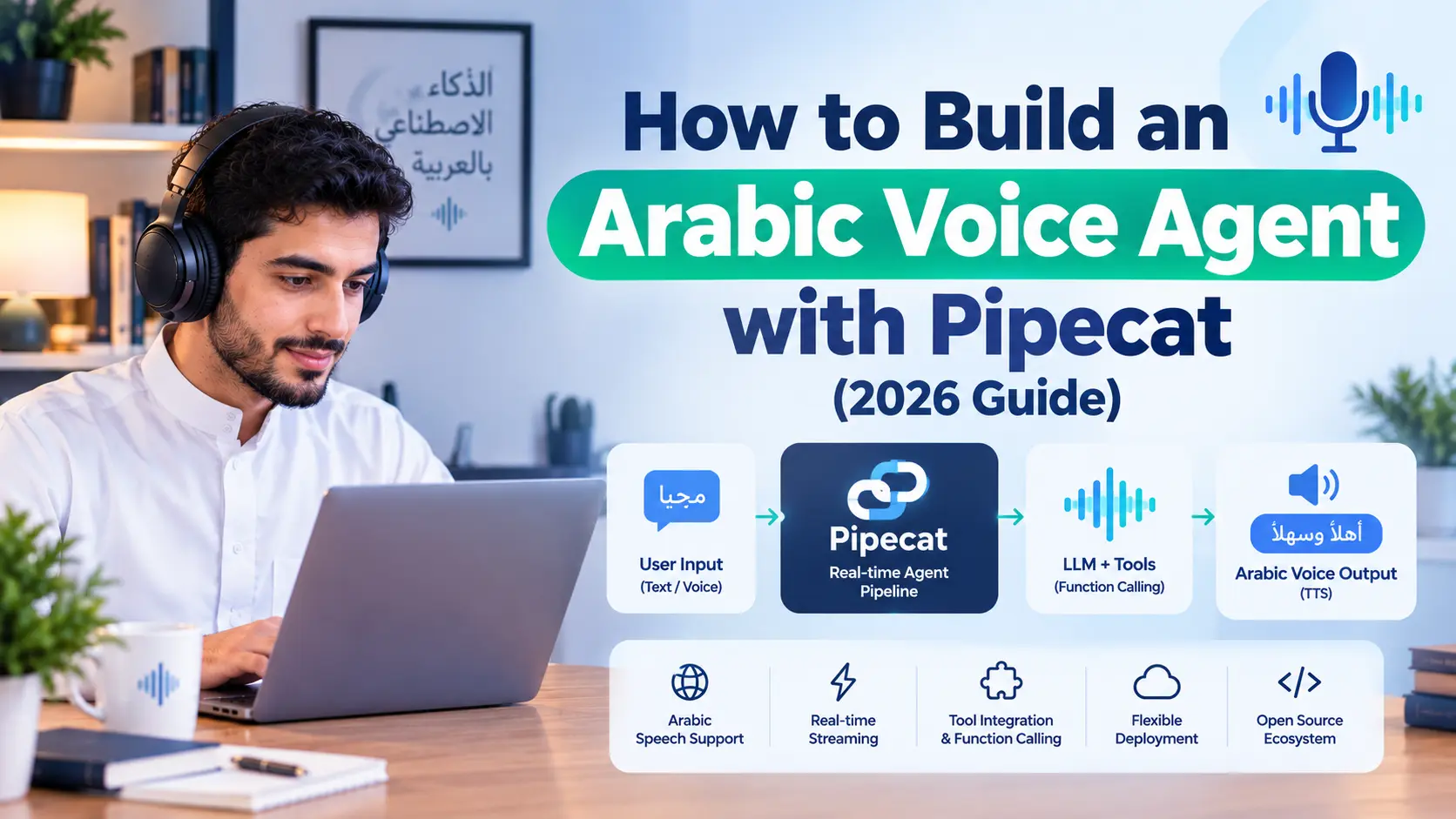
Beyond voice cloning: The same account covers Munsit’s speech-to-text (with a dedicated minutes-of-meetings endpoint, diarization with per-speaker sentiment, keyword extraction, and translation), real-time streaming synthesis over a documented WebSocket protocol, and drop-in voice-agent plugins for LiveKit, Pipecat, VAPI, and Ultravox.
Pricing: Usage-based pricing starting at $8/month for 200,000 credits on the Pro plan, with free credits and no card required to start. Current rates apply across TTS, voice cloning, and Munsit’s other products.
Pros:
Built on an Arabic-first architecture rather than a multilingual model stretched to cover Arabic, the same foundation behind a speech-recognition model that independently ranks near the top of the Open Universal Arabic ASR Leaderboard
Purpose-built for Gulf dialect prosody rather than a multilingual compromise
Sovereign deployment options (VPC, on-premises, on-device) support PDPL and NCA compliance for regulated GCC industries
Voice-isolation technology designed to work from imperfect sample audio, not just studio recordings
Best For: GCC enterprises building Arabic IVR systems, government entities requiring sovereign deployment, contact centers needing Gulf dialect accuracy, and developers creating Arabic voice agents or accessibility tools.
2. ElevenLabs: Best for Multilingual Content Creators
ElevenLabs is a US-based voice AI company founded in 2022, known for expressive voice cloning and text-to-speech. Its language coverage varies by model, Multilingual v2 covers 29 languages, Flash v2.5 and Turbo v2.5 cover 32, and the newer Eleven v3 extends to 74, and Arabic is supported with regional voice variants specifically labeled for Saudi Arabia and the UAE, which is more dialect-level granularity than the “generic Arabic” label competitors often use, though it doesn’t amount to the 25+ dialect coverage of Arabic-specialist platforms.
Arabic Dialect Coverage: Arabic supported with Saudi Arabia and UAE voice variants on the Multilingual v2 model; broader Gulf, Levantine, Egyptian, and Maghrebi dialect depth beyond these two locales is not separately documented.
Deployment Options: Cloud only via API and web interface. No on-premises or sovereign deployment options.
Voice Cloning: Instant Voice Cloning is available from a short sample on the Starter tier and above; Professional Voice Cloning, which unlocks at the Creator tier, uses a longer training sample for higher fidelity. Cloned voices support emotional range and style control through text prompts.
Pricing: As of mid-2026, ElevenLabs’ published tiers run Free, Starter ($6/month, adds a commercial license and Instant Voice Cloning), Creator (~$22/month, unlocks Professional Voice Cloning), Pro (~$99/month), Scale (~$299/month), and Business (~$990/month), with custom Enterprise pricing above that. Verify current rates, ElevenLabs has restructured its tiers more than once in the past two years, and published third-party sources show some variance in exact figures.
Pros:
High-quality voice synthesis widely praised for naturalness on well-supported languages
Region-specific Arabic voice variants (Saudi Arabia, UAE) rather than a single undifferentiated “Arabic” label
Large pre-built voice library and frequent feature updates
Cons:
Arabic dialect coverage beyond the Saudi/UAE variants is limited compared to Arabic-specialist platforms, no documented Levantine, Egyptian, or Maghrebi-specific voices
Cloud-only deployment is not suitable for organizations with data-residency requirements
Credit-based pricing can become expensive at production scale for long-form content, and tier names/pricing have changed enough in the past two years that any cited figure should be reverified before budgeting
Best For: Multilingual content creators producing primarily English content with occasional Arabic voiceover, and teams comfortable with cloud-only deployment.
3. PlayHT: Best for Voiceover Production and Content Localization
PlayHT is a US-based text-to-speech platform supporting 142 languages with voice-cloning capabilities. The platform focuses on content creators, marketers, and podcasters producing voiceover for videos, ads, and audiobooks, offering both pre-built voices and custom voice cloning with commercial licensing.
Arabic Dialect Coverage: Arabic listed among 142 supported languages, with MSA as the primary documented coverage; dialect-specific optimization is not detailed in public materials.
Deployment Options: Cloud only via API, web interface, and a WordPress plugin. No on-premises deployment offered.
Voice Cloning: Instant voice cloning from a short audio sample; longer samples are recommended for improved quality. Cloned voices support SSML tags for pronunciation and prosody control.
Pricing: Reported figures vary by source at roughly $39/month for entry paid tiers, up to higher tiers for larger word allowances, plus custom Enterprise pricing. Verify current rates directly, third-party pricing trackers show inconsistent figures for this platform, which is itself a signal to confirm before committing.
Pros:
Large language coverage useful for multilingual content pipelines
WordPress integration simplifies workflow for content teams
SSML support allows fine control over pronunciation and pacing
Pricing per word (rather than per character or minute) can be harder to predict for Arabic text, where character-to-word ratios differ from English
No sovereign or on-premises deployment for GCC compliance needs
Best For: Content localization teams producing multilingual voiceover, marketers creating Arabic ad copy from existing English campaigns, and WordPress users needing integrated TTS.
4. Lahajati: Best for Arabic Dialect Variety and Creator Focus
Lahajati is a UAE-based Arabic text-to-speech specialist claiming coverage of 192+ Arabic dialects. The platform targets Arabic content creators, voiceover artists, and educators producing dialect-specific audio, differentiating on breadth of dialect coverage rather than feature depth.
Arabic Dialect Coverage: 192+ dialects claimed across Gulf, Levantine, Egyptian, North African, and other regional varieties, the broadest claimed dialect count among Arabic TTS platforms in this comparison, though the specific dialect list is not itemized in public documentation, so it’s worth testing against your target dialects directly rather than taking the headline number at face value.
Deployment Options: Cloud only via web interface and API. No on-premises or sovereign deployment options listed.
Voice Cloning: Voice-cloning capabilities are advertised; technical specifications and sample-duration requirements are not detailed in public documentation.
Pricing: Free tier available; paid plans reported from $6/month. Detailed pricing structure not fully published, contact the vendor for current rates.
Pros:
Broadest claimed Arabic dialect coverage among dedicated Arabic TTS platforms
Built in the UAE with a stated focus on GCC and MENA market needs
5. Resemble AI: Best for Custom Voice Agents and Real-Time Streaming
Resemble AI is a US-based voice-cloning platform focused on real-time voice synthesis for gaming, call centers, and voice agents, pricing by the second of audio produced rather than by input characters.
Arabic Dialect Coverage: Arabic listed as a supported language in documentation; dialect specificity and coverage depth are not detailed in public materials or independently benchmarked case studies.
Deployment Options: Cloud API; on-premises deployment available for Enterprise-tier customers. Regional deployment options are not specified publicly.
Voice Cloning: Voice cloning is self-serve via the API or dashboard, without the consent-documentation step some competitors (like Microsoft Azure’s custom voice) require, worth noting as both a convenience and a compliance consideration if you’re cloning anyone other than yourself for use in the UAE or Saudi Arabia (see the compliance section below). Cloned voices support emotional control and prosody adjustment through API parameters.
Pricing: Pay-as-you-go, roughly $280/mo of generated audio. Custom enterprise pricing available. Verify current rates.
Pros:
Low-latency streaming synthesis suitable for real-time voice agents and gaming
On-premises deployment available for Enterprise customers with compliance needs
Per-second pricing has no hard cap, you pay for what you use rather than hitting a monthly ceiling
Cons:
Arabic dialect coverage and quality not detailed in documentation or independent case studies
Professional voice cloning has explicit consent requirements and built-in consent workflows
Limited public examples of Arabic voice-cloning quality specifically
Best For: Gaming studios creating character voices, contact centers building voice agents, and developers needing real-time streaming synthesis with API control.
6. VEED.io: Best for Video Creators and Social Media
VEED.io is a UK-based online video-editing platform supporting 100+ languages for subtitling, voiceover, and video translation, targeting social media creators, marketers, and content teams producing short-form video with integrated text-to-speech.
Arabic Dialect Coverage: Arabic listed among 100+ supported languages. The platform’s focus is video workflow rather than voice-quality depth; dialect specificity is not detailed.
Deployment Options: Cloud only via web browser. No on-premises or programmatic API access documented for general users.
Voice Cloning: A voice-cloning feature is available; technical specifications and sample requirements are not detailed in public documentation.
Pricing: Free tier with a VEED watermark; paid tiers reported from roughly $520/month upward depending on export resolution and features. Verify current rates.
Pros:
Integrated video editing and voiceover in a single browser-based workflow
Fast turnaround for social media video production with subtitles and voiceover
No software installation required for team collaboration
Cons:
Video-editor-first positioning means Arabic voice quality and dialect depth are less extensively documented than specialist TTS platforms
The core workflow is browser-based, although VEED does offer APIs
Free tier includes a branding watermark on exported videos
Best For: Social media content creators producing short videos with Arabic voiceover, marketing teams localizing video ads, and teams needing quick turnaround on simple video projects.
This is some text inside of a div block.
Heading
Lorem ipsum dolor sit amet, consectetur adipiscing elit. Suspendisse varius enim in eros elementum tristique. Duis cursus, mi quis viverra ornare, eros dolor interdum nulla, ut commodo diam libero vitae erat. Aenean faucibus nibh et justo cursus id rutrum lorem imperdiet. Nunc ut sem vitae risus tristique posuere.
Lorem ipsum dolor sit amet, consectetur adipiscing elit. Suspendisse varius enim in eros elementum tristique. Duis cursus, mi quis viverra ornare, eros dolor interdum nulla, ut commodo diam libero vitae erat. Aenean faucibus nibh et justo cursus id rutrum lorem imperdiet. Nunc ut sem vitae risus tristique posuere.
Lorem ipsum dolor sit amet, consectetur adipiscing elit. Suspendisse varius enim in eros elementum tristique. Duis cursus, mi quis viverra ornare, eros dolor interdum nulla, ut commodo diam libero vitae erat. Aenean faucibus nibh et justo cursus id rutrum lorem imperdiet. Nunc ut sem vitae risus tristique posuere.
Lorem ipsum dolor sit amet, consectetur adipiscing elit. Suspendisse varius enim in eros elementum tristique. Duis cursus, mi quis viverra ornare, eros dolor interdum nulla, ut commodo diam libero vitae erat. Aenean faucibus nibh et justo cursus id rutrum lorem imperdiet. Nunc ut sem vitae risus tristique posuere.
How to Choose the Right Arabic Voice Cloning Tool
Selecting an Arabic voice-cloning platform depends on three primary factors: deployment requirements, dialect accuracy needs, and production volume.
1. For GCC enterprises and government entities requiring sovereign deployment, platforms offering on-premises or VPC deployment are essential. Munsit provides sovereign deployment options among the Arabic voice AI platforms compared here, aimed at meeting PDPL and NCA compliance expectations for regulated industries including banking, healthcare, and government services.
2. For content creators and marketing teams prioritizing dialect variety, platforms purpose-built for Arabic tend to outperform multilingual tools stretched to cover it. Lahajati claims the broadest dialect coverage among Arabic TTS specialists, while Lahjty focuses specifically on GCC advertising with a narrower, named set of Khaleeji varieties.
3. For development teams building voice agents or IVR systems, API access and streaming synthesis capabilities matter more than web-interface features. Munsit’s Faseeh TTS offers real-time streaming synthesis with REST and WebSocket APIs alongside on-device SDKs for iOS, Android, macOS, Windows, and Linux, verify current documented latency figures directly with Munsit rather than relying on any single cited number, including in this article, since real-world latency depends on network conditions and deployment configuration.
Pricing models vary significantly across platforms. Per-character or per-word pricing (ElevenLabs, PlayHT) works well for predictable content volumes but can become expensive at production scale. Per-second pricing (Resemble AI) has no hard cap but scales directly with output length. Credit-based systems (Munsit) allow allocation across multiple features, voice cloning, text-to-speech, and speech-to-text, within a single subscription.
4. Test with real Arabic content before committing. Most platforms offer free tiers or trial periods. Upload sample scripts containing proper nouns, technical terminology, and the specific dialect your audience speaks, and specifically include ambiguous, undiacritized words (the kind where كتب could be read as kataba, kutub, or kutiba depending on context), since this is where Arabic TTS and cloning most commonly mispronounces. Compare cloning quality, pronunciation accuracy, and prosody naturalness rather than relying on demo voices provided by the vendor, which are typically the platform’s best-case examples.
Voice Cloning Consent and UAE/Saudi Compliance
Voice cloning raises legal questions that plain text-to-speech doesn’t, because it involves capturing and reproducing a specific, identifiable person’s biometric characteristics, and the UAE and Saudi Arabia both have relevant, active law here:
A person’s voice is personal data. Under the UAE PDPL (Federal Decree-Law No. 45 of 2021), in force since January 2022, and under Saudi Arabia’s PDPL, in full enforcement since September 2024, a person’s voice, as biometric-adjacent identifying data, falls within scope when processed, stored, or used to train a model. Cloning your own voice for your own business use is generally straightforward. Cloning someone else’s voice, an employee, a customer, a public figure, requires their documented, explicit consent, particularly for commercial use, and that consent should specify what the clone can be used for.
Misuse of a cloned voice carries criminal exposure, not just civil liability. The UAE Cybercrimes Law (Federal Decree-Law No. 34 of 2021) addresses the misuse of manipulated or fabricated digital content, which covers synthetic voice used to impersonate, deceive, or defraud. The UAE’s national AI guidance has separately recommended labeling AI-generated or synthetic voice content and verifying provenance where the content could otherwise be mistaken for a real person speaking.
Platform consent steps don’t replace your own diligence. Some platforms (Descript’s Overdub) build in a spoken-consent step before cloning; others (Resemble AI, and many self-serve tools) let you upload audio and clone it without any consent verification, which shifts full legal responsibility onto you as the customer. Before cloning anyone’s voice for commercial use in the UAE or Saudi Arabia, obtain a documented consent agreement specifying scope of use, and don’t rely on a platform’s terms of service alone to establish that consent, a platform’s willingness to process the clone is not the same as your having the legal right to create it.
This section is general information, not legal advice, consult qualified UAE or Saudi counsel for guidance specific to your use case, especially before cloning a voice belonging to an employee, customer, public figure, or anyone other than yourself.
شاهد أداء Munsit في الكلام العربي الحقيقي
قم بتقييم تغطية اللهجة ومعالجة الضوضاء والنشر داخل المنطقة على البيانات التي تعكس عملائك.
Dialect coverage varies widely, Arabic-specialist platforms like Munsit (25+ dialects) and Lahajati (192+ claimed) outperform global multilingual tools that treat Arabic as just one of 100+ languages.
Deployment matters for compliance, GCC enterprises needing sovereign cloud, on-premises, or on-device deployment (for PDPL/NCA compliance) have far fewer options than cloud-only platforms like ElevenLabs or PlayHT.
Consent isn't optional, Under UAE and Saudi PDPL, voice counts as personal/biometric data; cloning anyone else's voice requires documented explicit consent, and misuse can trigger criminal liability under the UAE Cybercrimes Law.
Pricing models differ by use case, Per-character, per-second, and credit-based pricing suit different volumes and workflows, and rates across this category have changed frequently, so vendor pages should be verified before budgeting.
Voice cloning technology has reached production quality for English, but teams building Arabic voice experiences quickly discover that most platforms were trained primarily on English speech data and struggle with Arabic phonology, optional diacritics, and the prosodic patterns that differ between Gulf, Levantine, Egyptian, and North African dialects. A GCC enterprise testing a global voice-cloning platform will often find that the cloned voice handles Modern Standard Arabic (MSA) acceptably but mishandles Khaleeji intonation, mispronounces proper nouns, and produces unnatural rhythm when code-switching between Arabic and English mid-sentence.
The demand-side case for getting this right is well documented: in a Researchscape International survey reported by Arab News, 92% of UAE respondents said they would prefer an AI assistant designed specifically for the Middle East, and separately, GCC organizational AI adoption reached 84% in 2025, up from 62%, yet only 31% of organizations report reaching scaled deployment. That adoption-to-deployment gap is, in voice AI specifically, most often a language-quality problem rather than a budget or infrastructure one: a cloned voice that sounds convincing in a demo often breaks down on real proper nouns, real dialect, and real code-switching.
This guide compares 10 AI voice-cloning tools for Arabic use cases, ranked by dialect coverage, cloning quality and consent handling, deployment flexibility, and pricing transparency. It includes global platforms and GCC-built specialists, and, because voice cloning carries consent and biometric-data implications that plain TTS doesn’t, a dedicated section on what UAE and Saudi law require before you clone anyone’s voice.
Quick Comparison: AI Voice Cloning Tools for Arabic
Free tier; Premium reported ~$29/month (or lower on annual billing)
Note: The competitor information in this article is based on publicly available sources at the time of writing. This article is intended to help readers make informed decisions and is not a criticism of any company or its products. Every tool mentioned has its own strengths depending on the use case. Always conduct your own research and speak directly with vendors before making any purchasing or technology decisions. Pricing changes frequently across this category, verify current rates at each vendor’s pricing page before budgeting.
Lorem ipsum dolor
لوريم إيبسوم ألم
لوريم إيبسوم ألم
لوريم إيبسوم ألم
لوريم إيبسوم ألم
لوريم إيبسوم ألم
لوريم إيبسوم ألم
لوريم إيبسوم ألم
لوريم إيبسوم ألم
لوريم إيبسوم ألم
لوريم إيبسوم ألم
لوريم إيبسوم ألم
لوريم إيبسوم ألم
لوريم إيبسوم ألم
لوريم إيبسوم ألم
لوريم إيبسوم ألم
لوريم إيبسوم ألم
لوريم إيبسوم ألم
لوريم إيبسوم ألم
لوريم إيبسوم ألم
لوريم إيبسوم ألم
Lorem ipsum dolor
Lorem ipsum dolor
Lorem ipsum dolor
Lorem ipsum dolor
Lorem ipsum dolor
Lorem ipsum dolor
Lorem ipsum dolor
Lorem ipsum dolor
Lorem ipsum dolor
Lorem ipsum dolor
Lorem ipsum dolor
Detailed Comparison: AI Voice Cloning Tools for Arabic
فهم أصول هلوسات الذكاء الاصطناعي هو الخطوة الأولى نحو التخفيف منها. هذه الظاهرة ليست مشكلة واحدة، بل هي قضية معقدة ذات عوامل متعددة تساهم فيها.
1
أوجه القصور في بيانات التدريب
1. Munsit (Faseeh TTS): Best for GCC Enterprises and Arabic Dialect Voice Cloning
Munsit is an Arabic Voice AI platform built in the UAE by CNTXT AI, featuring Faseeh TTS, a text-to-speech and voice-cloning model trained on Arabic dialects with coverage optimized for Gulf varieties including Emirati, Khaleeji, Saudi Najdi, and Hijazi, alongside Levantine, Egyptian, and North African dialects. Unlike multilingual platforms that add Arabic as one of 100+ languages, Faseeh was architected specifically for Arabic phonology, prosody, and the code-switching patterns common in GCC business environments, the same underlying Arabic-first approach behind Munsit’s speech-recognition model, which independently benchmarks near the top of the Open Universal Arabic ASR Leaderboard (a speech-recognition, not voice-cloning, benchmark, cited here as evidence of the underlying Arabic model quality, not a cloning-specific score).
Arabic Dialect Coverage: 25+ dialects including Emirati, Khaleeji (Bahraini, Kuwaiti, Qatari), Saudi (Najdi, Hijazi), Levantine (Lebanese, Syrian, Jordanian, Palestinian), Egyptian, Sudanese, Iraqi, Moroccan, Tunisian, Algerian, Libyan, Yemeni, and MSA. Handles Arabic-English code-switching within the same audio output.
Deployment Options: Cloud API, sovereign cloud (VPC), on-premises deployment for regulated industries, and on-device synthesis for mobile and embedded applications — Faseeh runs locally on iOS, Android, macOS, Windows, and Linux with no network connection required.
Voice Cloning: Per Munsit’s own published materials, voice cloning is possible from short samples of source audio, with quality improving as sample length increases, verify current minimum-sample guidance directly with Munsit before planning a production workflow. The platform’s voice-isolation technology is designed to allow cloning from audio with background noise or music, rather than requiring studio-quality source recordings. Munsit requires confirmation that the uploader holds rights to the voice being cloned (see the consent section below, this is a legal requirement, not just a platform policy).
Beyond voice cloning: The same account covers Munsit’s speech-to-text (with a dedicated minutes-of-meetings endpoint, diarization with per-speaker sentiment, keyword extraction, and translation), real-time streaming synthesis over a documented WebSocket protocol, and drop-in voice-agent plugins for LiveKit, Pipecat, VAPI, and Ultravox.
Pricing: Usage-based pricing starting at $8/month for 200,000 credits on the Pro plan, with free credits and no card required to start. Current rates apply across TTS, voice cloning, and Munsit’s other products.
Pros:
Built on an Arabic-first architecture rather than a multilingual model stretched to cover Arabic, the same foundation behind a speech-recognition model that independently ranks near the top of the Open Universal Arabic ASR Leaderboard
Purpose-built for Gulf dialect prosody rather than a multilingual compromise
Sovereign deployment options (VPC, on-premises, on-device) support PDPL and NCA compliance for regulated GCC industries
Voice-isolation technology designed to work from imperfect sample audio, not just studio recordings
Best For: GCC enterprises building Arabic IVR systems, government entities requiring sovereign deployment, contact centers needing Gulf dialect accuracy, and developers creating Arabic voice agents or accessibility tools.
2. ElevenLabs: Best for Multilingual Content Creators
ElevenLabs is a US-based voice AI company founded in 2022, known for expressive voice cloning and text-to-speech. Its language coverage varies by model, Multilingual v2 covers 29 languages, Flash v2.5 and Turbo v2.5 cover 32, and the newer Eleven v3 extends to 74, and Arabic is supported with regional voice variants specifically labeled for Saudi Arabia and the UAE, which is more dialect-level granularity than the “generic Arabic” label competitors often use, though it doesn’t amount to the 25+ dialect coverage of Arabic-specialist platforms.
Arabic Dialect Coverage: Arabic supported with Saudi Arabia and UAE voice variants on the Multilingual v2 model; broader Gulf, Levantine, Egyptian, and Maghrebi dialect depth beyond these two locales is not separately documented.
Deployment Options: Cloud only via API and web interface. No on-premises or sovereign deployment options.
Voice Cloning: Instant Voice Cloning is available from a short sample on the Starter tier and above; Professional Voice Cloning, which unlocks at the Creator tier, uses a longer training sample for higher fidelity. Cloned voices support emotional range and style control through text prompts.
Pricing: As of mid-2026, ElevenLabs’ published tiers run Free, Starter ($6/month, adds a commercial license and Instant Voice Cloning), Creator (~$22/month, unlocks Professional Voice Cloning), Pro (~$99/month), Scale (~$299/month), and Business (~$990/month), with custom Enterprise pricing above that. Verify current rates, ElevenLabs has restructured its tiers more than once in the past two years, and published third-party sources show some variance in exact figures.
Pros:
High-quality voice synthesis widely praised for naturalness on well-supported languages
Region-specific Arabic voice variants (Saudi Arabia, UAE) rather than a single undifferentiated “Arabic” label
Large pre-built voice library and frequent feature updates
Cons:
Arabic dialect coverage beyond the Saudi/UAE variants is limited compared to Arabic-specialist platforms, no documented Levantine, Egyptian, or Maghrebi-specific voices
Cloud-only deployment is not suitable for organizations with data-residency requirements
Credit-based pricing can become expensive at production scale for long-form content, and tier names/pricing have changed enough in the past two years that any cited figure should be reverified before budgeting
Best For: Multilingual content creators producing primarily English content with occasional Arabic voiceover, and teams comfortable with cloud-only deployment.
3. PlayHT: Best for Voiceover Production and Content Localization
PlayHT is a US-based text-to-speech platform supporting 142 languages with voice-cloning capabilities. The platform focuses on content creators, marketers, and podcasters producing voiceover for videos, ads, and audiobooks, offering both pre-built voices and custom voice cloning with commercial licensing.
Arabic Dialect Coverage: Arabic listed among 142 supported languages, with MSA as the primary documented coverage; dialect-specific optimization is not detailed in public materials.
Deployment Options: Cloud only via API, web interface, and a WordPress plugin. No on-premises deployment offered.
Voice Cloning: Instant voice cloning from a short audio sample; longer samples are recommended for improved quality. Cloned voices support SSML tags for pronunciation and prosody control.
Pricing: Reported figures vary by source at roughly $39/month for entry paid tiers, up to higher tiers for larger word allowances, plus custom Enterprise pricing. Verify current rates directly, third-party pricing trackers show inconsistent figures for this platform, which is itself a signal to confirm before committing.
Pros:
Large language coverage useful for multilingual content pipelines
WordPress integration simplifies workflow for content teams
SSML support allows fine control over pronunciation and pacing
Pricing per word (rather than per character or minute) can be harder to predict for Arabic text, where character-to-word ratios differ from English
No sovereign or on-premises deployment for GCC compliance needs
Best For: Content localization teams producing multilingual voiceover, marketers creating Arabic ad copy from existing English campaigns, and WordPress users needing integrated TTS.
4. Lahajati: Best for Arabic Dialect Variety and Creator Focus
Lahajati is a UAE-based Arabic text-to-speech specialist claiming coverage of 192+ Arabic dialects. The platform targets Arabic content creators, voiceover artists, and educators producing dialect-specific audio, differentiating on breadth of dialect coverage rather than feature depth.
Arabic Dialect Coverage: 192+ dialects claimed across Gulf, Levantine, Egyptian, North African, and other regional varieties, the broadest claimed dialect count among Arabic TTS platforms in this comparison, though the specific dialect list is not itemized in public documentation, so it’s worth testing against your target dialects directly rather than taking the headline number at face value.
Deployment Options: Cloud only via web interface and API. No on-premises or sovereign deployment options listed.
Voice Cloning: Voice-cloning capabilities are advertised; technical specifications and sample-duration requirements are not detailed in public documentation.
Pricing: Free tier available; paid plans reported from $6/month. Detailed pricing structure not fully published, contact the vendor for current rates.
Pros:
Broadest claimed Arabic dialect coverage among dedicated Arabic TTS platforms
Built in the UAE with a stated focus on GCC and MENA market needs
5. Resemble AI: Best for Custom Voice Agents and Real-Time Streaming
Resemble AI is a US-based voice-cloning platform focused on real-time voice synthesis for gaming, call centers, and voice agents, pricing by the second of audio produced rather than by input characters.
Arabic Dialect Coverage: Arabic listed as a supported language in documentation; dialect specificity and coverage depth are not detailed in public materials or independently benchmarked case studies.
Deployment Options: Cloud API; on-premises deployment available for Enterprise-tier customers. Regional deployment options are not specified publicly.
Voice Cloning: Voice cloning is self-serve via the API or dashboard, without the consent-documentation step some competitors (like Microsoft Azure’s custom voice) require, worth noting as both a convenience and a compliance consideration if you’re cloning anyone other than yourself for use in the UAE or Saudi Arabia (see the compliance section below). Cloned voices support emotional control and prosody adjustment through API parameters.
Pricing: Pay-as-you-go, roughly $280/mo of generated audio. Custom enterprise pricing available. Verify current rates.
Pros:
Low-latency streaming synthesis suitable for real-time voice agents and gaming
On-premises deployment available for Enterprise customers with compliance needs
Per-second pricing has no hard cap, you pay for what you use rather than hitting a monthly ceiling
Cons:
Arabic dialect coverage and quality not detailed in documentation or independent case studies
Professional voice cloning has explicit consent requirements and built-in consent workflows
Limited public examples of Arabic voice-cloning quality specifically
Best For: Gaming studios creating character voices, contact centers building voice agents, and developers needing real-time streaming synthesis with API control.
6. VEED.io: Best for Video Creators and Social Media
VEED.io is a UK-based online video-editing platform supporting 100+ languages for subtitling, voiceover, and video translation, targeting social media creators, marketers, and content teams producing short-form video with integrated text-to-speech.
Arabic Dialect Coverage: Arabic listed among 100+ supported languages. The platform’s focus is video workflow rather than voice-quality depth; dialect specificity is not detailed.
Deployment Options: Cloud only via web browser. No on-premises or programmatic API access documented for general users.
Voice Cloning: A voice-cloning feature is available; technical specifications and sample requirements are not detailed in public documentation.
Pricing: Free tier with a VEED watermark; paid tiers reported from roughly $520/month upward depending on export resolution and features. Verify current rates.
Pros:
Integrated video editing and voiceover in a single browser-based workflow
Fast turnaround for social media video production with subtitles and voiceover
No software installation required for team collaboration
Cons:
Video-editor-first positioning means Arabic voice quality and dialect depth are less extensively documented than specialist TTS platforms
The core workflow is browser-based, although VEED does offer APIs
Free tier includes a branding watermark on exported videos
Best For: Social media content creators producing short videos with Arabic voiceover, marketing teams localizing video ads, and teams needing quick turnaround on simple video projects.
7. Lahjty: Best for Arabic Ad Production and GCC Marketing
Lahjty is a UAE-based platform combining AI Arabic ad copywriting with text-to-speech, targeting marketing teams and ad agencies producing Gulf-dialect campaigns. It’s narrower and more specialized than the other platforms here, built specifically for the tone and rhythm of Khaleeji advertising voiceover rather than general-purpose TTS.
Arabic Dialect Coverage: 6+ Khaleeji dialects specifically, Emirati, Saudi, Kuwaiti, Bahraini, Omani, and Qatari, rather than broad pan-Arab coverage. This narrower, more precisely targeted claim is arguably more useful for GCC advertising than a vague “GCC dialects” label, since it tells you exactly which markets it’s built for.
Deployment Options: Cloud only via web interface. No on-premises or API deployment options listed.
Voice Cloning: Voice-cloning capabilities are not listed in the public feature set; the platform’s focus is pre-built voices optimized for advertising tone rather than custom cloning.
Pricing: Reported at roughly $ 7.99/month for a Basic plan with limited voice generation and AED 299/month for a Pro plan with higher usage limits and voice cloning; custom Enterprise pricing above that. Note the pricing is denominated in AED rather than USD, confirm current rates and currency directly with the vendor before budgeting.
Pros:
Built specifically for the GCC advertising market with dialect-appropriate voices across six named Khaleeji varieties
Integrated copywriting and voiceover simplifies workflow for marketing teams
Focus on advertising tone and style rather than generic TTS
Cons:
Regional dialect coverage is broad, but depth and accuracy across individual dialects are not independently benchmarked
Voice cloning not available as a standalone feature per public materials
Pricing transparency and feature limits require direct vendor contact to confirm
Best For: GCC marketing teams producing Arabic ad campaigns, advertising agencies creating Gulf-dialect voiceover, and social media marketers needing quick Khaleeji-specific content.
8. Speechify: Best for Audiobook Narration and Accessibility
Speechify is a US-based text-to-speech platform supporting 30+ languages, focused on audiobook narration, document reading, and accessibility use cases, with browser extensions, mobile apps, and voice cloning for personalized reading experiences.
Arabic Dialect Coverage: Arabic listed among the platform’s supported languages; documentation does not specify dialect variants, and the product’s design center of gravity is reading comprehension rather than production-quality voiceover.
Deployment Options: Cloud service accessed through browser extensions, iOS and Android mobile apps, and a web interface. No on-premises or general-purpose API deployment for enterprise integration, the API that exists is not publicly self-serve priced.
Voice Cloning: Voice cloning is available on the paid Premium tier, creating a personalized voice for reading the user’s own documents and content; clones are used within the Speechify ecosystem rather than exported for external production use.
Pricing: Free tier with basic voices; Premium reported around $29/month on standard billing, with lower effective monthly rates (roughly $11.58–$20.75/month) available on annual billing. Verify current rates, Speechify’s annual-vs-monthly framing makes headline numbers easy to misquote.
Pros:
Cross-platform availability on web, iOS, and Android for a consistent reading experience
Accessibility-focused design benefits users with visual impairments or reading difficulties
Integration with browsers and productivity tools simplifies document-reading workflows
Cons:
Arabic is supported, but dialect-level performance is not extensively documented or independently benchmarked
Voice cloning is primarily integrated into Speechify's broader voice-generation ecosystem rather than positioned as a standalone Arabic voice-cloning infrastructure
Commercial usage rights depend on the applicable plan and terms
Best For: Arabic readers seeking accessible document reading, students listening to educational materials, and users needing cross-platform text-to-speech for personal use.
2
أوجه القصور في بيانات التدريب
العامل الأكثر أهمية في هلوسات الذكاء الاصطناعي هو البيانات التي تُدرّب عليها النماذج. تتعلم النماذج اللغوية الكبيرة (LLMs) من مجموعات بيانات ضخمة مجمعة من الإنترنت، والتي تحتوي على مزيج من المعلومات الواقعية والآراء والمعلومات المضللة والتحيزات. يمكن أن تؤدي العديد من المشكلات المحددة المتعلقة بالبيانات إلى الهلوسات:
حالات استخدام الذكاء الاصطناعي الصوتي العربي في الشركات لعام 2025
يفتح التحول نحو أنظمة التعرف التلقائي على الكلام (ASR) العربية التي تراعي اللهجات، آفاقاً جديدة لتطبيقات الشركات في جميع أنحاء منطقة الخليج والشرق الأوسط وشمال إفريقيا. تتجاوز المؤسسات الآن النسخ الأساسي لتصل إلى تحليلات كلام عربية متطورة.
تشهد تقنية الكلام العربية تطوراً سريعاً في عام 2025، مدفوعة بالنماذج اللغوية الضخمة متعددة اللغات والنماذج الأساسية الجديدة التي تركز على اللغة العربية.
تتقدم تقنية الكلام العربية بسرعة في عام 2025، مدفوعة بالنماذج اللغوية الضخمة متعددة اللغات ونماذج الأساس الجديدة المرتكزة على اللغة العربية.
تتقدم تقنية الكلام العربية بسرعة في عام 2025، مدفوعة بالنماذج اللغوية الضخمة متعددة اللغات ونماذج الأساس الجديدة المرتكزة على اللغة العربية.
تتقدم تقنية الكلام العربية بسرعة في عام 2025، مدفوعة بالنماذج اللغوية الضخمة متعددة اللغات ونماذج الأساس الجديدة المرتكزة على اللغة العربية.
How to Choose the Right Arabic Voice Cloning Tool
فهم أصول هلوسات الذكاء الاصطناعي هو الخطوة الأولى نحو التخفيف منها. هذه الظاهرة ليست مشكلة واحدة بل هي قضية معقدة ذات عوامل متعددة تساهم فيها.
1
أوجه القصور في بيانات التدريب
Selecting an Arabic voice-cloning platform depends on three primary factors: deployment requirements, dialect accuracy needs, and production volume.
1. For GCC enterprises and government entities requiring sovereign deployment, platforms offering on-premises or VPC deployment are essential. Munsit provides sovereign deployment options among the Arabic voice AI platforms compared here, aimed at meeting PDPL and NCA compliance expectations for regulated industries including banking, healthcare, and government services.
2. For content creators and marketing teams prioritizing dialect variety, platforms purpose-built for Arabic tend to outperform multilingual tools stretched to cover it. Lahajati claims the broadest dialect coverage among Arabic TTS specialists, while Lahjty focuses specifically on GCC advertising with a narrower, named set of Khaleeji varieties.
3. For development teams building voice agents or IVR systems, API access and streaming synthesis capabilities matter more than web-interface features. Munsit’s Faseeh TTS offers real-time streaming synthesis with REST and WebSocket APIs alongside on-device SDKs for iOS, Android, macOS, Windows, and Linux, verify current documented latency figures directly with Munsit rather than relying on any single cited number, including in this article, since real-world latency depends on network conditions and deployment configuration.
Pricing models vary significantly across platforms. Per-character or per-word pricing (ElevenLabs, PlayHT) works well for predictable content volumes but can become expensive at production scale. Per-second pricing (Resemble AI) has no hard cap but scales directly with output length. Credit-based systems (Munsit) allow allocation across multiple features, voice cloning, text-to-speech, and speech-to-text, within a single subscription.
4. Test with real Arabic content before committing. Most platforms offer free tiers or trial periods. Upload sample scripts containing proper nouns, technical terminology, and the specific dialect your audience speaks, and specifically include ambiguous, undiacritized words (the kind where كتب could be read as kataba, kutub, or kutiba depending on context), since this is where Arabic TTS and cloning most commonly mispronounces. Compare cloning quality, pronunciation accuracy, and prosody naturalness rather than relying on demo voices provided by the vendor, which are typically the platform’s best-case examples.
2
أوجه القصور في بيانات التدريب
أكبر عامل مساهم في هلوسات الذكاء الاصطناعي هو البيانات التي تُدرب عليها النماذج. تتعلم نماذج اللغة الكبيرة (LLMs) من مجموعات بيانات ضخمة مجمعة من الإنترنت، والتي تحتوي على مزيج من المعلومات الواقعية والآراء والمعلومات المضللة والتحيزات. يمكن أن تؤدي العديد من المشكلات المحددة المتعلقة بالبيانات إلى الهلوسات:
حالات استخدام المؤسسات للذكاء الاصطناعي الصوتي العربي في عام 2025
يفتح الانتقال إلى أنظمة التعرف التلقائي على الكلام (ASR) العربية المدركة للهجات موجة جديدة من تطبيقات المؤسسات عبر مناطق مجلس التعاون الخليجي والشرق الأوسط وشمال إفريقيا. تتجاوز المؤسسات الآن النسخ الأساسي لتصل إلى تحليلات الكلام العربية المتطورة.
تتقدم تقنية الكلام العربية بسرعة في عام 2025، مدفوعة بالنماذج اللغوية الضخمة متعددة اللغات ونماذج الأساس الجديدة المرتكزة على اللغة العربية.
تتقدم تقنية الكلام العربية بسرعة في عام 2025، مدفوعة بالنماذج اللغوية الضخمة متعددة اللغات ونماذج الأساس الجديدة المرتكزة على اللغة العربية.
تتقدم تقنية الكلام العربية بسرعة في عام 2025، مدفوعة بالنماذج اللغوية الضخمة متعددة اللغات ونماذج الأساس الجديدة المرتكزة على اللغة العربية.
تتقدم تقنية الكلام العربية بسرعة في عام 2025، مدفوعة بالنماذج اللغوية الضخمة متعددة اللغات ونماذج الأساس الجديدة المرتكزة على اللغة العربية.
بناء وهندسة أنظمة ذكاء اصطناعي صوتي فائقة الكفاءة يتطلب حتماً اعتماد المنهجية العلمية الصحيحة
نحن في شركة CNTXT AI نساعدك باحترافية في تصميم وهندسة حلول صوتية مخصصة ومطابقة لأعمالك، وبناء وإدارة مسارات تدفق البيانات (Data Pipelines) المتقدمة، وتأمين وصول منتجاتك لقمة تطبيقات الذكاء الاصطناعي العربي المتطور والآمن كلياً.
فهم أصول هلوسات الذكاء الاصطناعي هو الخطوة الأولى نحو التخفيف منها. هذه الظاهرة ليست مشكلة واحدة بل هي قضية معقدة ذات عوامل متعددة تساهم فيها.
1
أوجه القصور في بيانات التدريب
Voice cloning raises legal questions that plain text-to-speech doesn’t, because it involves capturing and reproducing a specific, identifiable person’s biometric characteristics, and the UAE and Saudi Arabia both have relevant, active law here:
A person’s voice is personal data. Under the UAE PDPL (Federal Decree-Law No. 45 of 2021), in force since January 2022, and under Saudi Arabia’s PDPL, in full enforcement since September 2024, a person’s voice, as biometric-adjacent identifying data, falls within scope when processed, stored, or used to train a model. Cloning your own voice for your own business use is generally straightforward. Cloning someone else’s voice, an employee, a customer, a public figure, requires their documented, explicit consent, particularly for commercial use, and that consent should specify what the clone can be used for.
Misuse of a cloned voice carries criminal exposure, not just civil liability. The UAE Cybercrimes Law (Federal Decree-Law No. 34 of 2021) addresses the misuse of manipulated or fabricated digital content, which covers synthetic voice used to impersonate, deceive, or defraud. The UAE’s national AI guidance has separately recommended labeling AI-generated or synthetic voice content and verifying provenance where the content could otherwise be mistaken for a real person speaking.
2
أوجه القصور في بيانات التدريب
المساهم الأكبر في هلوسات الذكاء الاصطناعي هو البيانات التي تُدرّب عليها النماذج. تتعلم النماذج اللغوية الكبيرة (LLMs) من مجموعات بيانات ضخمة مجمعة من الإنترنت، والتي تحتوي على مزيج من المعلومات الواقعية والآراء والمعلومات المضللة والتحيزات. يمكن أن تؤدي عدة مشكلات محددة متعلقة بالبيانات إلى الهلوسات:
Platform consent steps don’t replace your own diligence. Some platforms (Descript’s Overdub) build in a spoken-consent step before cloning; others (Resemble AI, and many self-serve tools) let you upload audio and clone it without any consent verification, which shifts full legal responsibility onto you as the customer. Before cloning anyone’s voice for commercial use in the UAE or Saudi Arabia, obtain a documented consent agreement specifying scope of use, and don’t rely on a platform’s terms of service alone to establish that consent, a platform’s willingness to process the clone is not the same as your having the legal right to create it.
This section is general information, not legal advice, consult qualified UAE or Saudi counsel for guidance specific to your use case, especially before cloning a voice belonging to an employee, customer, public figure, or anyone other than yourself.
حالات الاستخدام المؤسسية للذكاء الاصطناعي الصوتي العربي في عام 2025
يفتح الانتقال إلى تقنية التعرف التلقائي على الكلام (ASR) للغة العربية المدركة للهجات آفاقًا جديدة لتطبيقات الشركات في جميع أنحاء منطقة الخليج والشرق الأوسط وشمال إفريقيا. تتجاوز المؤسسات النسخ الأساسي لتصل إلى تحليلات الكلام العربية المتطورة.
تتطور تقنية الكلام العربية بسرعة في عام 2025، مدفوعة بالنماذج اللغوية الضخمة متعددة اللغات والنماذج التأسيسية الجديدة المرتكزة على اللغة العربية.
تتطور تقنية الكلام العربية بسرعة في عام 2025، مدفوعة بالنماذج اللغوية الضخمة متعددة اللغات والنماذج التأسيسية الجديدة المرتكزة على اللغة العربية.
تتطور تقنية الكلام العربية بسرعة في عام 2025، مدفوعة بالنماذج اللغوية الضخمة متعددة اللغات والنماذج التأسيسية الجديدة المرتكزة على اللغة العربية.
تتطور تقنية الكلام العربية بسرعة في عام 2025، مدفوعة بالنماذج اللغوية الضخمة متعددة اللغات والنماذج التأسيسية الجديدة المرتكزة على اللغة العربية.
يُعد فهم أصول هلوسات الذكاء الاصطناعي الخطوة الأولى نحو التخفيف منها. هذه الظاهرة ليست مشكلة واحدة بل قضية معقدة ذات عوامل متعددة تساهم فيها.
1
أوجه القصور في بيانات التدريب
2
أوجه القصور في بيانات التدريب
المساهم الأكبر في هلوسات الذكاء الاصطناعي هو البيانات التي تُدرّب عليها النماذج. تتعلم النماذج اللغوية الكبيرة (LLMs) من مجموعات بيانات ضخمة مجمعة من الإنترنت، والتي تحتوي على مزيج من المعلومات الواقعية والآراء والمعلومات المضللة والتحيزات. يمكن أن تؤدي عدة مشكلات محددة متعلقة بالبيانات إلى الهلوسات:
حالات الاستخدام المؤسسية للذكاء الاصطناعي الصوتي العربي في عام 2025
يفتح الانتقال إلى تقنية التعرف التلقائي على الكلام (ASR) للغة العربية المدركة للهجات آفاقًا جديدة لتطبيقات الشركات في جميع أنحاء منطقة الخليج والشرق الأوسط وشمال إفريقيا. تتجاوز المؤسسات النسخ الأساسي لتصل إلى تحليلات الكلام العربية المتطورة.
تتطور تقنية الكلام العربية بسرعة في عام 2025، مدفوعة بالنماذج اللغوية الضخمة متعددة اللغات والنماذج التأسيسية الجديدة المرتكزة على اللغة العربية.
تتطور تقنية الكلام العربية بسرعة في عام 2025، مدفوعة بالنماذج اللغوية الضخمة متعددة اللغات والنماذج التأسيسية الجديدة المرتكزة على اللغة العربية.
تتقدم تقنية الكلام العربية بسرعة في عام 2025، مدفوعة بالنماذج اللغوية المتعددة الضخمة والنماذج التأسيسية الجديدة المرتكزة على اللغة العربية.
تتقدم تقنية الكلام العربية بسرعة في عام 2025، مدفوعة بالنماذج اللغوية المتعددة الضخمة والنماذج التأسيسية الجديدة المرتكزة على اللغة العربية.
Understanding the origins of AI hallucinations is the first step toward mitigating them. The phenomenon is not a single problem but rather a complex issue with multiple contributing factors.
1
Training Data Deficiencies
2
Training Data Deficiencies
The most significant contributor to AI hallucinations is the data on which the models are trained. LLMs learn from vast datasets scraped from the internet, which contain a mixture of factual information, opinions, misinformation, and biases. Several specific data-related issues can lead to hallucinations:
Enterprise Use Cases for Arabic Voice AI in 2025
The move to dialect-aware Arabic ASR is unlocking a new wave of enterprise applications across the GCC and MENA regions. Organizations are moving beyond basic transcription to sophisticated Arabic speech analytics.
Arabic speech technology is rapidly advancing in 2025, driven by massive multilingual models and new Arabic-centric foundation models.
Arabic speech technology is rapidly advancing in 2025, driven by massive multilingual models and new Arabic-centric foundation models.
Arabic speech technology is rapidly advancing in 2025, driven by massive multilingual models and new Arabic-centric foundation models.
Arabic speech technology is rapidly advancing in 2025, driven by massive multilingual models and new Arabic-centric foundation models.
Understanding the origins of AI hallucinations is the first step toward mitigating them. The phenomenon is not a single problem but rather a complex issue with multiple contributing factors.
1
Training Data Deficiencies
2
Training Data Deficiencies
The most significant contributor to AI hallucinations is the data on which the models are trained. LLMs learn from vast datasets scraped from the internet, which contain a mixture of factual information, opinions, misinformation, and biases. Several specific data-related issues can lead to hallucinations:
Enterprise Use Cases for Arabic Voice AI in 2025
The move to dialect-aware Arabic ASR is unlocking a new wave of enterprise applications across the GCC and MENA regions. Organizations are moving beyond basic transcription to sophisticated Arabic speech analytics.
Arabic speech technology is rapidly advancing in 2025, driven by massive multilingual models and new Arabic-centric foundation models.
Arabic speech technology is rapidly advancing in 2025, driven by massive multilingual models and new Arabic-centric foundation models.
Arabic speech technology is rapidly advancing in 2025, driven by massive multilingual models and new Arabic-centric foundation models.
Arabic speech technology is rapidly advancing in 2025, driven by massive multilingual models and new Arabic-centric foundation models.
Understanding the origins of AI hallucinations is the first step toward mitigating them. The phenomenon is not a single problem but rather a complex issue with multiple contributing factors.
1
Training Data Deficiencies
2
Training Data Deficiencies
The most significant contributor to AI hallucinations is the data on which the models are trained. LLMs learn from vast datasets scraped from the internet, which contain a mixture of factual information, opinions, misinformation, and biases. Several specific data-related issues can lead to hallucinations:
Enterprise Use Cases for Arabic Voice AI in 2025
The move to dialect-aware Arabic ASR is unlocking a new wave of enterprise applications across the GCC and MENA regions. Organizations are moving beyond basic transcription to sophisticated Arabic speech analytics.
Arabic speech technology is rapidly advancing in 2025, driven by massive multilingual models and new Arabic-centric foundation models.
Arabic speech technology is rapidly advancing in 2025, driven by massive multilingual models and new Arabic-centric foundation models.
Arabic speech technology is rapidly advancing in 2025, driven by massive multilingual models and new Arabic-centric foundation models.
Arabic speech technology is rapidly advancing in 2025, driven by massive multilingual models and new Arabic-centric foundation models.
Understanding the origins of AI hallucinations is the first step toward mitigating them. The phenomenon is not a single problem but rather a complex issue with multiple contributing factors.
1
Training Data Deficiencies
2
Training Data Deficiencies
The most significant contributor to AI hallucinations is the data on which the models are trained. LLMs learn from vast datasets scraped from the internet, which contain a mixture of factual information, opinions, misinformation, and biases. Several specific data-related issues can lead to hallucinations:
Enterprise Use Cases for Arabic Voice AI in 2025
The move to dialect-aware Arabic ASR is unlocking a new wave of enterprise applications across the GCC and MENA regions. Organizations are moving beyond basic transcription to sophisticated Arabic speech analytics.
Arabic speech technology is rapidly advancing in 2025, driven by massive multilingual models and new Arabic-centric foundation models.
Arabic speech technology is rapidly advancing in 2025, driven by massive multilingual models and new Arabic-centric foundation models.
Arabic speech technology is rapidly advancing in 2025, driven by massive multilingual models and new Arabic-centric foundation models.
Arabic speech technology is rapidly advancing in 2025, driven by massive multilingual models and new Arabic-centric foundation models.
Understanding the origins of AI hallucinations is the first step toward mitigating them. The phenomenon is not a single problem but rather a complex issue with multiple contributing factors.
1
Training Data Deficiencies
2
Training Data Deficiencies
The most significant contributor to AI hallucinations is the data on which the models are trained. LLMs learn from vast datasets scraped from the internet, which contain a mixture of factual information, opinions, misinformation, and biases. Several specific data-related issues can lead to hallucinations:
Enterprise Use Cases for Arabic Voice AI in 2025
The move to dialect-aware Arabic ASR is unlocking a new wave of enterprise applications across the GCC and MENA regions. Organizations are moving beyond basic transcription to sophisticated Arabic speech analytics.
Arabic speech technology is rapidly advancing in 2025, driven by massive multilingual models and new Arabic-centric foundation models.
Arabic speech technology is rapidly advancing in 2025, driven by massive multilingual models and new Arabic-centric foundation models.
Arabic speech technology is rapidly advancing in 2025, driven by massive multilingual models and new Arabic-centric foundation models.
Arabic speech technology is rapidly advancing in 2025, driven by massive multilingual models and new Arabic-centric foundation models.
الأسئلة الشائعة وإرشادات التشغيل للمؤسسات الإعلامية
What is AI voice cloning and how does it work?
How much sample audio is needed to clone an Arabic voice?
Can AI voice cloning handle multiple Arabic dialects in one voice?
Is voice cloning legal for commercial use in the UAE and GCC?
What is the difference between voice cloning and text-to-speech?
How accurate is Arabic voice cloning compared to English?
Can voice cloning work with noisy or low-quality audio samples?
اجعل الذكاء الاصطناعي الصوتي العربي جاهزًا للإنتاج
تقنية تحويل الكلام إلى نص (STT) والنص إلى كلام (TTS) باللغة العربية بمستوى أصلي





.webp)


.webp)
.webp)
.webp)





%20for%20Arabic%20Conversational%20AI%20%20%20.png)








.svg)
.svg)