المنتج
لتر 5 دقيقة

10 Best AssemblyAI Alternatives for Arabic Voice AI in 2026

التقنيات الصوتية بالذكاء الاصطناعي
المؤلف
ريم باشوش

تعزيز المستقبل باستخدام الذكاء الاصطناعي

انضم إلى النشرة الإخبارية للحصول على رؤى حول أحدث التقنيات المبنية في الإمارات العربية المتحدة

الوجبات السريعة الرئيسية

1

AssemblyAI's Arabic gap isn't transcription, it's the layer above it. Topic detection, auto-chapters, and LeMUR rely on separate NLP models that aren't as mature for Arabic as English, so accuracy issues often trace back to that layer, not the base model.

2

Dialect coverage varies widely across alternatives. Munsit (25+ dialects), Deepgram Nova-3 (17 documented variants), and Kanari AI (19 dialects) offer far more granular Arabic support than generic multilingual platforms relying on MSA alone.

3

Deployment flexibility determines compliance eligibility. For PDPL and NCA-regulated industries in the GCC, cloud-only tools like Gladia and Google Cloud Speech-to-Text are ruled out, while Munsit, Speechmatics, Intella, and Kanari AI support on-premises or sovereign VPC deployment.

4

Migrating from AssemblyAI isn't a drop-in swap. Webhook structures, streaming protocols, and dialect-handling logic (automatic detection vs. locale parameters) differ across vendors, so teams should plan for an integration adapter layer.

AssemblyAI has built a strong following for its speech recognition API and Audio Intelligence features, LeMUR-based summarization, topic detection, sentiment analysis, and layered clean transcription. Arabic is supported on AssemblyAI’s flagship Universal-3 Pro model as part of its 99-language coverage, and its Universal-3.5 Pro Realtime model added Arabic to streaming in 2026, so this isn’t a case of the platform ignoring Arabic.

The gap teams actually run into is dialect depth: AssemblyAI documents automatic regional pattern recognition from the base ar language code but doesn’t publish per-dialect accuracy, and organizations processing Gulf, Levantine, or North African varieties commonly find that the Audio Intelligence layer built for English, topic detection, auto-chapters, entity detection, doesn’t carry the same accuracy into Arabic, because those features depend on NLP models with their own separate language coverage, not just the transcription layer.

That’s the real reason teams search for AssemblyAI alternatives for Arabic: not because AssemblyAI can’t transcribe Arabic, but because the features that make AssemblyAI valuable for English (accurate topic extraction, reliable auto-chapters, LeMUR question-answering) are a different, less mature layer for Arabic than the transcription itself.

This guide compares 10 alternatives, ranked by what matters in production: dialect coverage across Gulf, Levantine, Egyptian, and North African varieties, real-time transcription accuracy, deployment flexibility for PDPL and NCA compliance, and total cost of ownership at scale, plus, since this is a migration decision, what actually changes in your integration when you switch.

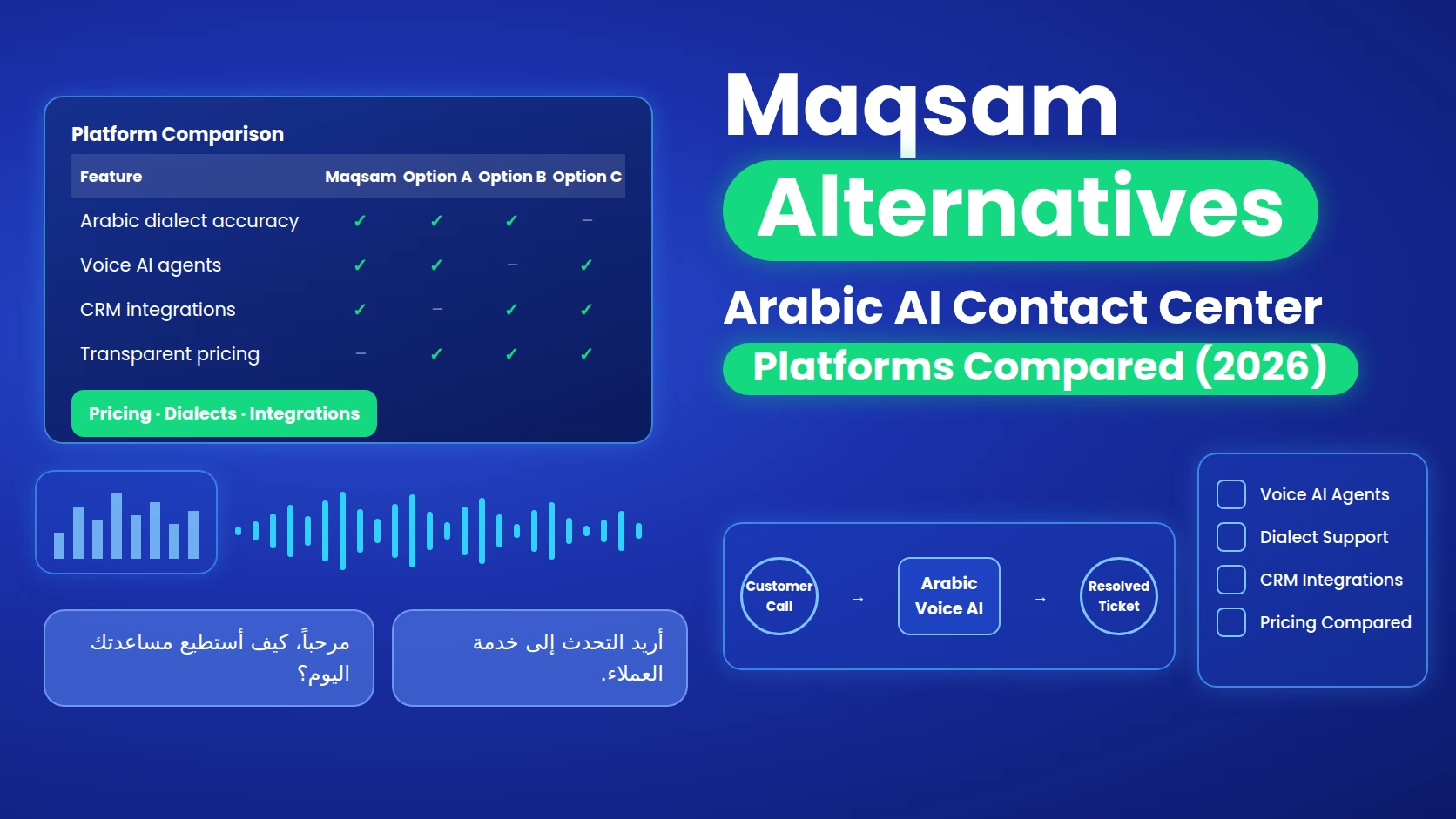
Quick Comparison: AssemblyAI Alternatives for Arabic Voice AI

Note: The competitor information in this article is based on publicly available sources at the time of writing. This article is intended to help readers make informed decisions and is not a criticism of any company or its products. Every tool mentioned has its own strengths depending on the use case. Always conduct your own research and speak directly with vendors before making any purchasing or technology decisions.

This is some text inside of a div block.

Detailed Comparison: AssemblyAI Alternatives for Arabic Voice AI

1. Munsit: Best for GCC Enterprises Needing Arabic Dialect Accuracy

Munsit is an Arabic Voice AI platform built in the UAE by CNTXT AI, architected specifically for Arabic phonetic complexity, prosodic variation, and dialectal diversity from Gulf varieties to North African dialects, rather than treating Arabic as one of 100+ supported languages. On the multi-dialect test sets used by the Open Universal Arabic ASR Leaderboard, the Munsit-1 model records a 26.68% average word error rate against 36.86% for OpenAI Whisper large-v3 on the same six test sets, roughly 10 points, which in practice is the difference between a transcript you edit and one you retype. Verify the live leaderboard for the current standing before quoting a specific figure, since rankings shift as new models are submitted.

Arabic Dialect Coverage: 25+ dialects including Gulf varieties (Emirati, Khaleeji, Saudi Najdi, Saudi Hijazi), Levantine (Lebanese, Syrian, Jordanian, Palestinian), Egyptian, Sudanese, Iraqi, Moroccan, Tunisian, Algerian, Libyan, Yemeni, and MSA, handled automatically, with no dialect parameter to configure. Handles code-switching between Arabic and English within the same conversation.

Deployment Options: Cloud API, sovereign cloud (VPC), on-premises deployment for regulated industries, and on-device SDK for iOS, Android, macOS, Windows, and Linux, audio can remain entirely within customer infrastructure with air-gapped deployment.

Beyond transcription: The same API covers a dedicated minutes-of-meetings endpoint, speaker diarization chained to per-speaker sentiment, keyword extraction, translation, voice isolation for noisy audio, and Faseeh, Munsit’s Arabic TTS engine, plus drop-in voice-agent plugins for LiveKit, Pipecat, VAPI, and Ultravox, which is the closer analogue to AssemblyAI’s Audio Intelligence layer for teams migrating over.

Pricing: Free plan with credits and no card required; Pro from $8/month (200,000 credits/month), with higher tiers for larger teams and a custom Enterprise tier for sovereign and on-premises deployment. Current rates, verify directly, as tier structure and credit allocations are updated periodically.

Pros:

  • Independently benchmarks near the top of Arabic ASR accuracy on the Open Universal Arabic ASR Leaderboard, verify the live table for current standing
  • Full Arabic Voice AI platform: STT + Faseeh TTS + meeting transcription + voice-agent plugins in one stack, similar in breadth to what AssemblyAI offers for English
  • Sovereign deployment options (VPC, on-premises, on-device) for PDPL/NCA compliance requirements common in GCC regulated industries

Best for: GCC enterprises, government authorities, contact centers, and developers building Arabic-first applications where dialect accuracy and data sovereignty are non-negotiable requirements.

2. Deepgram Nova-3 Arabic: Best for Real-Time Voice Agents Wanting Documented Dialect Coverage

Deepgram launched Nova-3 Arabic in January 2026, a dedicated Arabic model documented to cover 17 regional variants across Gulf, MSA, Egyptian, Levantine, and North African groups, specifically closing the dialect-documentation gap that generic multilingual Arabic support usually leaves open.

Arabic Dialect Coverage: 17 documented Arabic variants, a genuine step up from Arabic-as-one-of-many-languages, and more granular published dialect coverage than most global clouds.

Deployment Options: Cloud API; self-hosted and on-premises deployment available at the Enterprise tier.

Pricing: Pay-as-you-go from $0.0048/minute for the Nova model line; pre-paid growth plans available. Full pricing at deepgram.com/pricing.

Pros:

  • Sub-second real-time streaming latency well-suited to voice agent applications, verify current documented latency figures directly with Deepgram before citing a specific number
  • 17 documented Arabic dialect variants, launched specifically to address the Arabic gap other multilingual clouds leave undocumented
  • Strong developer documentation and SDKs; likely the smoothest migration path for teams already comfortable with an AssemblyAI-style developer-first API

Cons:

  • Nova-3 Arabic launched in January 2026, so it has a shorter GCC production track record than longer-standing Arabic-specialist platforms
  • No built-in understanding layer (summarization, sentiment, meeting minutes) comparable to AssemblyAI’s LeMUR or Munsit’s bundled endpoints, transcription output needs a separate pipeline for that
  • On-premises deployment only available at Enterprise tier with custom pricing

Best for: Real-time voice agent applications where streaming latency is critical and the team wants documented Arabic dialect breadth on a familiar, developer-friendly multilingual stack.

3. OpenAI Whisper — Best for Developers Needing Open Weights

OpenAI Whisper is an open-source multilingual speech recognition model released in 2022, trained on 680,000 hours of multilingual audio, supporting 99 languages including Arabic with model weights available for self-hosting.

Arabic Dialect Coverage: MSA with limited generalization to dialects. On the Open Universal Arabic ASR Leaderboard, an independent 2025 evaluation placed Whisper large-v3 at a 36.86% average WER across the six multi-dialect test sets, roughly one word in three wrong, workable for search and rough drafts, generally below the bar for compliance-grade transcripts without human review.

Deployment Options: Self-hosted (open weights), or via OpenAI API and Azure OpenAI Service.

Pricing: Free for self-hosting; OpenAI API from $0.006/minute; Azure pricing varies by region.

Pros:

  • Open model weights allow full control over deployment, data residency, and cost at scale
  • No vendor lock-in; can run entirely air-gapped on internal infrastructure
  • Active community with fine-tuning guides and optimization tools

Cons:

  • MSA-focused; independently documented to trail Arabic-specialist models by a wide margin on multi-dialect benchmarks
  • Self-hosting requires GPU infrastructure and ML engineering resources to optimize latency and cost
  • No commercial support; troubleshooting relies on community forums, unlike AssemblyAI’s dedicated support channels

Best for: Developer teams with ML infrastructure who need open weights, full data control, and are willing to trade dialect accuracy for deployment flexibility.

4. Speechmatics — Best for Multilingual Broadcast and Code-Switching Workflows

Speechmatics is a UK-based ASR provider founded in 2006, offering Arabic speech to text with particular strength in handling code-switching between Arabic and English mid-sentence, trained on Gulf, Egyptian, Levantine, and Maghrebi speech rather than broadcast audio alone.

Arabic Dialect Coverage: MSA, Gulf, Egyptian, Levantine, and Maghrebi dialects, with native code-switching support.

Deployment Options: Cloud API, with containerized on-premises deployment available for Enterprise customers.

Pricing: Custom enterprise pricing for the Ursa model line; no public pay-as-you-go rate card at time of writing. Contact Speechmatics for quotes.

Pros:

  • Native Arabic-English code-switching handling, trained on real conversational data rather than broadcast-only audio
  • On-premises deployment containerized for enterprise environments
  • Strong reputation in broadcast and media transcription workflows


Cons:

  • No independently published Arabic dialect accuracy benchmark comparable to the leaderboard cited throughout this article
  • Custom pricing only, no transparent rate card for self-serve evaluation, a bigger friction point for teams used to AssemblyAI’s published per-hour rates
  • Primarily European broadcast heritage; less GCC-specific enterprise track record than regional specialists


Best for:
Media and broadcast organizations needing strong Arabic-English code-switching alongside other languages, with enterprise procurement budget for custom pricing.

5. Google Cloud Speech-to-Text — Best for Google Cloud Enterprises

Google Cloud Speech-to-Text supports many Arabic country locales, including ar-SA (Saudi Arabia), ar-AE (UAE), ar-EG (Egypt), ar-MA (Morocco), and others,  through its Chirp model family, alongside 125+ total languages.

Arabic Dialect Coverage: Multiple country locales selectable via language code, broader than “MSA only,” but the caller must declare the expected locale per request, and Google does not publish per-dialect accuracy data or automatic handling across a call that mixes dialects.

Deployment Options: Cloud API; on-premises deployment available through Google Distributed Cloud for regulated industries.

Pricing: Chirp 2 model from $0.006 per 15 seconds; older models from $0.004 per 15 seconds. Full pricing at Google Cloud Speech pricing.

Pros:

  • Native integration with the Google Cloud ecosystem (BigQuery, Vertex AI, Cloud Storage)
  • Locale-level Arabic coverage broader than a single MSA model, with automatic punctuation and diarization included
  • Automatic scaling with no infrastructure management

Cons:

  • Locale codes require declaring the expected dialect region per request rather than automatic detection across a mixed-dialect call
  • Cloud-only architecture, no sovereign deployment option, which rules it out for PDPL/NCA-governed use cases in regulated GCC industries
  • No independently published Arabic dialect accuracy benchmarks comparable to the leaderboard cited throughout this article

Best for: Google Cloud enterprises processing Arabic content across known, declared locales where dialects are not required to be auto-detected within a single call.

This is some text inside of a div block.

Heading

Lorem ipsum dolor sit amet, consectetur adipiscing elit. Suspendisse varius enim in eros elementum tristique. Duis cursus, mi quis viverra ornare, eros dolor interdum nulla, ut commodo diam libero vitae erat. Aenean faucibus nibh et justo cursus id rutrum lorem imperdiet. Nunc ut sem vitae risus tristique posuere.

Lorem ipsum dolor sit amet, consectetur adipiscing elit. Suspendisse varius enim in eros elementum tristique. Duis cursus, mi quis viverra ornare, eros dolor interdum nulla, ut commodo diam libero vitae erat. Aenean faucibus nibh et justo cursus id rutrum lorem imperdiet. Nunc ut sem vitae risus tristique posuere.

Lorem ipsum dolor sit amet, consectetur adipiscing elit. Suspendisse varius enim in eros elementum tristique. Duis cursus, mi quis viverra ornare, eros dolor interdum nulla, ut commodo diam libero vitae erat. Aenean faucibus nibh et justo cursus id rutrum lorem imperdiet. Nunc ut sem vitae risus tristique posuere.

Lorem ipsum dolor sit amet, consectetur adipiscing elit. Suspendisse varius enim in eros elementum tristique. Duis cursus, mi quis viverra ornare, eros dolor interdum nulla, ut commodo diam libero vitae erat. Aenean faucibus nibh et justo cursus id rutrum lorem imperdiet. Nunc ut sem vitae risus tristique posuere.

What Actually Changes When You Migrate From AssemblyAI to an Arabic Specialist

Since this is a migration decision for most readers, not a first purchase, here’s what genuinely changes in your integration,  beyond dialect accuracy, based on how these platforms differ structurally from AssemblyAI’s API shape:

1. Audio Intelligence parity isn’t automatic. AssemblyAI’s value beyond raw transcription, auto-chapters, topic detection, entity detection, LeMUR question-answering,  is a separate NLP layer with its own language coverage, and moving to a new STT provider doesn’t automatically bring an equivalent layer with it. Check specifically whether your target platform has native summarization/Q&A (Munsit’s meeting-minutes endpoint and Intella’s CX analytics are the closer analogues here) or whether you’ll need to add an LLM step yourself.

2. Webhook and streaming shapes differ. AssemblyAI’s webhook payload structure, polling model, and streaming protocol won’t match another vendor’s exactly, plan for an adapter layer in your integration rather than a drop-in swap, even between two REST APIs that look superficially similar.

3. Self-serve vs. sales-led changes your evaluation timeline. AssemblyAI, Deepgram, and Munsit all support instant API-key signup and pay-as-you-go testing. Speechmatics, Intella, and Kanari AI are largely sales-led with custom pricing, budget for a longer procurement cycle if you’re evaluating those.

4. Dialect parameters vs. automatic detection changes your request logic. If you’re used to AssemblyAI’s single ar language code, check whether your target platform needs a specific locale per request (Google, Azure) or handles dialect automatically (Munsit, Kanari AI), this affects whether you need upstream dialect-detection logic of your own for mixed-dialect audio streams.

Why GCC Enterprises Choose Munsit for Arabic Voice AI

For organizations where Arabic is the primary language of operation, not a multilingual add-on, the architectural difference between Arabic-first platforms and retrofitted multilingual tools tends to show up at production scale rather than in a demo.

Munsit addresses the specific gaps GCC enterprises report:

  • Dialect accuracy where it matters: Independently benchmarks near the top of the Open Universal Arabic ASR Leaderboard,  verify the live table for current standing rather than any single cited figure.
  • Data sovereignty for regulated industries: Munsit deploys on-premises, in sovereign VPC, or on-device, so audio never needs to leave customer infrastructure, an architecture aimed at PDPL (UAE and KSA), NCA, and CBUAE requirements common in banking, healthcare, and government.
  • Full Arabic Voice AI platform: Beyond STT, Munsit provides Faseeh TTS, meeting transcription, and voice-agent plugins in a single stack, reducing the integration overhead of stitching together multiple vendors for the equivalent of AssemblyAI’s Audio Intelligence layer.
  • Built in the UAE, for the region: Munsit’s training data, model architecture, and roadmap are prioritized around the dialects, regulations, and use cases of the GCC specifically.

For developers evaluating Arabic Voice AI, the practical question is: do you need a multilingual platform that lists Arabic as one of 100+ languages, or the platform built to solve Arabic speech recognition as its primary problem?

Try Munsit Free or Contact Sales for sovereign deployment.

شاهد أداء Munsit في الكلام العربي الحقيقي

قم بتقييم تغطية اللهجة ومعالجة الضوضاء والنشر داخل المنطقة على البيانات التي تعكس عملائك.
اكتشف

How to Choose the Right Arabic Voice AI Platform

Selecting an AssemblyAI alternative for Arabic voice AI means evaluating four core dimensions:

1. Dialect Coverage vs. Generic Arabic Support

Most multilingual platforms claim “Arabic support” but document only MSA or a handful of locales, and almost no one speaks pure MSA conversationally in the GCC. A contact center in Dubai processing Emirati customer calls, a Saudi broadcaster transcribing Najdi interviews, or a Moroccan media house subtitling Darija content will see accuracy drop meaningfully if the model was never trained on those dialects specifically.

Ask vendors: which specific dialects are in your training data, and can you point to independent benchmark data (not just your own marketing page) for Gulf varieties vs. MSA? If they can’t cite a checkable source, treat the accuracy claim as unverified.

2. Deployment Flexibility for Regulatory Compliance

The UAE’s PDPL (Federal Decree-Law No. 45 of 2021), Saudi Arabia’s PDPL, NCA requirements, and sector-specific rules from CBUAE (UAE banking) and health authorities all impose restrictions on where sensitive audio data can be processed and stored. Cloud-only platforms eliminate entire regulated industries from your addressable market.

Ask vendors: can you deploy on-premises or in our VPC with audio never leaving our infrastructure? What audit trail exists for data-residency compliance?

3. Platform Breadth vs. Point Solutions

If you need STT, TTS, and an Audio Intelligence-equivalent layer (summarization, sentiment, Q&A), stitching together three separate vendors creates integration overhead and compounded per-feature costs. Platforms that bundle these reduce architectural complexity, see the migration section above for what to check specifically.

4. Total Cost of Ownership at Scale

Headline API rates are deceptive. Per-minute pricing that looks competitive at low volume can become unsustainable at high volume once you add per-feature charges for diarization, translation, and premium models. Ask vendors for the all-in cost per hour including every feature you actually need, and check whether volume discounts or prepaid credit plans improve the unit economics at your expected scale.

التعليمات

Does AssemblyAI support Arabic speech recognition?
What is the most accurate Arabic speech-to-text model in 2026?
Can I deploy Arabic ASR on-premises for PDPL compliance?

Powering the Future with AI

Join our newsletter for insights on cutting-edge technology built in the UAE
Thank you! Your submission has been received!
Oops! Something went wrong while submitting the form.
آخر تحديث:
August 13, 2026

10 Best AssemblyAI Alternatives for Arabic Voice AI in 2026

المنتج
التقنيات الصوتية بالذكاء الاصطناعي
المؤلف
سارة تركي
ريم باشوش
زمن القراءة: 5 دقائق

اطرح أنظمة الذكاء الاصطناعي الصوتي العربي في بيئة الإنتاج الفعلي  للشركات (Production)

حلول تحويل الكلام إلى نص والنص إلى كلام باللغة العربية بمستويات  جودة ودقة أصلية كلياً تفوق النماذج العامة
بنية تحتية برمجية صُممت خصيصاً لتلبية أدق متطلبات حكومات ومؤسسات  كبرى دول مجلس التعاون الخليجي
خيارات استضافة مرنة تدعم خيار الاستضافة المحلية بالكامل والسحب  السيادية والوطنية المستقلة
احجز موعداً لعرض توضيحي واستشارة الخبراء لمؤسستك
شكرًا لك! لقد تم استلام طلبك!
عذرًا! حدث خطأ ما أثناء إرسال النموذج.

أبرز النقاط

AssemblyAI's Arabic gap isn't transcription, it's the layer above it. Topic detection, auto-chapters, and LeMUR rely on separate NLP models that aren't as mature for Arabic as English, so accuracy issues often trace back to that layer, not the base model.

Dialect coverage varies widely across alternatives. Munsit (25+ dialects), Deepgram Nova-3 (17 documented variants), and Kanari AI (19 dialects) offer far more granular Arabic support than generic multilingual platforms relying on MSA alone.

Deployment flexibility determines compliance eligibility. For PDPL and NCA-regulated industries in the GCC, cloud-only tools like Gladia and Google Cloud Speech-to-Text are ruled out, while Munsit, Speechmatics, Intella, and Kanari AI support on-premises or sovereign VPC deployment.

Migrating from AssemblyAI isn't a drop-in swap. Webhook structures, streaming protocols, and dialect-handling logic (automatic detection vs. locale parameters) differ across vendors, so teams should plan for an integration adapter layer.

Benchmark and pricing claims need independent verification. WER figures (e.g., Munsit's 26.68% vs. Whisper's 36.86% on the Open Universal Arabic ASR Leaderboard) and vendor pricing shift frequently, so checking live sources before deciding is essential.

AssemblyAI has built a strong following for its speech recognition API and Audio Intelligence features, LeMUR-based summarization, topic detection, sentiment analysis, and layered clean transcription. Arabic is supported on AssemblyAI’s flagship Universal-3 Pro model as part of its 99-language coverage, and its Universal-3.5 Pro Realtime model added Arabic to streaming in 2026, so this isn’t a case of the platform ignoring Arabic.

The gap teams actually run into is dialect depth: AssemblyAI documents automatic regional pattern recognition from the base ar language code but doesn’t publish per-dialect accuracy, and organizations processing Gulf, Levantine, or North African varieties commonly find that the Audio Intelligence layer built for English, topic detection, auto-chapters, entity detection, doesn’t carry the same accuracy into Arabic, because those features depend on NLP models with their own separate language coverage, not just the transcription layer.

That’s the real reason teams search for AssemblyAI alternatives for Arabic: not because AssemblyAI can’t transcribe Arabic, but because the features that make AssemblyAI valuable for English (accurate topic extraction, reliable auto-chapters, LeMUR question-answering) are a different, less mature layer for Arabic than the transcription itself.

This guide compares 10 alternatives, ranked by what matters in production: dialect coverage across Gulf, Levantine, Egyptian, and North African varieties, real-time transcription accuracy, deployment flexibility for PDPL and NCA compliance, and total cost of ownership at scale, plus, since this is a migration decision, what actually changes in your integration when you switch.

Quick Comparison: AssemblyAI Alternatives for Arabic Voice AI

Tool Arabic Dialect Coverage Deployment Best For Pricing
Munsit 25+ dialects including Khaleeji, Emirati, Najdi, Hijazi, Levantine, Egyptian, Maghrebi — automatic, no dialect parameter Cloud / VPC / On-Prem / On-Device GCC enterprises needing strong Arabic accuracy with sovereign deployment From $8/month
Deepgram Nova-3 Arabic 17 documented Arabic variants across Gulf, MSA, Egyptian, Levantine, North African Cloud / Self-hosted / On-Prem (Enterprise) Real-time voice agents wanting documented dialect breadth From $0.0048/min
OpenAI Whisper MSA + limited dialectal generalization Self-hosted / Cloud (via Azure)

Note: The competitor information in this article is based on publicly available sources at the time of writing. This article is intended to help readers make informed decisions and is not a criticism of any company or its products. Every tool mentioned has its own strengths depending on the use case. Always conduct your own research and speak directly with vendors before making any purchasing or technology decisions.

Lorem ipsum dolor
لوريم إيبسوم ألم
لوريم إيبسوم ألم
لوريم إيبسوم ألم
لوريم إيبسوم ألم
لوريم إيبسوم ألم
لوريم إيبسوم ألم
لوريم إيبسوم ألم
لوريم إيبسوم ألم
لوريم إيبسوم ألم
لوريم إيبسوم ألم
لوريم إيبسوم ألم
لوريم إيبسوم ألم
لوريم إيبسوم ألم
لوريم إيبسوم ألم
لوريم إيبسوم ألم
لوريم إيبسوم ألم
لوريم إيبسوم ألم
لوريم إيبسوم ألم
لوريم إيبسوم ألم
لوريم إيبسوم ألم
Lorem ipsum dolor
Lorem ipsum dolor
Lorem ipsum dolor
Lorem ipsum dolor
Lorem ipsum dolor
Lorem ipsum dolor
Lorem ipsum dolor
Lorem ipsum dolor
Lorem ipsum dolor
Lorem ipsum dolor
Lorem ipsum dolor

Detailed Comparison: AssemblyAI Alternatives for Arabic Voice AI

فهم أصول هلوسات الذكاء الاصطناعي هو الخطوة الأولى نحو التخفيف منها. هذه الظاهرة ليست مشكلة واحدة، بل هي قضية معقدة ذات عوامل متعددة تساهم فيها.

1

أوجه القصور في بيانات التدريب

1. Munsit: Best for GCC Enterprises Needing Arabic Dialect Accuracy

Munsit is an Arabic Voice AI platform built in the UAE by CNTXT AI, architected specifically for Arabic phonetic complexity, prosodic variation, and dialectal diversity from Gulf varieties to North African dialects, rather than treating Arabic as one of 100+ supported languages. On the multi-dialect test sets used by the Open Universal Arabic ASR Leaderboard, the Munsit-1 model records a 26.68% average word error rate against 36.86% for OpenAI Whisper large-v3 on the same six test sets, roughly 10 points, which in practice is the difference between a transcript you edit and one you retype. Verify the live leaderboard for the current standing before quoting a specific figure, since rankings shift as new models are submitted.

Arabic Dialect Coverage: 25+ dialects including Gulf varieties (Emirati, Khaleeji, Saudi Najdi, Saudi Hijazi), Levantine (Lebanese, Syrian, Jordanian, Palestinian), Egyptian, Sudanese, Iraqi, Moroccan, Tunisian, Algerian, Libyan, Yemeni, and MSA, handled automatically, with no dialect parameter to configure. Handles code-switching between Arabic and English within the same conversation.

Deployment Options: Cloud API, sovereign cloud (VPC), on-premises deployment for regulated industries, and on-device SDK for iOS, Android, macOS, Windows, and Linux, audio can remain entirely within customer infrastructure with air-gapped deployment.

Beyond transcription: The same API covers a dedicated minutes-of-meetings endpoint, speaker diarization chained to per-speaker sentiment, keyword extraction, translation, voice isolation for noisy audio, and Faseeh, Munsit’s Arabic TTS engine, plus drop-in voice-agent plugins for LiveKit, Pipecat, VAPI, and Ultravox, which is the closer analogue to AssemblyAI’s Audio Intelligence layer for teams migrating over.

Pricing: Free plan with credits and no card required; Pro from $8/month (200,000 credits/month), with higher tiers for larger teams and a custom Enterprise tier for sovereign and on-premises deployment. Current rates, verify directly, as tier structure and credit allocations are updated periodically.

Pros:

  • Independently benchmarks near the top of Arabic ASR accuracy on the Open Universal Arabic ASR Leaderboard, verify the live table for current standing
  • Full Arabic Voice AI platform: STT + Faseeh TTS + meeting transcription + voice-agent plugins in one stack, similar in breadth to what AssemblyAI offers for English
  • Sovereign deployment options (VPC, on-premises, on-device) for PDPL/NCA compliance requirements common in GCC regulated industries

Best for: GCC enterprises, government authorities, contact centers, and developers building Arabic-first applications where dialect accuracy and data sovereignty are non-negotiable requirements.

2. Deepgram Nova-3 Arabic: Best for Real-Time Voice Agents Wanting Documented Dialect Coverage

Deepgram launched Nova-3 Arabic in January 2026, a dedicated Arabic model documented to cover 17 regional variants across Gulf, MSA, Egyptian, Levantine, and North African groups, specifically closing the dialect-documentation gap that generic multilingual Arabic support usually leaves open.

Arabic Dialect Coverage: 17 documented Arabic variants, a genuine step up from Arabic-as-one-of-many-languages, and more granular published dialect coverage than most global clouds.

Deployment Options: Cloud API; self-hosted and on-premises deployment available at the Enterprise tier.

Pricing: Pay-as-you-go from $0.0048/minute for the Nova model line; pre-paid growth plans available. Full pricing at deepgram.com/pricing.

Pros:

  • Sub-second real-time streaming latency well-suited to voice agent applications, verify current documented latency figures directly with Deepgram before citing a specific number
  • 17 documented Arabic dialect variants, launched specifically to address the Arabic gap other multilingual clouds leave undocumented
  • Strong developer documentation and SDKs; likely the smoothest migration path for teams already comfortable with an AssemblyAI-style developer-first API

Cons:

  • Nova-3 Arabic launched in January 2026, so it has a shorter GCC production track record than longer-standing Arabic-specialist platforms
  • No built-in understanding layer (summarization, sentiment, meeting minutes) comparable to AssemblyAI’s LeMUR or Munsit’s bundled endpoints, transcription output needs a separate pipeline for that
  • On-premises deployment only available at Enterprise tier with custom pricing

Best for: Real-time voice agent applications where streaming latency is critical and the team wants documented Arabic dialect breadth on a familiar, developer-friendly multilingual stack.

3. OpenAI Whisper — Best for Developers Needing Open Weights

OpenAI Whisper is an open-source multilingual speech recognition model released in 2022, trained on 680,000 hours of multilingual audio, supporting 99 languages including Arabic with model weights available for self-hosting.

Arabic Dialect Coverage: MSA with limited generalization to dialects. On the Open Universal Arabic ASR Leaderboard, an independent 2025 evaluation placed Whisper large-v3 at a 36.86% average WER across the six multi-dialect test sets, roughly one word in three wrong, workable for search and rough drafts, generally below the bar for compliance-grade transcripts without human review.

Deployment Options: Self-hosted (open weights), or via OpenAI API and Azure OpenAI Service.

Pricing: Free for self-hosting; OpenAI API from $0.006/minute; Azure pricing varies by region.

Pros:

  • Open model weights allow full control over deployment, data residency, and cost at scale
  • No vendor lock-in; can run entirely air-gapped on internal infrastructure
  • Active community with fine-tuning guides and optimization tools

Cons:

  • MSA-focused; independently documented to trail Arabic-specialist models by a wide margin on multi-dialect benchmarks
  • Self-hosting requires GPU infrastructure and ML engineering resources to optimize latency and cost
  • No commercial support; troubleshooting relies on community forums, unlike AssemblyAI’s dedicated support channels

Best for: Developer teams with ML infrastructure who need open weights, full data control, and are willing to trade dialect accuracy for deployment flexibility.

4. Speechmatics — Best for Multilingual Broadcast and Code-Switching Workflows

Speechmatics is a UK-based ASR provider founded in 2006, offering Arabic speech to text with particular strength in handling code-switching between Arabic and English mid-sentence, trained on Gulf, Egyptian, Levantine, and Maghrebi speech rather than broadcast audio alone.

Arabic Dialect Coverage: MSA, Gulf, Egyptian, Levantine, and Maghrebi dialects, with native code-switching support.

Deployment Options: Cloud API, with containerized on-premises deployment available for Enterprise customers.

Pricing: Custom enterprise pricing for the Ursa model line; no public pay-as-you-go rate card at time of writing. Contact Speechmatics for quotes.

Pros:

  • Native Arabic-English code-switching handling, trained on real conversational data rather than broadcast-only audio
  • On-premises deployment containerized for enterprise environments
  • Strong reputation in broadcast and media transcription workflows


Cons:

  • No independently published Arabic dialect accuracy benchmark comparable to the leaderboard cited throughout this article
  • Custom pricing only, no transparent rate card for self-serve evaluation, a bigger friction point for teams used to AssemblyAI’s published per-hour rates
  • Primarily European broadcast heritage; less GCC-specific enterprise track record than regional specialists


Best for:
Media and broadcast organizations needing strong Arabic-English code-switching alongside other languages, with enterprise procurement budget for custom pricing.

5. Google Cloud Speech-to-Text — Best for Google Cloud Enterprises

Google Cloud Speech-to-Text supports many Arabic country locales, including ar-SA (Saudi Arabia), ar-AE (UAE), ar-EG (Egypt), ar-MA (Morocco), and others,  through its Chirp model family, alongside 125+ total languages.

Arabic Dialect Coverage: Multiple country locales selectable via language code, broader than “MSA only,” but the caller must declare the expected locale per request, and Google does not publish per-dialect accuracy data or automatic handling across a call that mixes dialects.

Deployment Options: Cloud API; on-premises deployment available through Google Distributed Cloud for regulated industries.

Pricing: Chirp 2 model from $0.006 per 15 seconds; older models from $0.004 per 15 seconds. Full pricing at Google Cloud Speech pricing.

Pros:

  • Native integration with the Google Cloud ecosystem (BigQuery, Vertex AI, Cloud Storage)
  • Locale-level Arabic coverage broader than a single MSA model, with automatic punctuation and diarization included
  • Automatic scaling with no infrastructure management

Cons:

  • Locale codes require declaring the expected dialect region per request rather than automatic detection across a mixed-dialect call
  • Cloud-only architecture, no sovereign deployment option, which rules it out for PDPL/NCA-governed use cases in regulated GCC industries
  • No independently published Arabic dialect accuracy benchmarks comparable to the leaderboard cited throughout this article

Best for: Google Cloud enterprises processing Arabic content across known, declared locales where dialects are not required to be auto-detected within a single call.

6. Gladia — Best for Multilingual Code-Switching Support

Gladia is a Paris-based audio intelligence platform focused on multilingual transcription and translation, supporting 100+ languages including Arabic with particular emphasis on handling code-switching between languages within the same conversation.

Arabic Dialect Coverage: Arabic supported via underlying ASR engines Gladia layers its platform on top of; dialect coverage is not independently documented, and the platform emphasizes code-switching handling over dialectal depth.

Deployment Options: Cloud API only.

Pricing: Pay-as-you-go reported from roughly $0.20–0.305/hour depending on plan, with diarization and translation bundled. See Gladia pricing for current rates.

Pros:

  • Handles Arabic-English code-switching in single conversations
  • Bundled translation and diarization without separate per-feature upcharges, comparable in spirit to AssemblyAI’s Audio Intelligence bundling
  • Async and real-time API endpoints for different latency requirements

Cons:

  • Built on underlying third-party ASR engines rather than a proprietary Arabic-trained model, Arabic transcription quality depends on the upstream provider Gladia uses, which isn’t fully disclosed
  • No dedicated Arabic dialect models; unclear performance on Gulf or Maghrebi varieties specifically
  • Cloud-only, no on-premises or VPC deployment for GCC data-residency requirements

Best for: Multilingual SaaS startups serving audiences that code-switch between Arabic and English, where translation and diarization are needed alongside transcription and cloud-only deployment is acceptable.

7. Intella — Best for GCC Contact Centers and CX Intelligence

Intella is a UAE-based Arabic Speech Intelligence platform focused on contact-center and customer-experience applications, with a stated specialization in Gulf Arabic dialects commonly heard in GCC customer service environments.

Arabic Dialect Coverage: Gulf dialects including Saudi, Emirati, Kuwaiti, Bahraini, and Qatari varieties, with a stated focus on Khaleeji; Levantine and Egyptian also supported per public materials.

Deployment Options: Cloud and on-premises deployment available.

Pricing: Custom enterprise pricing. Contact Intella for quotes.

Pros:

  • Built specifically for GCC contact-center use cases with a Gulf dialect focus
  • Speech analytics and QA features tailored for Arabic customer conversations, arguably closer to what AssemblyAI’s Audio Intelligence offers for English than a plain transcription API
  • Local UAE presence with PDPL-compliant deployment options

Cons:

  • Contact-center focused,  less suited for general transcription, meeting notes, or media workflows
  • Custom pricing only; no transparent developer API rate card for quick self-serve evaluation
  • Narrower language/dialect coverage than pan-MENA platforms outside the Gulf region

Best for: GCC contact centers and CX teams processing high volumes of Gulf Arabic customer calls, where speech analytics and quality monitoring are the primary use case.

8. Lahajati — Best for Arabic Content Creators and Voiceover

Lahajati is a UAE-based Arabic text-to-speech platform claiming coverage of 192+ Arabic dialects, creator-focused and built for voiceover production, content localization, and social media workflows rather than enterprise STT.

Arabic Dialect Coverage: 192+ dialects claimed (TTS-focused), the broadest claimed count in this comparison, though not itemized in public documentation, so worth testing against your specific target dialects. STT capabilities are not a documented primary product focus.

Deployment Options: Cloud only.

Pricing: Free tier available; paid plans reported from $5/month.

Pros:

  • Extensive claimed dialect variety for Arabic TTS voiceover production
  • Creator-friendly pricing for freelancers and agencies
  • Built in the UAE with regional dialect expertise

Cons:

  • TTS-focused platform; not a fit if your actual need is AssemblyAI-style speech-to-text and Audio Intelligence
  • Limited enterprise features or API documentation for production integration
  • Cloud-only, no sovereign deployment option

Best for: Arabic content creators, social media producers, and localization teams needing dialect-specific TTS voices; not a direct AssemblyAI substitute for teams needing transcription and analysis.

9. Kanari AI — Best for Arabic Media, Government, and Intelligence Transcription

Kanari AI is a dialectal speech-technology company (Pasadena, California and Doha, Qatar) that has focused specifically on Dialectal Arabic since 2020, offering a single global Arabic model that detects 19 dialects covering the large majority of the Arabic-speaking market, with cloud, on-premises, and hybrid deployment. (Note: Kanari AI previously offered a consumer-facing product called Fenek AI, which is no longer in operation as of early 2026, Kanari’s enterprise platform, covered here, is a separate and currently active product.)

Arabic Dialect Coverage: 19 Arabic dialects in one global model, plus MSA, with Arabic-English code-switching recognized within the same sentence, an approach similar to Munsit’s automatic, no-parameter dialect handling.

Deployment Options: Cloud, on-premises, and hybrid deployment, positioned for enterprise customers in media, government, intelligence, legal, and call-center industries.

Pricing: Not publicly listed, Kanari AI’s model is enterprise sales-led. Contact Kanari AI for quotes.

Pros:

  • Long-standing specialization in dialectal Arabic (since 2020) with named enterprise customers across media, government, and intelligence sectors
  • On-premises and hybrid deployment for regulated and classified use cases
  • Single global model handles 19 dialects plus code-switching without requiring per-dialect configuration

Cons:

  • Kanari has strong Arabic speech-recognition research, but its public product documentation provides less detail on developer-facing API pricing, technical specifications, and production integration than API-first providers such as AssemblyAI.
  • Arabic dialect performance is not presented through a current, independently reproducible multi-dialect leaderboard on Kanari’s public product pages, making direct WER comparisons with leading commercial and Arabic-specialist ASR providers more difficult.
  • Public product materials emphasise speech recognition, dialectal speech, voice experiences, and media workflows rather than a broad suite of built-in Audio Intelligence features such as summarisation, sentiment analysis, and topic detection


Best for:
Government, media, and intelligence organizations needing enterprise-grade dialectal Arabic transcription with deployment flexibility, and willing to go through a sales-led procurement process rather than self-serve signup.

10. Microsoft Azure Speech — Best for Microsoft 365 Enterprises

Microsoft Azure Speech is part of Azure AI Services, integrated with Microsoft 365 and Teams. Its language support documentation lists MSA plus several regional Arabic locales (Egypt, Saudi Arabia, UAE, and others), and Microsoft has published engineering work on improving Arabic pronunciation accuracy.

Arabic Dialect Coverage: MSA plus several regional locale variants; per-dialect accuracy benchmarks are not independently published, and in practice the locale voices trend toward the formal end of the register.

Deployment Options: Cloud and hybrid (Azure Stack) for select enterprise customers.

Pricing: Standard model from $1/hour; custom model training available at higher tiers. Full pricing at Azure Speech pricing.

Pros:

  • Native integration with Microsoft 365, Teams, and the Azure AI ecosystem
  • Custom speech model training for domain-specific vocabulary
  • Hybrid deployment option via Azure Stack for data residency

Cons:

  • Regional Arabic locale coverage exists, but independently benchmarked dialect accuracy against Arabic-specialist models is not published
  • Pricing per hour is higher than several specialized competitors at production volume
  • No independent benchmark data comparable to the leaderboard cited throughout this article

Best for: Microsoft 365 enterprises processing Arabic content where Azure ecosystem integration matters more than dialectal depth.

2

أوجه القصور في بيانات التدريب

العامل الأكثر أهمية في هلوسات الذكاء الاصطناعي هو البيانات التي تُدرّب عليها النماذج. تتعلم النماذج اللغوية الكبيرة (LLMs) من مجموعات بيانات ضخمة مجمعة من الإنترنت، والتي تحتوي على مزيج من المعلومات الواقعية والآراء والمعلومات المضللة والتحيزات. يمكن أن تؤدي العديد من المشكلات المحددة المتعلقة بالبيانات إلى الهلوسات:

حالات استخدام الذكاء الاصطناعي الصوتي العربي في الشركات لعام 2025

يفتح التحول نحو أنظمة التعرف التلقائي على الكلام (ASR) العربية التي تراعي اللهجات، آفاقاً جديدة لتطبيقات الشركات في جميع أنحاء منطقة الخليج والشرق الأوسط وشمال إفريقيا. تتجاوز المؤسسات الآن النسخ الأساسي لتصل إلى تحليلات كلام عربية متطورة.

تشهد تقنية الكلام العربية تطوراً سريعاً في عام 2025، مدفوعة بالنماذج اللغوية الضخمة متعددة اللغات والنماذج الأساسية الجديدة التي تركز على اللغة العربية.

تتقدم تقنية الكلام العربية بسرعة في عام 2025، مدفوعة بالنماذج اللغوية الضخمة متعددة اللغات ونماذج الأساس الجديدة المرتكزة على اللغة العربية.

تتقدم تقنية الكلام العربية بسرعة في عام 2025، مدفوعة بالنماذج اللغوية الضخمة متعددة اللغات ونماذج الأساس الجديدة المرتكزة على اللغة العربية.

تتقدم تقنية الكلام العربية بسرعة في عام 2025، مدفوعة بالنماذج اللغوية الضخمة متعددة اللغات ونماذج الأساس الجديدة المرتكزة على اللغة العربية.

What Actually Changes When You Migrate From AssemblyAI to an Arabic Specialist

فهم أصول هلوسات الذكاء الاصطناعي هو الخطوة الأولى نحو التخفيف منها. هذه الظاهرة ليست مشكلة واحدة بل هي قضية معقدة ذات عوامل متعددة تساهم فيها.

1

أوجه القصور في بيانات التدريب

Since this is a migration decision for most readers, not a first purchase, here’s what genuinely changes in your integration,  beyond dialect accuracy, based on how these platforms differ structurally from AssemblyAI’s API shape:

1. Audio Intelligence parity isn’t automatic. AssemblyAI’s value beyond raw transcription, auto-chapters, topic detection, entity detection, LeMUR question-answering,  is a separate NLP layer with its own language coverage, and moving to a new STT provider doesn’t automatically bring an equivalent layer with it. Check specifically whether your target platform has native summarization/Q&A (Munsit’s meeting-minutes endpoint and Intella’s CX analytics are the closer analogues here) or whether you’ll need to add an LLM step yourself.

2. Webhook and streaming shapes differ. AssemblyAI’s webhook payload structure, polling model, and streaming protocol won’t match another vendor’s exactly, plan for an adapter layer in your integration rather than a drop-in swap, even between two REST APIs that look superficially similar.

3. Self-serve vs. sales-led changes your evaluation timeline. AssemblyAI, Deepgram, and Munsit all support instant API-key signup and pay-as-you-go testing. Speechmatics, Intella, and Kanari AI are largely sales-led with custom pricing, budget for a longer procurement cycle if you’re evaluating those.

4. Dialect parameters vs. automatic detection changes your request logic. If you’re used to AssemblyAI’s single ar language code, check whether your target platform needs a specific locale per request (Google, Azure) or handles dialect automatically (Munsit, Kanari AI), this affects whether you need upstream dialect-detection logic of your own for mixed-dialect audio streams.

2

أوجه القصور في بيانات التدريب

أكبر عامل مساهم في هلوسات الذكاء الاصطناعي هو البيانات التي تُدرب عليها النماذج. تتعلم نماذج اللغة الكبيرة (LLMs) من مجموعات بيانات ضخمة مجمعة من الإنترنت، والتي تحتوي على مزيج من المعلومات الواقعية والآراء والمعلومات المضللة والتحيزات. يمكن أن تؤدي العديد من المشكلات المحددة المتعلقة بالبيانات إلى الهلوسات:

حالات استخدام المؤسسات للذكاء الاصطناعي الصوتي العربي في عام 2025

يفتح الانتقال إلى أنظمة التعرف التلقائي على الكلام (ASR) العربية المدركة للهجات موجة جديدة من تطبيقات المؤسسات عبر مناطق مجلس التعاون الخليجي والشرق الأوسط وشمال إفريقيا. تتجاوز المؤسسات الآن النسخ الأساسي لتصل إلى تحليلات الكلام العربية المتطورة.

تتقدم تقنية الكلام العربية بسرعة في عام 2025، مدفوعة بالنماذج اللغوية الضخمة متعددة اللغات ونماذج الأساس الجديدة المرتكزة على اللغة العربية.

تتقدم تقنية الكلام العربية بسرعة في عام 2025، مدفوعة بالنماذج اللغوية الضخمة متعددة اللغات ونماذج الأساس الجديدة المرتكزة على اللغة العربية.

تتقدم تقنية الكلام العربية بسرعة في عام 2025، مدفوعة بالنماذج اللغوية الضخمة متعددة اللغات ونماذج الأساس الجديدة المرتكزة على اللغة العربية.

تتقدم تقنية الكلام العربية بسرعة في عام 2025، مدفوعة بالنماذج اللغوية الضخمة متعددة اللغات ونماذج الأساس الجديدة المرتكزة على اللغة العربية.

بناء وهندسة أنظمة ذكاء اصطناعي صوتي فائقة الكفاءة يتطلب حتماً  اعتماد المنهجية العلمية الصحيحة

نحن في شركة CNTXT AI نساعدك باحترافية في تصميم وهندسة حلول صوتية  مخصصة ومطابقة لأعمالك، وبناء وإدارة مسارات تدفق البيانات (Data Pipelines)  المتقدمة، وتأمين وصول منتجاتك لقمة تطبيقات الذكاء الاصطناعي العربي المتطور  والآمن كلياً.

Why GCC Enterprises Choose Munsit for Arabic Voice AI

فهم أصول هلوسات الذكاء الاصطناعي هو الخطوة الأولى نحو التخفيف منها. هذه الظاهرة ليست مشكلة واحدة بل هي قضية معقدة ذات عوامل متعددة تساهم فيها.

1

أوجه القصور في بيانات التدريب

For organizations where Arabic is the primary language of operation, not a multilingual add-on, the architectural difference between Arabic-first platforms and retrofitted multilingual tools tends to show up at production scale rather than in a demo.

Munsit addresses the specific gaps GCC enterprises report:

  • Dialect accuracy where it matters: Independently benchmarks near the top of the Open Universal Arabic ASR Leaderboard,  verify the live table for current standing rather than any single cited figure.
  • Data sovereignty for regulated industries: Munsit deploys on-premises, in sovereign VPC, or on-device, so audio never needs to leave customer infrastructure, an architecture aimed at PDPL (UAE and KSA), NCA, and CBUAE requirements common in banking, healthcare, and government.
  • Full Arabic Voice AI platform: Beyond STT, Munsit provides Faseeh TTS, meeting transcription, and voice-agent plugins in a single stack, reducing the integration overhead of stitching together multiple vendors for the equivalent of AssemblyAI’s Audio Intelligence layer.
  • Built in the UAE, for the region: Munsit’s training data, model architecture, and roadmap are prioritized around the dialects, regulations, and use cases of the GCC specifically.
2

أوجه القصور في بيانات التدريب

المساهم الأكبر في هلوسات الذكاء الاصطناعي هو البيانات التي تُدرّب عليها النماذج. تتعلم النماذج اللغوية الكبيرة (LLMs) من مجموعات بيانات ضخمة مجمعة من الإنترنت، والتي تحتوي على مزيج من المعلومات الواقعية والآراء والمعلومات المضللة والتحيزات. يمكن أن تؤدي عدة مشكلات محددة متعلقة بالبيانات إلى الهلوسات:

For developers evaluating Arabic Voice AI, the practical question is: do you need a multilingual platform that lists Arabic as one of 100+ languages, or the platform built to solve Arabic speech recognition as its primary problem?

Try Munsit Free or Contact Sales for sovereign deployment.

حالات الاستخدام المؤسسية للذكاء الاصطناعي الصوتي العربي في عام 2025

يفتح الانتقال إلى تقنية التعرف التلقائي على الكلام (ASR) للغة العربية المدركة للهجات آفاقًا جديدة لتطبيقات الشركات في جميع أنحاء منطقة الخليج والشرق الأوسط وشمال إفريقيا. تتجاوز المؤسسات النسخ الأساسي لتصل إلى تحليلات الكلام العربية المتطورة.

تتطور تقنية الكلام العربية بسرعة في عام 2025، مدفوعة بالنماذج اللغوية الضخمة متعددة اللغات والنماذج التأسيسية الجديدة المرتكزة على اللغة العربية.

تتطور تقنية الكلام العربية بسرعة في عام 2025، مدفوعة بالنماذج اللغوية الضخمة متعددة اللغات والنماذج التأسيسية الجديدة المرتكزة على اللغة العربية.

تتطور تقنية الكلام العربية بسرعة في عام 2025، مدفوعة بالنماذج اللغوية الضخمة متعددة اللغات والنماذج التأسيسية الجديدة المرتكزة على اللغة العربية.

تتطور تقنية الكلام العربية بسرعة في عام 2025، مدفوعة بالنماذج اللغوية الضخمة متعددة اللغات والنماذج التأسيسية الجديدة المرتكزة على اللغة العربية.

How to Choose the Right Arabic Voice AI Platform

يُعد فهم أصول هلوسات الذكاء الاصطناعي الخطوة الأولى نحو التخفيف منها. هذه الظاهرة ليست مشكلة واحدة بل قضية معقدة ذات عوامل متعددة تساهم فيها.

1

أوجه القصور في بيانات التدريب

Selecting an AssemblyAI alternative for Arabic voice AI means evaluating four core dimensions:

1. Dialect Coverage vs. Generic Arabic Support

Most multilingual platforms claim “Arabic support” but document only MSA or a handful of locales, and almost no one speaks pure MSA conversationally in the GCC. A contact center in Dubai processing Emirati customer calls, a Saudi broadcaster transcribing Najdi interviews, or a Moroccan media house subtitling Darija content will see accuracy drop meaningfully if the model was never trained on those dialects specifically.

Ask vendors: which specific dialects are in your training data, and can you point to independent benchmark data (not just your own marketing page) for Gulf varieties vs. MSA? If they can’t cite a checkable source, treat the accuracy claim as unverified.

2. Deployment Flexibility for Regulatory Compliance

The UAE’s PDPL (Federal Decree-Law No. 45 of 2021), Saudi Arabia’s PDPL, NCA requirements, and sector-specific rules from CBUAE (UAE banking) and health authorities all impose restrictions on where sensitive audio data can be processed and stored. Cloud-only platforms eliminate entire regulated industries from your addressable market.

Ask vendors: can you deploy on-premises or in our VPC with audio never leaving our infrastructure? What audit trail exists for data-residency compliance?

3. Platform Breadth vs. Point Solutions

If you need STT, TTS, and an Audio Intelligence-equivalent layer (summarization, sentiment, Q&A), stitching together three separate vendors creates integration overhead and compounded per-feature costs. Platforms that bundle these reduce architectural complexity, see the migration section above for what to check specifically.

4. Total Cost of Ownership at Scale

Headline API rates are deceptive. Per-minute pricing that looks competitive at low volume can become unsustainable at high volume once you add per-feature charges for diarization, translation, and premium models. Ask vendors for the all-in cost per hour including every feature you actually need, and check whether volume discounts or prepaid credit plans improve the unit economics at your expected scale.

2

أوجه القصور في بيانات التدريب

المساهم الأكبر في هلوسات الذكاء الاصطناعي هو البيانات التي تُدرّب عليها النماذج. تتعلم النماذج اللغوية الكبيرة (LLMs) من مجموعات بيانات ضخمة مجمعة من الإنترنت، والتي تحتوي على مزيج من المعلومات الواقعية والآراء والمعلومات المضللة والتحيزات. يمكن أن تؤدي عدة مشكلات محددة متعلقة بالبيانات إلى الهلوسات:

حالات الاستخدام المؤسسية للذكاء الاصطناعي الصوتي العربي في عام 2025

يفتح الانتقال إلى تقنية التعرف التلقائي على الكلام (ASR) للغة العربية المدركة للهجات آفاقًا جديدة لتطبيقات الشركات في جميع أنحاء منطقة الخليج والشرق الأوسط وشمال إفريقيا. تتجاوز المؤسسات النسخ الأساسي لتصل إلى تحليلات الكلام العربية المتطورة.

تتطور تقنية الكلام العربية بسرعة في عام 2025، مدفوعة بالنماذج اللغوية الضخمة متعددة اللغات والنماذج التأسيسية الجديدة المرتكزة على اللغة العربية.

تتطور تقنية الكلام العربية بسرعة في عام 2025، مدفوعة بالنماذج اللغوية الضخمة متعددة اللغات والنماذج التأسيسية الجديدة المرتكزة على اللغة العربية.

تتقدم تقنية الكلام العربية بسرعة في عام 2025، مدفوعة بالنماذج اللغوية المتعددة الضخمة والنماذج التأسيسية الجديدة المرتكزة على اللغة العربية.

تتقدم تقنية الكلام العربية بسرعة في عام 2025، مدفوعة بالنماذج اللغوية المتعددة الضخمة والنماذج التأسيسية الجديدة المرتكزة على اللغة العربية.

UAE and Saudi Compliance: What to Verify Before Deploying

Understanding the origins of AI hallucinations is the first step toward mitigating them. The phenomenon is not a single problem but rather a complex issue with multiple contributing factors.

1

Training Data Deficiencies

Personal data and residency. Voice recordings and their transcripts are personal data under the UAE PDPL (Federal Decree-Law No. 45 of 2021), in force since January 2022, and under Saudi Arabia’s PDPL, fully enforced since September 2024. For government, banking, healthcare, and telecom projects, sovereign VPC or on-premises processing is frequently the binding requirement, not a nice-to-have.

Consent for recording. UAE law treats recording conversations without participants’ consent as a serious matter, with potential liability under privacy provisions and the Cybercrimes Law (Federal Decree-Law No. 34 of 2021). Choosing a compliant transcription API doesn’t make a non-consensual recording compliant, verify your recording and consent practices independently of the STT vendor you choose.

This section is general information, not legal advice, consult qualified UAE or Saudi counsel for your specific obligations.

Disclaimer: Benchmark accuracy figures referenced in this article are based on the Open Universal Arabic ASR Leaderboard and vendor-published materials at time of writing, leaderboard results change as new models are evaluated, and real-world performance varies by dialect, audio quality, and use case. Pricing information reflects publicly available rates at time of publication and may have changed, verify current rates at each vendor’s pricing page. Competitor information is provided for general awareness based on publicly available sources and does not constitute an endorsement or criticism of any vendor. Regulatory information is provided for general awareness only and does not constitute legal advice, consult qualified legal counsel for compliance decisions specific to your organization.

2

Training Data Deficiencies

The most significant contributor to AI hallucinations is the data on which the models are trained. LLMs learn from vast datasets scraped from the internet, which contain a mixture of factual information, opinions, misinformation, and biases. Several specific data-related issues can lead to hallucinations:

Enterprise Use Cases for Arabic Voice AI in 2025

The move to dialect-aware Arabic ASR is unlocking a new wave of enterprise applications across the GCC and MENA regions. Organizations are moving beyond basic transcription to sophisticated Arabic speech analytics.

Arabic speech technology is rapidly advancing in 2025, driven by massive multilingual models and new Arabic-centric foundation models.

Arabic speech technology is rapidly advancing in 2025, driven by massive multilingual models and new Arabic-centric foundation models.

Arabic speech technology is rapidly advancing in 2025, driven by massive multilingual models and new Arabic-centric foundation models.

Arabic speech technology is rapidly advancing in 2025, driven by massive multilingual models and new Arabic-centric foundation models.

Understanding the origins of AI hallucinations is the first step toward mitigating them. The phenomenon is not a single problem but rather a complex issue with multiple contributing factors.

1

Training Data Deficiencies

2

Training Data Deficiencies

The most significant contributor to AI hallucinations is the data on which the models are trained. LLMs learn from vast datasets scraped from the internet, which contain a mixture of factual information, opinions, misinformation, and biases. Several specific data-related issues can lead to hallucinations:

Enterprise Use Cases for Arabic Voice AI in 2025

The move to dialect-aware Arabic ASR is unlocking a new wave of enterprise applications across the GCC and MENA regions. Organizations are moving beyond basic transcription to sophisticated Arabic speech analytics.

Arabic speech technology is rapidly advancing in 2025, driven by massive multilingual models and new Arabic-centric foundation models.

Arabic speech technology is rapidly advancing in 2025, driven by massive multilingual models and new Arabic-centric foundation models.

Arabic speech technology is rapidly advancing in 2025, driven by massive multilingual models and new Arabic-centric foundation models.

Arabic speech technology is rapidly advancing in 2025, driven by massive multilingual models and new Arabic-centric foundation models.

Understanding the origins of AI hallucinations is the first step toward mitigating them. The phenomenon is not a single problem but rather a complex issue with multiple contributing factors.

1

Training Data Deficiencies

2

Training Data Deficiencies

The most significant contributor to AI hallucinations is the data on which the models are trained. LLMs learn from vast datasets scraped from the internet, which contain a mixture of factual information, opinions, misinformation, and biases. Several specific data-related issues can lead to hallucinations:

Enterprise Use Cases for Arabic Voice AI in 2025

The move to dialect-aware Arabic ASR is unlocking a new wave of enterprise applications across the GCC and MENA regions. Organizations are moving beyond basic transcription to sophisticated Arabic speech analytics.

Arabic speech technology is rapidly advancing in 2025, driven by massive multilingual models and new Arabic-centric foundation models.

Arabic speech technology is rapidly advancing in 2025, driven by massive multilingual models and new Arabic-centric foundation models.

Arabic speech technology is rapidly advancing in 2025, driven by massive multilingual models and new Arabic-centric foundation models.

Arabic speech technology is rapidly advancing in 2025, driven by massive multilingual models and new Arabic-centric foundation models.

Understanding the origins of AI hallucinations is the first step toward mitigating them. The phenomenon is not a single problem but rather a complex issue with multiple contributing factors.

1

Training Data Deficiencies

2

Training Data Deficiencies

The most significant contributor to AI hallucinations is the data on which the models are trained. LLMs learn from vast datasets scraped from the internet, which contain a mixture of factual information, opinions, misinformation, and biases. Several specific data-related issues can lead to hallucinations:

Enterprise Use Cases for Arabic Voice AI in 2025

The move to dialect-aware Arabic ASR is unlocking a new wave of enterprise applications across the GCC and MENA regions. Organizations are moving beyond basic transcription to sophisticated Arabic speech analytics.

Arabic speech technology is rapidly advancing in 2025, driven by massive multilingual models and new Arabic-centric foundation models.

Arabic speech technology is rapidly advancing in 2025, driven by massive multilingual models and new Arabic-centric foundation models.

Arabic speech technology is rapidly advancing in 2025, driven by massive multilingual models and new Arabic-centric foundation models.

Arabic speech technology is rapidly advancing in 2025, driven by massive multilingual models and new Arabic-centric foundation models.

Understanding the origins of AI hallucinations is the first step toward mitigating them. The phenomenon is not a single problem but rather a complex issue with multiple contributing factors.

1

Training Data Deficiencies

2

Training Data Deficiencies

The most significant contributor to AI hallucinations is the data on which the models are trained. LLMs learn from vast datasets scraped from the internet, which contain a mixture of factual information, opinions, misinformation, and biases. Several specific data-related issues can lead to hallucinations:

Enterprise Use Cases for Arabic Voice AI in 2025

The move to dialect-aware Arabic ASR is unlocking a new wave of enterprise applications across the GCC and MENA regions. Organizations are moving beyond basic transcription to sophisticated Arabic speech analytics.

Arabic speech technology is rapidly advancing in 2025, driven by massive multilingual models and new Arabic-centric foundation models.

Arabic speech technology is rapidly advancing in 2025, driven by massive multilingual models and new Arabic-centric foundation models.

Arabic speech technology is rapidly advancing in 2025, driven by massive multilingual models and new Arabic-centric foundation models.

Arabic speech technology is rapidly advancing in 2025, driven by massive multilingual models and new Arabic-centric foundation models.

الأسئلة الشائعة وإرشادات التشغيل للمؤسسات الإعلامية
Does AssemblyAI support Arabic speech recognition?
What is the most accurate Arabic speech-to-text model in 2026?
Can I deploy Arabic ASR on-premises for PDPL compliance?
Which Arabic ASR platform is best for contact centers in the GCC?
Is OpenAI Whisper good for Arabic transcription?
What is the difference between Arabic STT and Arabic TTS?
How much does Arabic speech recognition cost per hour?

اجعل الذكاء الاصطناعي الصوتي العربي جاهزًا للإنتاج

تقنية تحويل الكلام إلى نص (STT) والنص إلى كلام (TTS) باللغة العربية بمستوى أصلي
مصمم لحكومات وشركات دول مجلس التعاون الخليجي
نشر سيادي ومحلي
احجز عرضًا توضيحيًا
شكرًا لك! تم استلام طلبك بنجاح!
عذرًا! حدث خطأ ما أثناء إرسال النموذج.

ابدأ مجاناً الآن كلياً... وادفع بمرونة عندما تكون مستعداً  للانطلاق الحقيقي.

10,000 رصيد مجاني فوري بانتظارك. اختبر كفاءة وقدرات Munsit  الفائقة بصوتك ولهجتك الخاصة، واشهد فارق الدقة والموثوقية بنفسك.

Tool Arabic Dialect Coverage Deployment Best For Pricing
Munsit 25+ dialects including Khaleeji, Emirati, Najdi, Hijazi, Levantine, Egyptian, Maghrebi — automatic, no dialect parameter Cloud / VPC / On-Prem / On-Device GCC enterprises needing strong Arabic accuracy with sovereign deployment From $8/month
Deepgram Nova-3 Arabic 17 documented Arabic variants across Gulf, MSA, Egyptian, Levantine, North African Cloud / Self-hosted / On-Prem (Enterprise) Real-time voice agents wanting documented dialect breadth From $0.0048/min
OpenAI Whisper MSA + limited dialectal generalization Self-hosted / Cloud (via Azure)