




الوجبات السريعة الرئيسية
Egyptian Arabic is a challenging ASR use case. Its differences from Modern Standard Arabic (MSA), including pronunciation, vocabulary, negation patterns, and code-switching, can significantly affect transcription accuracy.
Generic Arabic support doesn’t guarantee Egyptian accuracy. Platforms that simply list “Arabic” may primarily be optimized around MSA, so users should look for explicit Egyptian Arabic or ar-EG coverage.
Egyptian-specific phonology matters. Features such as the Cairene glottal-stop pronunciation of ق and the hard “g” pronunciation of ج can expose whether an ASR model genuinely handles Egyptian speech.
Real-world testing is more reliable than vendor claims. The guide recommends testing Egyptian-specific words, Arabic-English code-switching, noisy recordings, phone calls, interviews, and overlapping speakers before choosing a transcription platform.
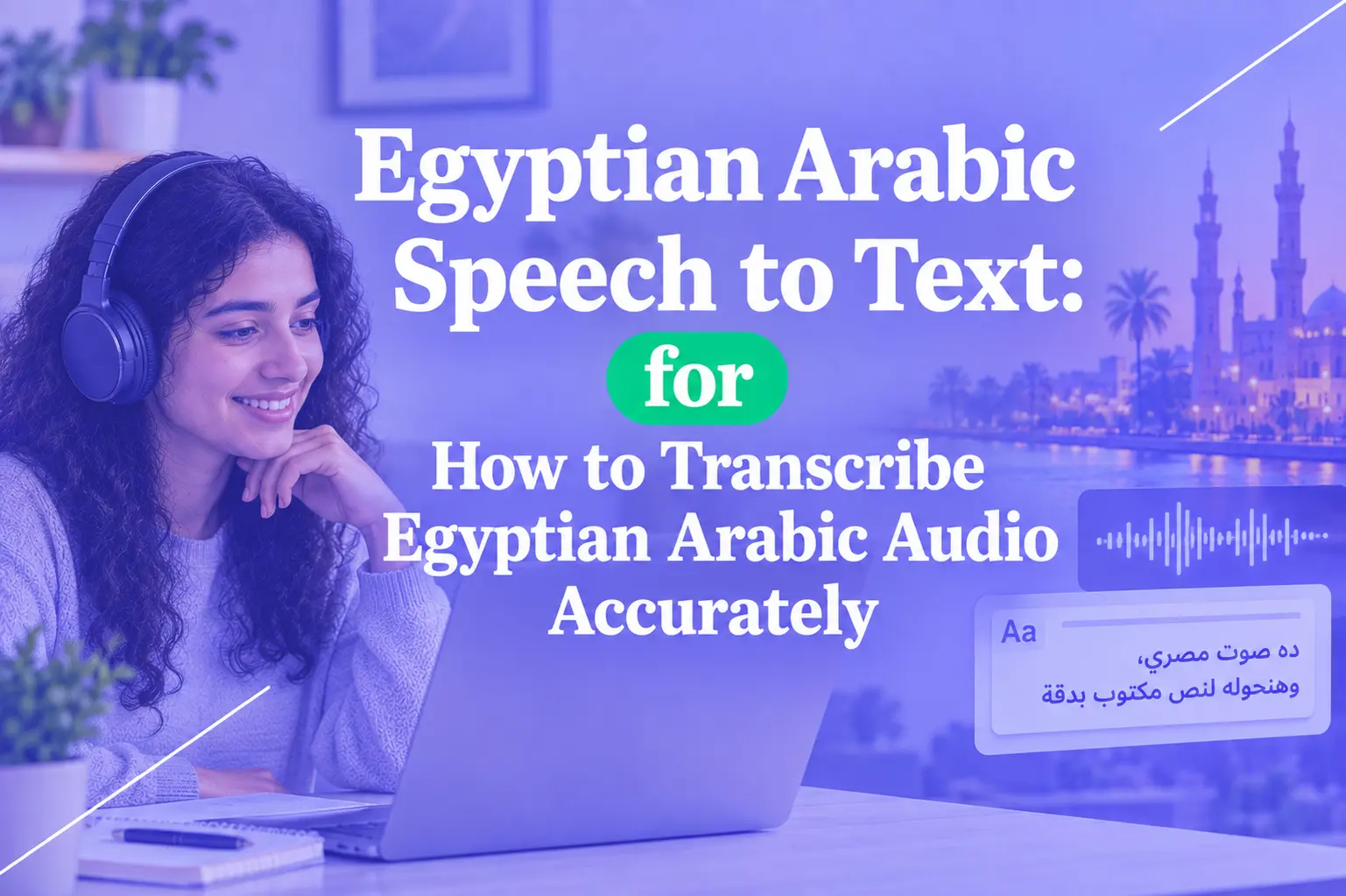
Egyptian Arabic is one of the more challenging Arabic dialects for speech-to-text because it differs significantly from MSA in pronunciation, vocabulary, speech patterns, and frequent Arabic-English code-switching. These differences mean that a platform supporting “Arabic” does not necessarily provide accurate transcription of everyday Egyptian speech.
Choosing an Egyptian Arabic transcription tool requires more than checking a language list. The guide recommends testing dialect-specific pronunciation, colloquial vocabulary, code-switched speech, and real-world audio conditions such as noisy calls and overlapping speakers.
This guide compares Egyptian Arabic coverage across major speech-to-text platforms, explains how to test transcription accuracy, explores use cases across customer service, media, research, meetings, and interviews, and covers UAE and Saudi compliance considerations


.webp)




.webp)





%20for%20Arabic%20Conversational%20AI%20%20%20.png)











.svg)
.svg)