


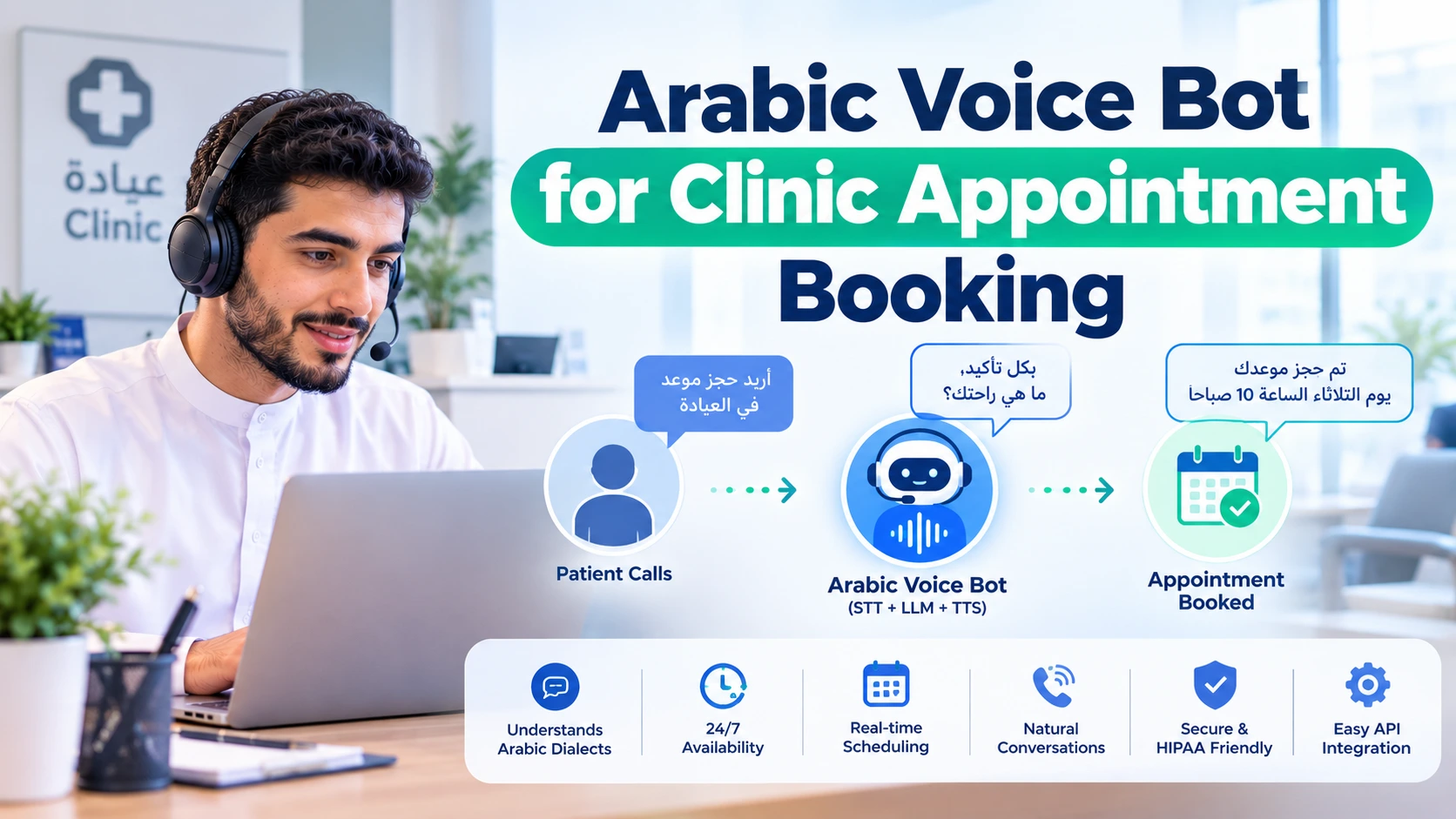


Key Takeaways
Appointment bots should focus on scheduling tasks: They should reliably handle booking, rescheduling, cancellations, confirmations, and reminders rather than attempting medical triage or providing medical advice.
Arabic dialect support is essential: Patients may use Gulf, Egyptian, Levantine, or other Arabic varieties and may switch to English when sharing names, insurance numbers, or identification details.
The bot needs access to real appointment availability: Connecting the voice interface to the clinic’s calendar, practice-management system, or EHR is essential for making the solution useful in production.
Healthcare voice bots require stronger compliance controls: UAE and Saudi healthcare deployments must account for health-data processing, storage, consent, access, and data-flow requirements.
The article explains how an Arabic voice bot can help clinics manage appointment booking, rescheduling, cancellations, and reminder calls while handling the dialect and code-switching challenges common among Arabic-speaking patients. It also highlights why the bot must integrate with a clinic’s scheduling system and have a clear handoff to human staff for anything beyond basic appointment logistics.


.webp)



.webp)










.webp)













%20for%20Arabic%20Conversational%20AI%20%20%20.png)












.svg)
.svg)