Munsit’s content-focused tools map fairly directly onto the short-form use cases above from a quick text-to-speech line for a caption read to a full voice-over and dubbing workflow for a branded campaign.
Turning a script into a TikTok voice over with Munsit Studio
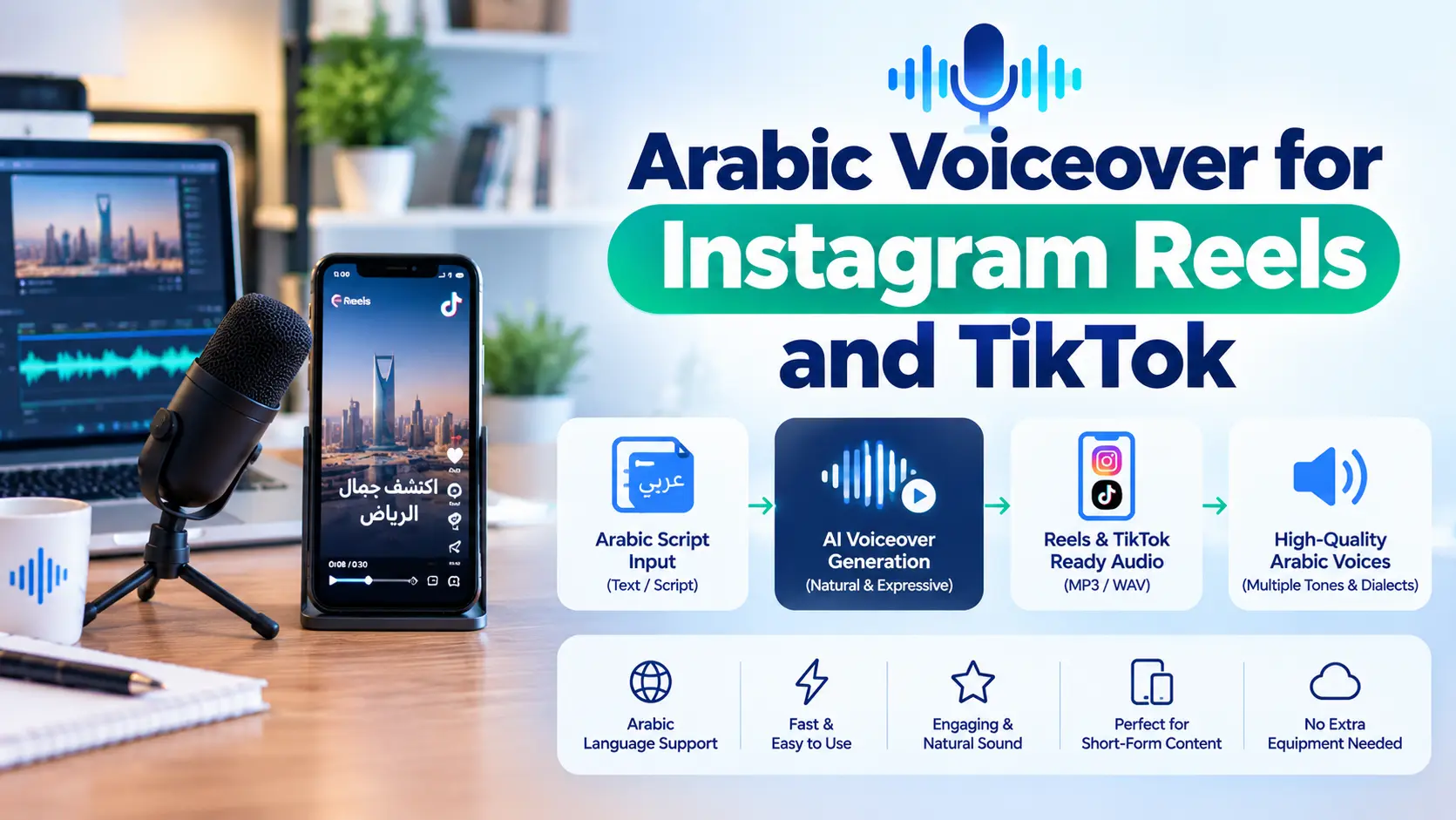
A creator writes a 30-second script for a product review, picks an Emirati or Saudi dialect voice, sets a fast, energetic pace, and previews the generated voice over directly against their TikTok draft in-browser with no separate voice generation software or editing timeline required. The same workflow works for an Instagram Reel caption-to-voice read, a listicle-style “5 things” video, or a quick reaction clip.
Dubbing an existing video for Instagram Reels
A media team has an English-language explainer or a trending international clip they want to repost for an Arabic-speaking audience. Munsit Dubbing takes the video or a link, detects speakers and language automatically, and dubs it into Gulf, Egyptian, Levantine, or MSA Arabic while preserving the original timing and delivery so the dubbed Reel still cuts and lands on-beat the way the source video did, rather than needing a manual re-sync.
Cloning a creator’s own voice for consistent short-form content
A creator posting daily wants every TikTok to sound like them, not a rotating cast of stock text-to-speech voices. Cloning their voice once means every future script and every quick fix to a flubbed line comes out in a recognizably consistent voice without re-recording or booking studio time per clip.
Turning a caption, article, or blog post into a narrated Reel
A brand or publisher has written content (a blog post, a set of product captions) they want to repurpose as voiced video rather than writing a separate script from scratch. Munsit’s audio narratives feature takes that existing text and narrates it naturally, which a creator can then pair with footage or a simple visual template for Instagram or TikTok.
Building Arabic voice generation directly into a content pipeline
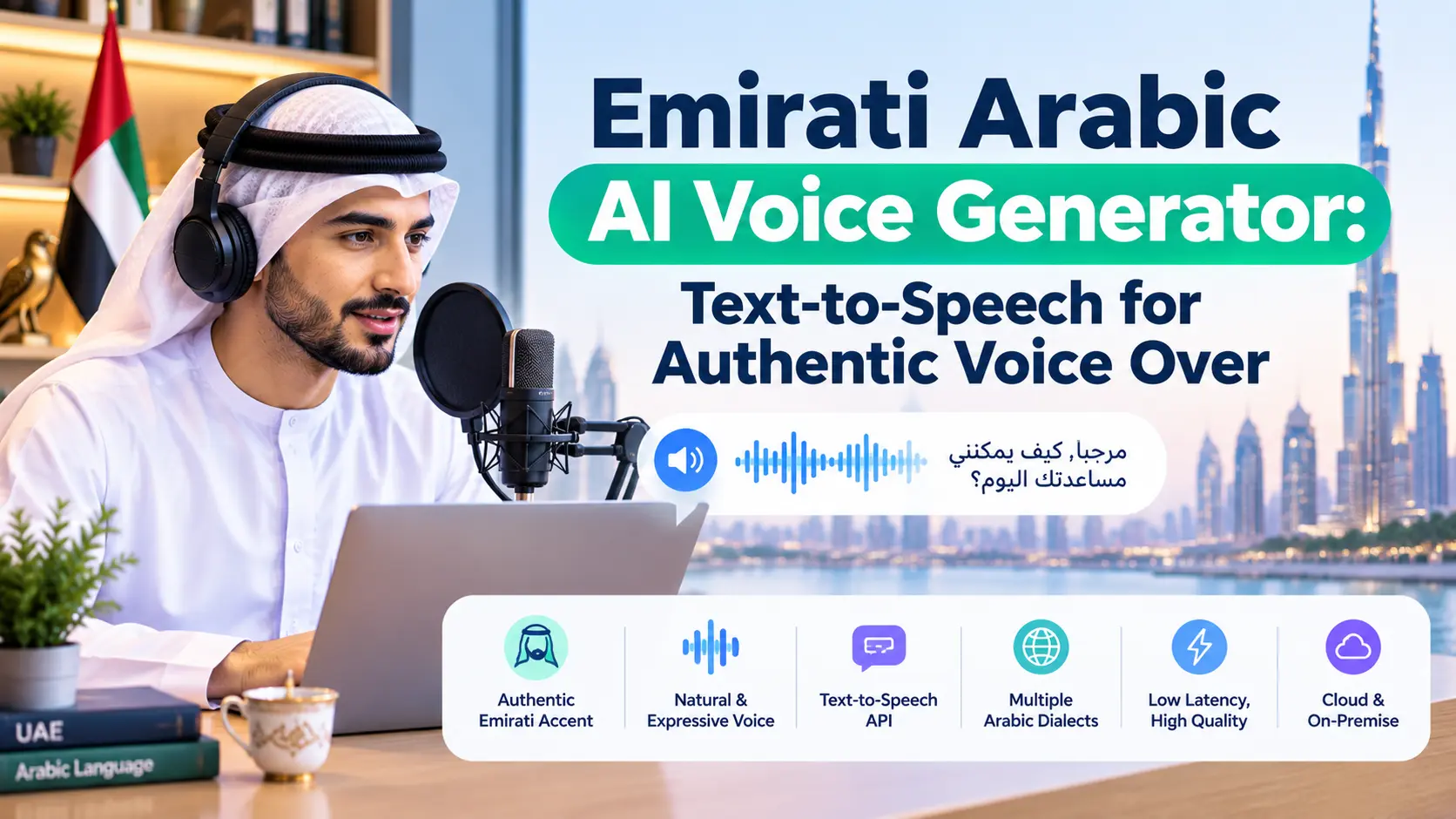
For teams generating voice over at volume a social team producing dozens of dialect-specific Reels a week, or a platform letting its own users generate Arabic text-to-speech clips the same voice generation capability is available over API rather than through the Studio interface:
POST https://api.munsit.com/v1/text-to-speech
{
"text": "أهلاً وسهلاً بكم",
"voice_id": "majed_emirati_male",
"dialect": "gulf",
"speed": 1.0
}
Munsit’s voice library includes dialect- and role-specific options rather than one generic Arabic voice for example, a clear, strong “news anchor” style voice suited to announcements, alongside a calmer, measured “brand narrator” style suited to product voice overs letting the voice match the actual content type (comedy, announcement, product ad, documentary-style explainer) rather than using the same read for everything.
Two more pieces round out the short-form workflow specifically: automatic voice-to-video sync, which times the generated voice over to match footage without manual nudging on every clip, and voice isolation plus sound effects, which cleans up noisy UGC source audio (a phone-recorded voice memo, a noisy street) and fills in ambient sound or transitions without separate licensing both relevant to creators working from rough, real-world source material rather than studio-recorded audio.






.webp)
.webp)
.webp)





%20for%20Arabic%20Conversational%20AI%20%20%20.png)








.svg)
.svg)