
لتر 5 دقيقة

Arabic Voice Bot for Clinic Appointment Booking: What It Takes to Build One

المؤلف

تعزيز المستقبل باستخدام الذكاء الاصطناعي

انضم إلى النشرة الإخبارية للحصول على رؤى حول أحدث التقنيات المبنية في الإمارات العربية المتحدة

الوجبات السريعة الرئيسية

1

Appointment bots should focus on scheduling tasks: They should reliably handle booking, rescheduling, cancellations, confirmations, and reminders rather than attempting medical triage or providing medical advice.

2

Arabic dialect support is essential: Patients may use Gulf, Egyptian, Levantine, or other Arabic varieties and may switch to English when sharing names, insurance numbers, or identification details.

3

The bot needs access to real appointment availability: Connecting the voice interface to the clinic’s calendar, practice-management system, or EHR is essential for making the solution useful in production.

4

Healthcare voice bots require stronger compliance controls: UAE and Saudi healthcare deployments must account for health-data processing, storage, consent, access, and data-flow requirements.

The article explains how an Arabic voice bot can help clinics manage appointment booking, rescheduling, cancellations, and reminder calls while handling the dialect and code-switching challenges common among Arabic-speaking patients. It also highlights why the bot must integrate with a clinic’s scheduling system and have a clear handoff to human staff for anything beyond basic appointment logistics.


Arabic Voice Bot for Clinic Appointment Booking

A 2026 study out of the University of Texas at Arlington, run at an outpatient clinic in the Rio Grande Valley, found something simple: calling patients three to five days before their appointment  instead of the usual one day  cut the no-show rate from 29% to 21% over the study period, saving the clinic roughly $5,200 in lost revenue from just 653 visits. The mechanism wasn’t complicated; earlier notice gave patients time to arrange transport, complete pre-visit lab work, or simply remember the appointment exists. It’s a useful reminder that appointment booking and reminder calls are not an administrative afterthought; they’re a measurable lever on whether a clinic’s schedule actually fills.

For Arabic-speaking patients, that lever is harder to pull with off-the-shelf tools. A recent industry roundup of the leading AI voice agents for clinic and healthcare appointment scheduling  Retell AI, Hyro, Vapi, Bland AI, Kore.ai, Nuance, Google Dialogflow CX, and Amazon Lex  doesn’t mention Arabic or MENA-region support for any of the eight. That’s not unusual for this category: scheduling bots built and tuned for English-language US and European clinics don’t automatically handle an Arabic Voice AI interaction with a patient calling in a Gulf or Egyptian dialect, switching to English mid-sentence to read out an insurance number, or asking a question the bot needs to recognize it can’t safely answer.

‍

This is some text inside of a div block.

What a Clinic Appointment-Booking Bot Actually Needs to Do

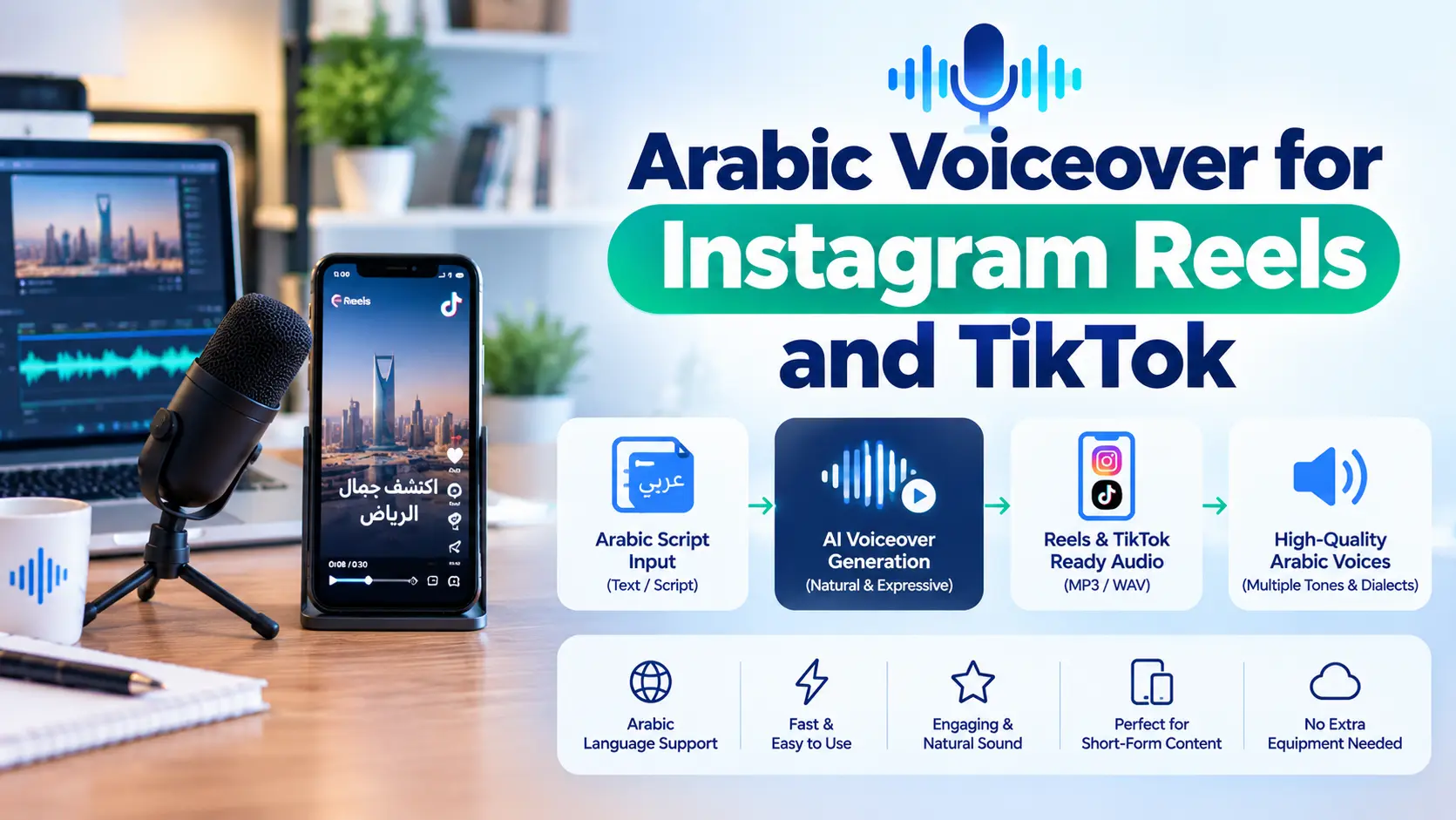
Book, reschedule, and cancel  the three core intents, recognized reliably across however a patient phrases them, not just a narrow set of scripted commands.
‍

•Confirm patient identity against existing records (name, date of birth, phone number) before discussing or changing any appointment, since appointment details themselves are patient data.
‍

•Handle dialect and code-switching naturally. A patient may give their name in English, describe their complaint in Gulf or Egyptian Arabic, and read out an Emirates ID or insurance number as a mix of both  this is the same code-switching challenge covered elsewhere in Arabic voice AI, but higher-stakes here because a misheard date or ID number means a missed or wrong appointment.
‍

•Send and schedule reminder calls  the exact lever the UTA study measured, and a natural fit for an outbound voice bot rather than requiring staff to place every reminder call manually.
‍

•Know its own limits. A scheduling bot should handle logistics  booking, timing, location, provider availability  and explicitly should not attempt to triage symptoms, give medical advice, or interpret test results. Every clinic deployment needs a clear, fast escalation path to a human for anything outside scheduling, including genuine urgency.
‍

•Work after hours, when a meaningful share of call volume for any clinic actually arrives, without needing staff on the line.
‍

•Integrate with the clinic’s actual scheduling system  a calendar, practice management software, or EHR  since a bot that can talk fluently but can’t see real appointment slots isn’t usable in production.

‍

This is some text inside of a div block.

Heading

Lorem ipsum dolor sit amet, consectetur adipiscing elit. Suspendisse varius enim in eros elementum tristique. Duis cursus, mi quis viverra ornare, eros dolor interdum nulla, ut commodo diam libero vitae erat. Aenean faucibus nibh et justo cursus id rutrum lorem imperdiet. Nunc ut sem vitae risus tristique posuere.

Lorem ipsum dolor sit amet, consectetur adipiscing elit. Suspendisse varius enim in eros elementum tristique. Duis cursus, mi quis viverra ornare, eros dolor interdum nulla, ut commodo diam libero vitae erat. Aenean faucibus nibh et justo cursus id rutrum lorem imperdiet. Nunc ut sem vitae risus tristique posuere.

Lorem ipsum dolor sit amet, consectetur adipiscing elit. Suspendisse varius enim in eros elementum tristique. Duis cursus, mi quis viverra ornare, eros dolor interdum nulla, ut commodo diam libero vitae erat. Aenean faucibus nibh et justo cursus id rutrum lorem imperdiet. Nunc ut sem vitae risus tristique posuere.

Lorem ipsum dolor sit amet, consectetur adipiscing elit. Suspendisse varius enim in eros elementum tristique. Duis cursus, mi quis viverra ornare, eros dolor interdum nulla, ut commodo diam libero vitae erat. Aenean faucibus nibh et justo cursus id rutrum lorem imperdiet. Nunc ut sem vitae risus tristique posuere.

Why This Is a Harder Problem in the UAE and Saudi Arabia Specifically Than It Looks

Roughly 88% of the UAE’s resident population is expatriate, per Khaleej Times’ reporting on UAE census figures meaning a clinic’s patient base is often multilingual by default, with Arabic-speaking patients themselves spanning MSA, Gulf, Egyptian, Levantine, and other dialects depending on where they or their families are from. A scheduling bot tuned only to Modern Standard Arabic will handle a formal, scripted-sounding caller fine and then struggle with the dialect-heavy, code-switched speech that’s actually typical of a real phone call to a clinic reception desk.

The Compliance Layer Is Not Optional Here

Healthcare voice bots carry meaningfully stricter regulatory requirements than a general customer-service or retail voice agent, because appointment data is health data the moment it’s tied to a patient and a provider, not just personal data in the general PDPL sense.
‍

UAE: health data cannot leave the country. The UAE’s Federal Law No. 2 of 2019 (Health Data Law) is stricter than the general PDPL on this specific point: health information connected to services provided in the UAE “may not be stored, processed, generated, or transferred outside the country” without health authority approval  a rule that applies across Dubai Health Authority (DHA), Abu Dhabi’s Department of Health (DOH), and the Ministry of Health and Prevention (MOHAP) for the Northern Emirates. This is a materially stricter standard than the general UAE PDPL covered in most Arabic voice AI compliance discussions, and it directly affects where a clinic voice bot’s speech processing can run  a cloud API processing audio outside UAE borders is a genuine legal problem here, not just a best-practice concern. DHA’s own telehealth standard (ST-14, version 4, effective November 2025) and DOH’s ADHICS v2.0 framework both operate under this same data-residency baseline.
‍

Saudi Arabia: health data is explicitly “sensitive data” under the PDPL, with extra obligations beyond general personal data  need-to-know access restrictions, data-minimization requirements (processing limited to what’s actually necessary for the healthcare service), and documented data-flow mapping, with SDAIA as the regulator overseeing implementation. Saudi healthcare organizations should also expect NPHIES and Ministry of Health-specific requirements to apply on top of the PDPL baseline, separate from the data protection law itself.
‍

Retention and consent rules add further requirements. The UAE’s Health Data Law also sets a minimum 25-year retention requirement for health records and requires patient consent before any third-party disclosure of health data  both relevant to how call recordings and transcripts from a clinic voice bot get stored and who can access them.
‍

This section provides general information, not legal advice. Consult qualified legal counsel and your clinic’s compliance officer before deploying any voice bot that touches patient data, given how much stricter healthcare-specific rules are than general data protection law in both jurisdictions.

‍

شاهد أداء Munsit في الكلام العربي الحقيقي

قم بتقييم تغطية اللهجة ومعالجة الضوضاء والنشر داخل المنطقة على البيانات التي تعكس عملائك.
اكتشف

How Munsit’s API Fits a Clinic Appointment-Booking Bot

Munsit doesn’t ship a calendar, a practice-management integration, or a scheduling UI  building the actual booking logic, EHR/calendar connection, and escalation workflow is still engineering work a clinic or its software vendor has to do. What Munsit’s documented API provides is the Arabic speech layer underneath that logic:
‍

•Speech-to-text and text-to-speech, with dialect handling across Gulf, Egyptian, and other regional varieties rather than an MSA-only model  directly relevant to the code-switching and dialect-diversity problem described above.
‍

•Voice-agent framework plugins for LiveKit and Pipecat (plus VAPI and Ultravox), which is the actual layer a clinic’s developers would use to wire Munsit’s STT and TTS into a conversational booking flow, alongside whatever LLM and calendar/EHR integration the bot needs.
‍

•Deployment options beyond a shared cloud API  Munsit documents sovereign VPC and on-premises deployment alongside its standard cloud API, which is the specific lever that matters most for UAE healthcare deployments given Federal Law No. 2 of 2019’s data-residency requirement. Confirm which deployment model keeps patient audio and derived transcripts within the required jurisdiction before assuming the standard cloud API satisfies a healthcare client’s compliance obligations  it may not, depending on where that API’s infrastructure is hosted.
‍

•Outbound as well as inbound calling support through the same voice-agent frameworks, relevant to the reminder-call use case the UTA study measured, rather than only handling inbound booking requests.
‍

The honest scope: Munsit is the voice layer, not the scheduling system. A clinic evaluating this needs a development team (in-house or a systems integrator) to connect that voice layer to an actual booking backend, and needs to separately confirm with Munsit which deployment option satisfies its specific DHA, DOH, MOHAP, or Saudi MOH/SDAIA obligations  that’s a conversation with Munsit directly and with the clinic’s own compliance counsel, not something this article can settle in the abstract.

‍

التعليمات

Should a clinic voice bot ever give medical advice?
Does UAE health data law really require in-country processing even for a simple appointment-booking bot?
Is a generic global scheduling bot (like the ones built for US clinics) usable for a UAE or Saudi clinic?

Powering the Future with AI

Join our newsletter for insights on cutting-edge technology built in the UAE
Thank you! Your submission has been received!
Oops! Something went wrong while submitting the form.
آخر تحديث:
October 6, 2026

Arabic Voice Bot for Clinic Appointment Booking: What It Takes to Build One

المؤلف
سارة تركي
زمن القراءة: 5 دقائق

اطرح أنظمة الذكاء الاصطناعي الصوتي العربي في بيئة الإنتاج الفعلي  للشركات (Production)

حلول تحويل الكلام إلى نص والنص إلى كلام باللغة العربية بمستويات  جودة ودقة أصلية كلياً تفوق النماذج العامة
بنية تحتية برمجية صُممت خصيصاً لتلبية أدق متطلبات حكومات ومؤسسات  كبرى دول مجلس التعاون الخليجي
خيارات استضافة مرنة تدعم خيار الاستضافة المحلية بالكامل والسحب  السيادية والوطنية المستقلة
احجز موعداً لعرض توضيحي واستشارة الخبراء لمؤسستك
شكرًا لك! لقد تم استلام طلبك!
عذرًا! حدث خطأ ما أثناء إرسال النموذج.

أبرز النقاط

Appointment bots should focus on scheduling tasks: They should reliably handle booking, rescheduling, cancellations, confirmations, and reminders rather than attempting medical triage or providing medical advice.

Arabic dialect support is essential: Patients may use Gulf, Egyptian, Levantine, or other Arabic varieties and may switch to English when sharing names, insurance numbers, or identification details.

The bot needs access to real appointment availability: Connecting the voice interface to the clinic’s calendar, practice-management system, or EHR is essential for making the solution useful in production.

Healthcare voice bots require stronger compliance controls: UAE and Saudi healthcare deployments must account for health-data processing, storage, consent, access, and data-flow requirements.

Munsit provides the Arabic voice layer: Its STT and TTS services can be integrated with frameworks such as LiveKit and Pipecat, while clinics still need to build the scheduling and backend workflows.

Deployment location can be critical: Munsit documents cloud, sovereign VPC, and on-premises options, which can be particularly relevant for UAE healthcare deployments with data-residency requirements

Reminder calls can be an important use case: The study cited in the article found that calling patients three to five days before an appointment reduced no-shows from 29% to 21% during the study period, although the result comes from one clinic and is not a universal guarantee.

The article explains how an Arabic voice bot can help clinics manage appointment booking, rescheduling, cancellations, and reminder calls while handling the dialect and code-switching challenges common among Arabic-speaking patients. It also highlights why the bot must integrate with a clinic’s scheduling system and have a clear handoff to human staff for anything beyond basic appointment logistics.
Arabic Voice Bot for Clinic Appointment Booking

A 2026 study out of the University of Texas at Arlington, run at an outpatient clinic in the Rio Grande Valley, found something simple: calling patients three to five days before their appointment  instead of the usual one day  cut the no-show rate from 29% to 21% over the study period, saving the clinic roughly $5,200 in lost revenue from just 653 visits. The mechanism wasn’t complicated; earlier notice gave patients time to arrange transport, complete pre-visit lab work, or simply remember the appointment exists. It’s a useful reminder that appointment booking and reminder calls are not an administrative afterthought; they’re a measurable lever on whether a clinic’s schedule actually fills.

For Arabic-speaking patients, that lever is harder to pull with off-the-shelf tools. A recent industry roundup of the leading AI voice agents for clinic and healthcare appointment scheduling  Retell AI, Hyro, Vapi, Bland AI, Kore.ai, Nuance, Google Dialogflow CX, and Amazon Lex  doesn’t mention Arabic or MENA-region support for any of the eight. That’s not unusual for this category: scheduling bots built and tuned for English-language US and European clinics don’t automatically handle an Arabic Voice AI interaction with a patient calling in a Gulf or Egyptian dialect, switching to English mid-sentence to read out an insurance number, or asking a question the bot needs to recognize it can’t safely answer.

‍

Lorem ipsum dolor
لوريم إيبسوم ألم
لوريم إيبسوم ألم
لوريم إيبسوم ألم
لوريم إيبسوم ألم
لوريم إيبسوم ألم
لوريم إيبسوم ألم
لوريم إيبسوم ألم
لوريم إيبسوم ألم
لوريم إيبسوم ألم
لوريم إيبسوم ألم
لوريم إيبسوم ألم
لوريم إيبسوم ألم
لوريم إيبسوم ألم
لوريم إيبسوم ألم
لوريم إيبسوم ألم
لوريم إيبسوم ألم
لوريم إيبسوم ألم
لوريم إيبسوم ألم
لوريم إيبسوم ألم
لوريم إيبسوم ألم
Lorem ipsum dolor
Lorem ipsum dolor
Lorem ipsum dolor
Lorem ipsum dolor
Lorem ipsum dolor
Lorem ipsum dolor
Lorem ipsum dolor
Lorem ipsum dolor
Lorem ipsum dolor
Lorem ipsum dolor
Lorem ipsum dolor

What a Clinic Appointment-Booking Bot Actually Needs to Do

فهم أصول هلوسات الذكاء الاصطناعي هو الخطوة الأولى نحو التخفيف منها. هذه الظاهرة ليست مشكلة واحدة، بل هي قضية معقدة ذات عوامل متعددة تساهم فيها.

1

أوجه القصور في بيانات التدريب

Book, reschedule, and cancel  the three core intents, recognized reliably across however a patient phrases them, not just a narrow set of scripted commands.
‍

•Confirm patient identity against existing records (name, date of birth, phone number) before discussing or changing any appointment, since appointment details themselves are patient data.
‍

•Handle dialect and code-switching naturally. A patient may give their name in English, describe their complaint in Gulf or Egyptian Arabic, and read out an Emirates ID or insurance number as a mix of both  this is the same code-switching challenge covered elsewhere in Arabic voice AI, but higher-stakes here because a misheard date or ID number means a missed or wrong appointment.
‍

•Send and schedule reminder calls  the exact lever the UTA study measured, and a natural fit for an outbound voice bot rather than requiring staff to place every reminder call manually.
‍

•Know its own limits. A scheduling bot should handle logistics  booking, timing, location, provider availability  and explicitly should not attempt to triage symptoms, give medical advice, or interpret test results. Every clinic deployment needs a clear, fast escalation path to a human for anything outside scheduling, including genuine urgency.
‍

•Work after hours, when a meaningful share of call volume for any clinic actually arrives, without needing staff on the line.
‍

•Integrate with the clinic’s actual scheduling system  a calendar, practice management software, or EHR  since a bot that can talk fluently but can’t see real appointment slots isn’t usable in production.

‍

2

أوجه القصور في بيانات التدريب

العامل الأكثر أهمية في هلوسات الذكاء الاصطناعي هو البيانات التي تُدرّب عليها النماذج. تتعلم النماذج اللغوية الكبيرة (LLMs) من مجموعات بيانات ضخمة مجمعة من الإنترنت، والتي تحتوي على مزيج من المعلومات الواقعية والآراء والمعلومات المضللة والتحيزات. يمكن أن تؤدي العديد من المشكلات المحددة المتعلقة بالبيانات إلى الهلوسات:

حالات استخدام الذكاء الاصطناعي الصوتي العربي في الشركات لعام 2025

يفتح التحول نحو أنظمة التعرف التلقائي على الكلام (ASR) العربية التي تراعي اللهجات، آفاقاً جديدة لتطبيقات الشركات في جميع أنحاء منطقة الخليج والشرق الأوسط وشمال إفريقيا. تتجاوز المؤسسات الآن النسخ الأساسي لتصل إلى تحليلات كلام عربية متطورة.

تشهد تقنية الكلام العربية تطوراً سريعاً في عام 2025، مدفوعة بالنماذج اللغوية الضخمة متعددة اللغات والنماذج الأساسية الجديدة التي تركز على اللغة العربية.

تتقدم تقنية الكلام العربية بسرعة في عام 2025، مدفوعة بالنماذج اللغوية الضخمة متعددة اللغات ونماذج الأساس الجديدة المرتكزة على اللغة العربية.

تتقدم تقنية الكلام العربية بسرعة في عام 2025، مدفوعة بالنماذج اللغوية الضخمة متعددة اللغات ونماذج الأساس الجديدة المرتكزة على اللغة العربية.

تتقدم تقنية الكلام العربية بسرعة في عام 2025، مدفوعة بالنماذج اللغوية الضخمة متعددة اللغات ونماذج الأساس الجديدة المرتكزة على اللغة العربية.

Why This Is a Harder Problem in the UAE and Saudi Arabia Specifically Than It Looks

فهم أصول هلوسات الذكاء الاصطناعي هو الخطوة الأولى نحو التخفيف منها. هذه الظاهرة ليست مشكلة واحدة بل هي قضية معقدة ذات عوامل متعددة تساهم فيها.

1

أوجه القصور في بيانات التدريب

Roughly 88% of the UAE’s resident population is expatriate, per Khaleej Times’ reporting on UAE census figures meaning a clinic’s patient base is often multilingual by default, with Arabic-speaking patients themselves spanning MSA, Gulf, Egyptian, Levantine, and other dialects depending on where they or their families are from. A scheduling bot tuned only to Modern Standard Arabic will handle a formal, scripted-sounding caller fine and then struggle with the dialect-heavy, code-switched speech that’s actually typical of a real phone call to a clinic reception desk.

2

أوجه القصور في بيانات التدريب

أكبر عامل مساهم في هلوسات الذكاء الاصطناعي هو البيانات التي تُدرب عليها النماذج. تتعلم نماذج اللغة الكبيرة (LLMs) من مجموعات بيانات ضخمة مجمعة من الإنترنت، والتي تحتوي على مزيج من المعلومات الواقعية والآراء والمعلومات المضللة والتحيزات. يمكن أن تؤدي العديد من المشكلات المحددة المتعلقة بالبيانات إلى الهلوسات:

حالات استخدام المؤسسات للذكاء الاصطناعي الصوتي العربي في عام 2025

يفتح الانتقال إلى أنظمة التعرف التلقائي على الكلام (ASR) العربية المدركة للهجات موجة جديدة من تطبيقات المؤسسات عبر مناطق مجلس التعاون الخليجي والشرق الأوسط وشمال إفريقيا. تتجاوز المؤسسات الآن النسخ الأساسي لتصل إلى تحليلات الكلام العربية المتطورة.

تتقدم تقنية الكلام العربية بسرعة في عام 2025، مدفوعة بالنماذج اللغوية الضخمة متعددة اللغات ونماذج الأساس الجديدة المرتكزة على اللغة العربية.

تتقدم تقنية الكلام العربية بسرعة في عام 2025، مدفوعة بالنماذج اللغوية الضخمة متعددة اللغات ونماذج الأساس الجديدة المرتكزة على اللغة العربية.

تتقدم تقنية الكلام العربية بسرعة في عام 2025، مدفوعة بالنماذج اللغوية الضخمة متعددة اللغات ونماذج الأساس الجديدة المرتكزة على اللغة العربية.

تتقدم تقنية الكلام العربية بسرعة في عام 2025، مدفوعة بالنماذج اللغوية الضخمة متعددة اللغات ونماذج الأساس الجديدة المرتكزة على اللغة العربية.

بناء وهندسة أنظمة ذكاء اصطناعي صوتي فائقة الكفاءة يتطلب حتماً  اعتماد المنهجية العلمية الصحيحة

نحن في شركة CNTXT AI نساعدك باحترافية في تصميم وهندسة حلول صوتية  مخصصة ومطابقة لأعمالك، وبناء وإدارة مسارات تدفق البيانات (Data Pipelines)  المتقدمة، وتأمين وصول منتجاتك لقمة تطبيقات الذكاء الاصطناعي العربي المتطور  والآمن كلياً.

The Compliance Layer Is Not Optional Here

فهم أصول هلوسات الذكاء الاصطناعي هو الخطوة الأولى نحو التخفيف منها. هذه الظاهرة ليست مشكلة واحدة بل هي قضية معقدة ذات عوامل متعددة تساهم فيها.

1

أوجه القصور في بيانات التدريب

Healthcare voice bots carry meaningfully stricter regulatory requirements than a general customer-service or retail voice agent, because appointment data is health data the moment it’s tied to a patient and a provider, not just personal data in the general PDPL sense.
‍

UAE: health data cannot leave the country. The UAE’s Federal Law No. 2 of 2019 (Health Data Law) is stricter than the general PDPL on this specific point: health information connected to services provided in the UAE “may not be stored, processed, generated, or transferred outside the country” without health authority approval  a rule that applies across Dubai Health Authority (DHA), Abu Dhabi’s Department of Health (DOH), and the Ministry of Health and Prevention (MOHAP) for the Northern Emirates. This is a materially stricter standard than the general UAE PDPL covered in most Arabic voice AI compliance discussions, and it directly affects where a clinic voice bot’s speech processing can run  a cloud API processing audio outside UAE borders is a genuine legal problem here, not just a best-practice concern. DHA’s own telehealth standard (ST-14, version 4, effective November 2025) and DOH’s ADHICS v2.0 framework both operate under this same data-residency baseline.
‍

Saudi Arabia: health data is explicitly “sensitive data” under the PDPL, with extra obligations beyond general personal data  need-to-know access restrictions, data-minimization requirements (processing limited to what’s actually necessary for the healthcare service), and documented data-flow mapping, with SDAIA as the regulator overseeing implementation. Saudi healthcare organizations should also expect NPHIES and Ministry of Health-specific requirements to apply on top of the PDPL baseline, separate from the data protection law itself.
‍

Retention and consent rules add further requirements. The UAE’s Health Data Law also sets a minimum 25-year retention requirement for health records and requires patient consent before any third-party disclosure of health data  both relevant to how call recordings and transcripts from a clinic voice bot get stored and who can access them.
‍

This section provides general information, not legal advice. Consult qualified legal counsel and your clinic’s compliance officer before deploying any voice bot that touches patient data, given how much stricter healthcare-specific rules are than general data protection law in both jurisdictions.

‍

2

أوجه القصور في بيانات التدريب

المساهم الأكبر في هلوسات الذكاء الاصطناعي هو البيانات التي تُدرّب عليها النماذج. تتعلم النماذج اللغوية الكبيرة (LLMs) من مجموعات بيانات ضخمة مجمعة من الإنترنت، والتي تحتوي على مزيج من المعلومات الواقعية والآراء والمعلومات المضللة والتحيزات. يمكن أن تؤدي عدة مشكلات محددة متعلقة بالبيانات إلى الهلوسات:

حالات الاستخدام المؤسسية للذكاء الاصطناعي الصوتي العربي في عام 2025

يفتح الانتقال إلى تقنية التعرف التلقائي على الكلام (ASR) للغة العربية المدركة للهجات آفاقًا جديدة لتطبيقات الشركات في جميع أنحاء منطقة الخليج والشرق الأوسط وشمال إفريقيا. تتجاوز المؤسسات النسخ الأساسي لتصل إلى تحليلات الكلام العربية المتطورة.

تتطور تقنية الكلام العربية بسرعة في عام 2025، مدفوعة بالنماذج اللغوية الضخمة متعددة اللغات والنماذج التأسيسية الجديدة المرتكزة على اللغة العربية.

تتطور تقنية الكلام العربية بسرعة في عام 2025، مدفوعة بالنماذج اللغوية الضخمة متعددة اللغات والنماذج التأسيسية الجديدة المرتكزة على اللغة العربية.

تتطور تقنية الكلام العربية بسرعة في عام 2025، مدفوعة بالنماذج اللغوية الضخمة متعددة اللغات والنماذج التأسيسية الجديدة المرتكزة على اللغة العربية.

تتطور تقنية الكلام العربية بسرعة في عام 2025، مدفوعة بالنماذج اللغوية الضخمة متعددة اللغات والنماذج التأسيسية الجديدة المرتكزة على اللغة العربية.

How Munsit’s API Fits a Clinic Appointment-Booking Bot

يُعد فهم أصول هلوسات الذكاء الاصطناعي الخطوة الأولى نحو التخفيف منها. هذه الظاهرة ليست مشكلة واحدة بل قضية معقدة ذات عوامل متعددة تساهم فيها.

1

أوجه القصور في بيانات التدريب

Munsit doesn’t ship a calendar, a practice-management integration, or a scheduling UI  building the actual booking logic, EHR/calendar connection, and escalation workflow is still engineering work a clinic or its software vendor has to do. What Munsit’s documented API provides is the Arabic speech layer underneath that logic:
‍

•Speech-to-text and text-to-speech, with dialect handling across Gulf, Egyptian, and other regional varieties rather than an MSA-only model  directly relevant to the code-switching and dialect-diversity problem described above.
‍

•Voice-agent framework plugins for LiveKit and Pipecat (plus VAPI and Ultravox), which is the actual layer a clinic’s developers would use to wire Munsit’s STT and TTS into a conversational booking flow, alongside whatever LLM and calendar/EHR integration the bot needs.
‍

•Deployment options beyond a shared cloud API  Munsit documents sovereign VPC and on-premises deployment alongside its standard cloud API, which is the specific lever that matters most for UAE healthcare deployments given Federal Law No. 2 of 2019’s data-residency requirement. Confirm which deployment model keeps patient audio and derived transcripts within the required jurisdiction before assuming the standard cloud API satisfies a healthcare client’s compliance obligations  it may not, depending on where that API’s infrastructure is hosted.
‍

•Outbound as well as inbound calling support through the same voice-agent frameworks, relevant to the reminder-call use case the UTA study measured, rather than only handling inbound booking requests.
‍

The honest scope: Munsit is the voice layer, not the scheduling system. A clinic evaluating this needs a development team (in-house or a systems integrator) to connect that voice layer to an actual booking backend, and needs to separately confirm with Munsit which deployment option satisfies its specific DHA, DOH, MOHAP, or Saudi MOH/SDAIA obligations  that’s a conversation with Munsit directly and with the clinic’s own compliance counsel, not something this article can settle in the abstract.

‍

2

أوجه القصور في بيانات التدريب

المساهم الأكبر في هلوسات الذكاء الاصطناعي هو البيانات التي تُدرّب عليها النماذج. تتعلم النماذج اللغوية الكبيرة (LLMs) من مجموعات بيانات ضخمة مجمعة من الإنترنت، والتي تحتوي على مزيج من المعلومات الواقعية والآراء والمعلومات المضللة والتحيزات. يمكن أن تؤدي عدة مشكلات محددة متعلقة بالبيانات إلى الهلوسات:

حالات الاستخدام المؤسسية للذكاء الاصطناعي الصوتي العربي في عام 2025

يفتح الانتقال إلى تقنية التعرف التلقائي على الكلام (ASR) للغة العربية المدركة للهجات آفاقًا جديدة لتطبيقات الشركات في جميع أنحاء منطقة الخليج والشرق الأوسط وشمال إفريقيا. تتجاوز المؤسسات النسخ الأساسي لتصل إلى تحليلات الكلام العربية المتطورة.

تتطور تقنية الكلام العربية بسرعة في عام 2025، مدفوعة بالنماذج اللغوية الضخمة متعددة اللغات والنماذج التأسيسية الجديدة المرتكزة على اللغة العربية.

تتطور تقنية الكلام العربية بسرعة في عام 2025، مدفوعة بالنماذج اللغوية الضخمة متعددة اللغات والنماذج التأسيسية الجديدة المرتكزة على اللغة العربية.

تتقدم تقنية الكلام العربية بسرعة في عام 2025، مدفوعة بالنماذج اللغوية المتعددة الضخمة والنماذج التأسيسية الجديدة المرتكزة على اللغة العربية.

تتقدم تقنية الكلام العربية بسرعة في عام 2025، مدفوعة بالنماذج اللغوية المتعددة الضخمة والنماذج التأسيسية الجديدة المرتكزة على اللغة العربية.

Understanding the origins of AI hallucinations is the first step toward mitigating them. The phenomenon is not a single problem but rather a complex issue with multiple contributing factors.

1

Training Data Deficiencies

2

Training Data Deficiencies

The most significant contributor to AI hallucinations is the data on which the models are trained. LLMs learn from vast datasets scraped from the internet, which contain a mixture of factual information, opinions, misinformation, and biases. Several specific data-related issues can lead to hallucinations:

Enterprise Use Cases for Arabic Voice AI in 2025

The move to dialect-aware Arabic ASR is unlocking a new wave of enterprise applications across the GCC and MENA regions. Organizations are moving beyond basic transcription to sophisticated Arabic speech analytics.

Arabic speech technology is rapidly advancing in 2025, driven by massive multilingual models and new Arabic-centric foundation models.

Arabic speech technology is rapidly advancing in 2025, driven by massive multilingual models and new Arabic-centric foundation models.

Arabic speech technology is rapidly advancing in 2025, driven by massive multilingual models and new Arabic-centric foundation models.

Arabic speech technology is rapidly advancing in 2025, driven by massive multilingual models and new Arabic-centric foundation models.

Understanding the origins of AI hallucinations is the first step toward mitigating them. The phenomenon is not a single problem but rather a complex issue with multiple contributing factors.

1

Training Data Deficiencies

2

Training Data Deficiencies

The most significant contributor to AI hallucinations is the data on which the models are trained. LLMs learn from vast datasets scraped from the internet, which contain a mixture of factual information, opinions, misinformation, and biases. Several specific data-related issues can lead to hallucinations:

Enterprise Use Cases for Arabic Voice AI in 2025

The move to dialect-aware Arabic ASR is unlocking a new wave of enterprise applications across the GCC and MENA regions. Organizations are moving beyond basic transcription to sophisticated Arabic speech analytics.

Arabic speech technology is rapidly advancing in 2025, driven by massive multilingual models and new Arabic-centric foundation models.

Arabic speech technology is rapidly advancing in 2025, driven by massive multilingual models and new Arabic-centric foundation models.

Arabic speech technology is rapidly advancing in 2025, driven by massive multilingual models and new Arabic-centric foundation models.

Arabic speech technology is rapidly advancing in 2025, driven by massive multilingual models and new Arabic-centric foundation models.

Understanding the origins of AI hallucinations is the first step toward mitigating them. The phenomenon is not a single problem but rather a complex issue with multiple contributing factors.

1

Training Data Deficiencies

2

Training Data Deficiencies

The most significant contributor to AI hallucinations is the data on which the models are trained. LLMs learn from vast datasets scraped from the internet, which contain a mixture of factual information, opinions, misinformation, and biases. Several specific data-related issues can lead to hallucinations:

Enterprise Use Cases for Arabic Voice AI in 2025

The move to dialect-aware Arabic ASR is unlocking a new wave of enterprise applications across the GCC and MENA regions. Organizations are moving beyond basic transcription to sophisticated Arabic speech analytics.

Arabic speech technology is rapidly advancing in 2025, driven by massive multilingual models and new Arabic-centric foundation models.

Arabic speech technology is rapidly advancing in 2025, driven by massive multilingual models and new Arabic-centric foundation models.

Arabic speech technology is rapidly advancing in 2025, driven by massive multilingual models and new Arabic-centric foundation models.

Arabic speech technology is rapidly advancing in 2025, driven by massive multilingual models and new Arabic-centric foundation models.

Understanding the origins of AI hallucinations is the first step toward mitigating them. The phenomenon is not a single problem but rather a complex issue with multiple contributing factors.

1

Training Data Deficiencies

2

Training Data Deficiencies

The most significant contributor to AI hallucinations is the data on which the models are trained. LLMs learn from vast datasets scraped from the internet, which contain a mixture of factual information, opinions, misinformation, and biases. Several specific data-related issues can lead to hallucinations:

Enterprise Use Cases for Arabic Voice AI in 2025

The move to dialect-aware Arabic ASR is unlocking a new wave of enterprise applications across the GCC and MENA regions. Organizations are moving beyond basic transcription to sophisticated Arabic speech analytics.

Arabic speech technology is rapidly advancing in 2025, driven by massive multilingual models and new Arabic-centric foundation models.

Arabic speech technology is rapidly advancing in 2025, driven by massive multilingual models and new Arabic-centric foundation models.

Arabic speech technology is rapidly advancing in 2025, driven by massive multilingual models and new Arabic-centric foundation models.

Arabic speech technology is rapidly advancing in 2025, driven by massive multilingual models and new Arabic-centric foundation models.

Understanding the origins of AI hallucinations is the first step toward mitigating them. The phenomenon is not a single problem but rather a complex issue with multiple contributing factors.

1

Training Data Deficiencies

2

Training Data Deficiencies

The most significant contributor to AI hallucinations is the data on which the models are trained. LLMs learn from vast datasets scraped from the internet, which contain a mixture of factual information, opinions, misinformation, and biases. Several specific data-related issues can lead to hallucinations:

Enterprise Use Cases for Arabic Voice AI in 2025

The move to dialect-aware Arabic ASR is unlocking a new wave of enterprise applications across the GCC and MENA regions. Organizations are moving beyond basic transcription to sophisticated Arabic speech analytics.

Arabic speech technology is rapidly advancing in 2025, driven by massive multilingual models and new Arabic-centric foundation models.

Arabic speech technology is rapidly advancing in 2025, driven by massive multilingual models and new Arabic-centric foundation models.

Arabic speech technology is rapidly advancing in 2025, driven by massive multilingual models and new Arabic-centric foundation models.

Arabic speech technology is rapidly advancing in 2025, driven by massive multilingual models and new Arabic-centric foundation models.

الأسئلة الشائعة وإرشادات التشغيل للمؤسسات الإعلامية
Should a clinic voice bot ever give medical advice?
Does UAE health data law really require in-country processing even for a simple appointment-booking bot?
Is a generic global scheduling bot (like the ones built for US clinics) usable for a UAE or Saudi clinic?
How much does a reminder-call program actually move the needle on no-shows?

اجعل الذكاء الاصطناعي الصوتي العربي جاهزًا للإنتاج

تقنية تحويل الكلام إلى نص (STT) والنص إلى كلام (TTS) باللغة العربية بمستوى أصلي
مصمم لحكومات وشركات دول مجلس التعاون الخليجي
نشر سيادي ومحلي
احجز عرضًا توضيحيًا
شكرًا لك! تم استلام طلبك بنجاح!
عذرًا! حدث خطأ ما أثناء إرسال النموذج.

ابدأ مجاناً الآن كلياً... وادفع بمرونة عندما تكون مستعداً  للانطلاق الحقيقي.

10,000 رصيد مجاني فوري بانتظارك. اختبر كفاءة وقدرات Munsit  الفائقة بصوتك ولهجتك الخاصة، واشهد فارق الدقة والموثوقية بنفسك.