
المنتج
لتر 5 دقيقة

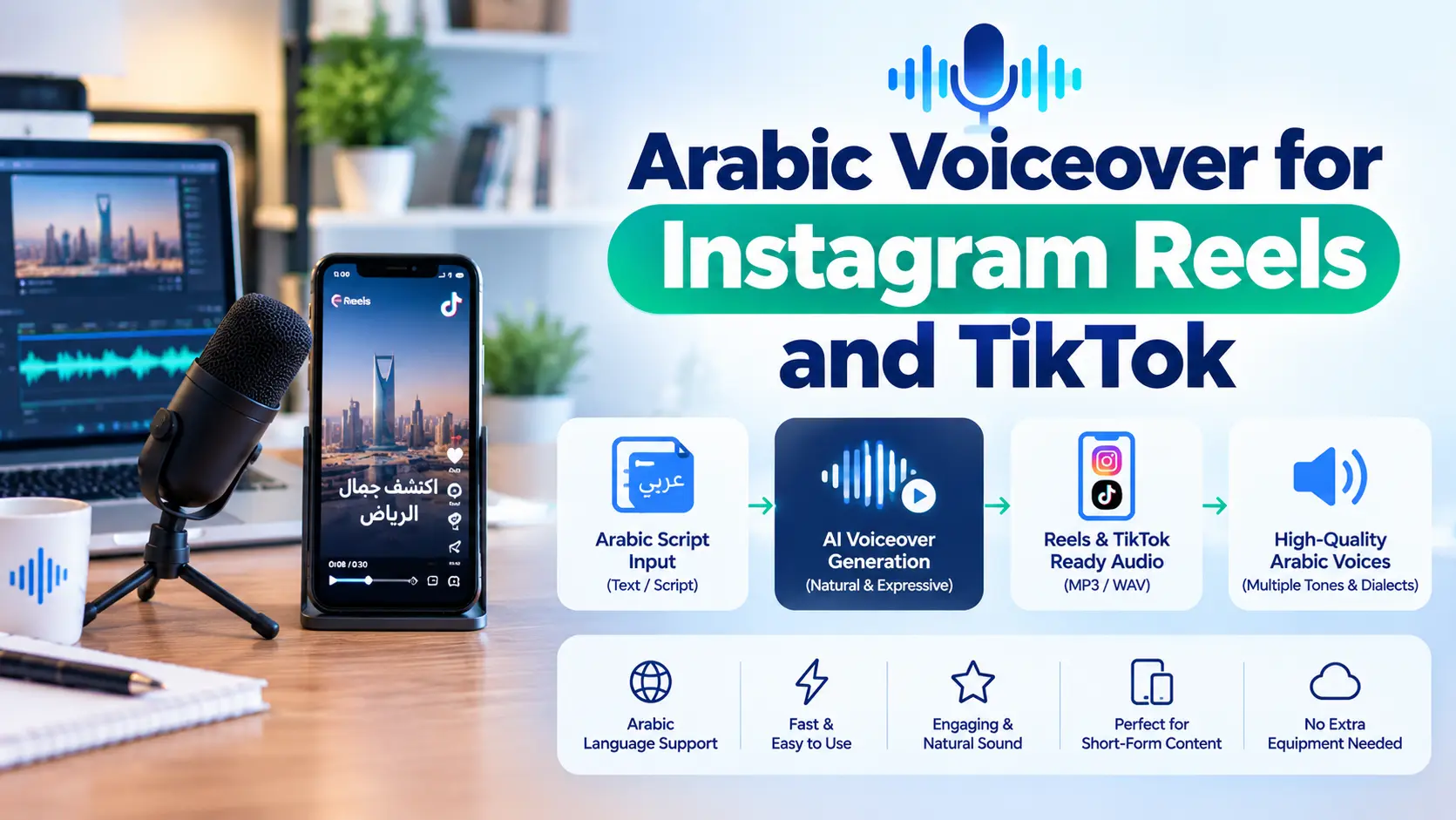
Arabic Voiceover for Instagram Reels and TikTok: Text-to-Speech That Sounds Local

التقنيات الصوتية بالذكاء الاصطناعي
المؤلف
ريم باشوش

تعزيز المستقبل باستخدام الذكاء الاصطناعي

انضم إلى النشرة الإخبارية للحصول على رؤى حول أحدث التقنيات المبنية في الإمارات العربية المتحدة

الوجبات السريعة الرئيسية

1

Short-form Arabic needs a dialect-first approach: Gulf, Hijazi, Najdi, Egyptian, Levantine, and MSA voices can create very different audience experiences, so selecting the right dialect is more important than simply choosing “Arabic

2

Pacing matters for Reels and TikTok: Short-form videos typically need faster, more energetic delivery than documentaries or corporate narration. The voice should match the rhythm and visual style of the content.

3

Voice cloning supports creator consistency: Creators and brands can use a consistent recognizable voice across frequent videos, while also making quick corrections without recording an entire segment again.

4

Dubbing and voiceover serve different workflows: Voiceover is generally generated from a script for original content, while dubbing adapts existing video audio into Arabic while maintaining the source video's timing and delivery.

The article explains why Arabic short-form voiceover requires more than generic Arabic text-to-speech. TikTok and Instagram audiences across the Gulf increasingly engage with dialect-driven content, making dialect choice, energetic delivery, pacing, and natural code-switching important for creating videos that feel native rather than translated or dubbed.

It covers practical use cases including UGC product reviews, comedy clips, GCC campaigns, podcast-to-Reel repurposing, and Arabic dubbing. Munsit’s workflow is presented around Studio voice generation, video dubbing, voice cloning, audio narratives, and API-based generation, with additional features such as voice-to-video sync, voice isolation, and sound effects supporting higher-volume social content production.


‍

Arabic Voiceover for Instagram Reels and TikTok

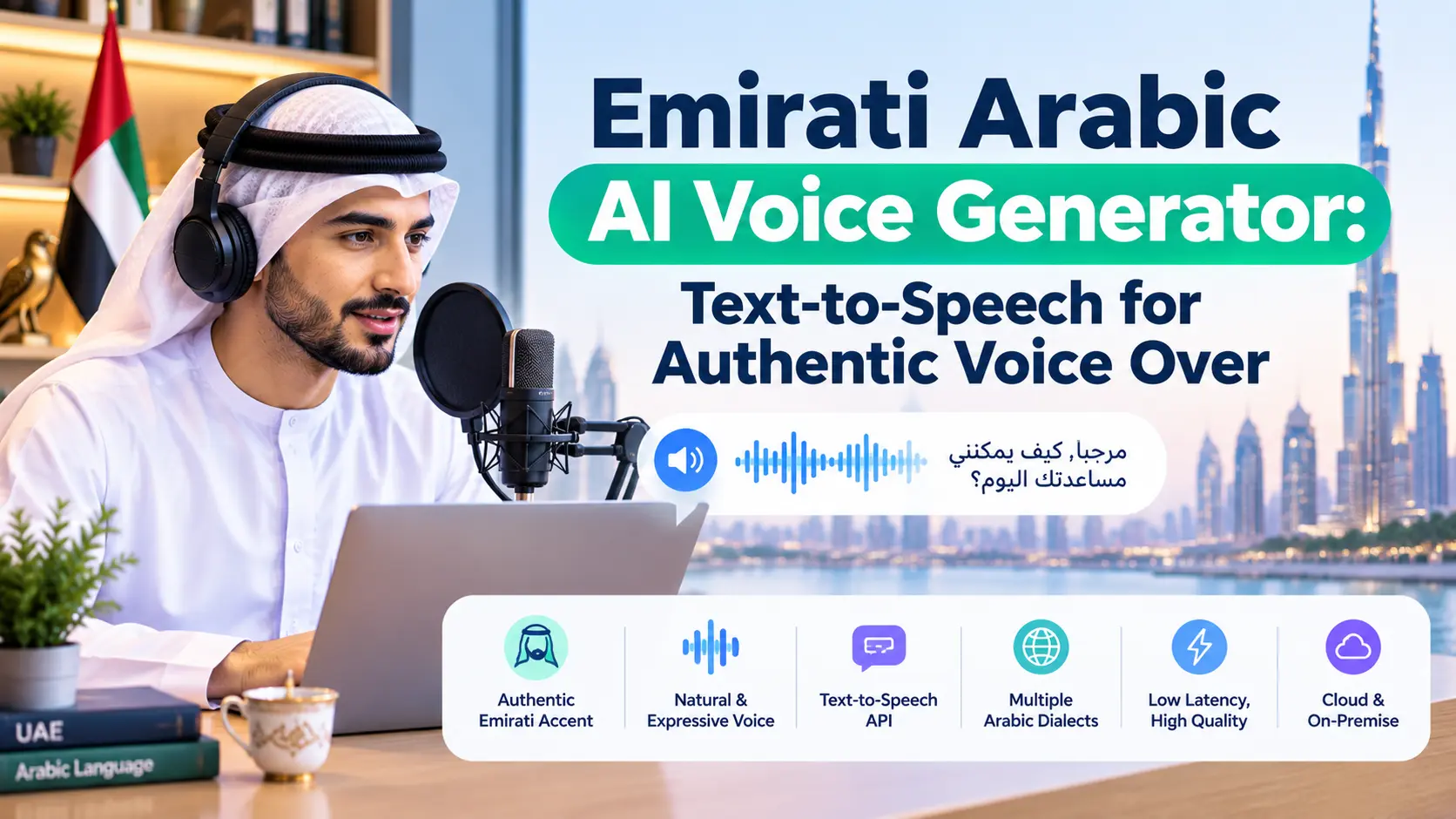
Saudi Arabia and the UAE have the highest TikTok penetration rates in the world 154% and 134% of their populations respectively, reflecting how many Gulf users run multiple accounts. Across the wider region, 228 million Arabs 46% of the population are active social media users, and TikTok leads the platform rankings in the UAE, Saudi Arabia, Kuwait, Qatar, and Bahrain. The same reporting notes a real shift in what’s actually getting watched: “strong local output, including dialect-driven comedy, Saudi and Emirati lifestyle content creators, fashion and food creators” a move toward Arabic dialect content specifically, not just Arabic content generically.

‍

That shift is the whole reason Arabic voice over for short-form video is a different problem than Arabic text-to-speech for anything else. The underlying voice generation technology is the same; what has to change is the dialect, the pacing, and the delivery style to match how people actually scroll through a feed.

‍

This is some text inside of a div block.

Why Short-Form Arabic Video Needs Dialect-First Voiceover, Not Dubbing

A documentary or a corporate explainer can get away with a measured, formal Modern Standard Arabic voice the audience expects a certain polish. A 15-second TikTok or Reel doesn’t work that way. Short-form video lives or dies on feeling native to the platform and the moment, and a voiceover that sounds like it was translated and read by a formal MSA narrator reads as exactly that: translated, not made. Viewers in Riyadh or Dubai can tell the difference between a clip that sounds like it was made for them in their own dialect and one that sounds dubbed over from somewhere else and on a platform where the next video is one swipe away, that distinction decides whether someone keeps watching.

‍

Example: A skincare brand wants to repurpose a YouTube explainer into a TikTok. Running the same MSA voiceover script as a Reel will sound like a shrunk-down ad. A dialect-first rewrite of shorter sentences, Gulf or Egyptian colloquialisms, a faster and more energetic read is what actually performs as native short-form content rather than a clipped-down version of something else.

‍

This is some text inside of a div block.

Heading

Lorem ipsum dolor sit amet, consectetur adipiscing elit. Suspendisse varius enim in eros elementum tristique. Duis cursus, mi quis viverra ornare, eros dolor interdum nulla, ut commodo diam libero vitae erat. Aenean faucibus nibh et justo cursus id rutrum lorem imperdiet. Nunc ut sem vitae risus tristique posuere.

Lorem ipsum dolor sit amet, consectetur adipiscing elit. Suspendisse varius enim in eros elementum tristique. Duis cursus, mi quis viverra ornare, eros dolor interdum nulla, ut commodo diam libero vitae erat. Aenean faucibus nibh et justo cursus id rutrum lorem imperdiet. Nunc ut sem vitae risus tristique posuere.

Lorem ipsum dolor sit amet, consectetur adipiscing elit. Suspendisse varius enim in eros elementum tristique. Duis cursus, mi quis viverra ornare, eros dolor interdum nulla, ut commodo diam libero vitae erat. Aenean faucibus nibh et justo cursus id rutrum lorem imperdiet. Nunc ut sem vitae risus tristique posuere.

Lorem ipsum dolor sit amet, consectetur adipiscing elit. Suspendisse varius enim in eros elementum tristique. Duis cursus, mi quis viverra ornare, eros dolor interdum nulla, ut commodo diam libero vitae erat. Aenean faucibus nibh et justo cursus id rutrum lorem imperdiet. Nunc ut sem vitae risus tristique posuere.

What to Look For in an Arabic Text-to-Speech or Voice Over Tool for Reels and TikTok

•Named dialect options, not just “Arabic.” Gulf, Hijazi, Najdi, Egyptian, Levantine, and MSA all read differently to a native ear; a tool that lets you pick the specific one your audience speaks, rather than a single generic Arabic voice, is doing the actual job.
‍

•A delivery style built for short-form pacing. A fast, energetic read is a different product than a slow documentary narration, and not every voice or every TTS engine does both well.
‍

•Voice cloning for creator consistency. A creator who wants every video to sound like them, not a rotating cast of stock voices needs a cloning option, not just a voice library.
‍

•Sync to video timing. A voiceover that has to be manually nudged to match cuts and captions on every single video doesn’t scale across a daily or weekly posting schedule.
‍

•Built-in cleanup and sound design, since a lot of short-form source audio (a phone-recorded voice memo, a noisy market clip) needs denoising before it’s usable, and ambient sound or transitions often matter as much as the voice itself.
‍

•Fast turnaround. Short-form content runs on a rapid posting cadence; a voiceover workflow that takes hours per clip doesn’t match how these platforms actually get used.

‍

Use Cases and Examples

A UGC-style product review Reel. A creator records a rough script in English, and wants it voiced in Emirati Arabic with a casual, conversational tone rather than an ad-read. This is a dialect-and-tone match problem first, a translation problem second.
‍

A comedy skit for TikTok. Timing is everything in a punchline; the voiceover needs the same fast, energetic delivery a human comedic performer would use, synced tightly to the visual beat, not a flat narration pace.
‍

A brand launching a product across the GCC. The same script needs a Gulf dialect read for one market and possibly an Egyptian-dialect version for another, from a single source script and a consistent “brand voice” rather than hiring separate voice talent per dialect per platform.
‍

A podcast host repurposing long-form audio into Reels. Clips get pulled from a podcast episode, but a flubbed line or a changed detail needs fixing without re-recording the whole segment; a voice-cloning workflow lets that fix happen in the creator’s own voice rather than requiring a re-record.
‍

A media team dubbing an existing video into Arabic for TikTok, keeping the original timing and delivery rather than re-cutting the whole clip around a new voice track relevant for any team repurposing non-Arabic source footage for an Arabic-speaking audience.

‍

شاهد أداء Munsit في الكلام العربي الحقيقي

قم بتقييم تغطية اللهجة ومعالجة الضوضاء والنشر داخل المنطقة على البيانات التي تعكس عملائك.
اكتشف

How Munsit’s Tools Fit

Munsit’s content-focused tools map fairly directly onto the short-form use cases above from a quick text-to-speech line for a caption read to a full voice-over and dubbing workflow for a branded campaign.
‍

Turning a script into a TikTok voice over with Munsit Studio

A creator writes a 30-second script for a product review, picks an Emirati or Saudi dialect voice, sets a fast, energetic pace, and previews the generated voice over directly against their TikTok draft in-browser with no separate voice generation software or editing timeline required. The same workflow works for an Instagram Reel caption-to-voice read, a listicle-style “5 things” video, or a quick reaction clip.
‍

Dubbing an existing video for Instagram Reels

A media team has an English-language explainer or a trending international clip they want to repost for an Arabic-speaking audience. Munsit Dubbing takes the video or a link, detects speakers and language automatically, and dubs it into Gulf, Egyptian, Levantine, or MSA Arabic while preserving the original timing and delivery so the dubbed Reel still cuts and lands on-beat the way the source video did, rather than needing a manual re-sync.
‍

Cloning a creator’s own voice for consistent short-form content

A creator posting daily wants every TikTok to sound like them, not a rotating cast of stock text-to-speech voices. Cloning their voice once means every future script and every quick fix to a flubbed line comes out in a recognizably consistent voice without re-recording or booking studio time per clip.
‍

Turning a caption, article, or blog post into a narrated Reel

A brand or publisher has written content (a blog post, a set of product captions) they want to repurpose as voiced video rather than writing a separate script from scratch. Munsit’s audio narratives feature takes that existing text and narrates it naturally, which a creator can then pair with footage or a simple visual template for Instagram or TikTok.
‍

Building Arabic voice generation directly into a content pipeline

For teams generating voice over at volume a social team producing dozens of dialect-specific Reels a week, or a platform letting its own users generate Arabic text-to-speech clips the same voice generation capability is available over API rather than through the Studio interface:
‍

POST https://api.munsit.com/v1/text-to-speech
{
  "text": "أهلاً وسهلاً بكم",
  "voice_id": "majed_emirati_male",
  "dialect": "gulf",
  "speed": 1.0
}
‍

Munsit’s voice library includes dialect- and role-specific options rather than one generic Arabic voice for example, a clear, strong “news anchor” style voice suited to announcements, alongside a calmer, measured “brand narrator” style suited to product voice overs letting the voice match the actual content type (comedy, announcement, product ad, documentary-style explainer) rather than using the same read for everything.
‍

Two more pieces round out the short-form workflow specifically: automatic voice-to-video sync, which times the generated voice over to match footage without manual nudging on every clip, and voice isolation plus sound effects, which cleans up noisy UGC source audio (a phone-recorded voice memo, a noisy street) and fills in ambient sound or transitions without separate licensing both relevant to creators working from rough, real-world source material rather than studio-recorded audio.

‍

التعليمات

Does every AI-voiced TikTok or Reel need an “AI-generated” label?
What’s the difference between dubbing and voiceover for short-form content?
Can one voice work across both a documentary-style YouTube video and a fast-paced TikTok?

Powering the Future with AI

Join our newsletter for insights on cutting-edge technology built in the UAE
Thank you! Your submission has been received!
Oops! Something went wrong while submitting the form.
آخر تحديث:
October 6, 2026

Arabic Voiceover for Instagram Reels and TikTok: Text-to-Speech That Sounds Local

المنتج
التقنيات الصوتية بالذكاء الاصطناعي
المؤلف
سارة تركي
ريم باشوش
زمن القراءة: 5 دقائق

اطرح أنظمة الذكاء الاصطناعي الصوتي العربي في بيئة الإنتاج الفعلي  للشركات (Production)

حلول تحويل الكلام إلى نص والنص إلى كلام باللغة العربية بمستويات  جودة ودقة أصلية كلياً تفوق النماذج العامة
بنية تحتية برمجية صُممت خصيصاً لتلبية أدق متطلبات حكومات ومؤسسات  كبرى دول مجلس التعاون الخليجي
خيارات استضافة مرنة تدعم خيار الاستضافة المحلية بالكامل والسحب  السيادية والوطنية المستقلة
احجز موعداً لعرض توضيحي واستشارة الخبراء لمؤسستك
شكرًا لك! لقد تم استلام طلبك!
عذرًا! حدث خطأ ما أثناء إرسال النموذج.

أبرز النقاط

Short-form Arabic needs a dialect-first approach: Gulf, Hijazi, Najdi, Egyptian, Levantine, and MSA voices can create very different audience experiences, so selecting the right dialect is more important than simply choosing “Arabic

Pacing matters for Reels and TikTok: Short-form videos typically need faster, more energetic delivery than documentaries or corporate narration. The voice should match the rhythm and visual style of the content.

Voice cloning supports creator consistency: Creators and brands can use a consistent recognizable voice across frequent videos, while also making quick corrections without recording an entire segment again.

Dubbing and voiceover serve different workflows: Voiceover is generally generated from a script for original content, while dubbing adapts existing video audio into Arabic while maintaining the source video's timing and delivery.

Video synchronization and audio cleanup help at scale: Automatic voice-to-video synchronization can reduce manual timing work, while voice isolation and sound effects can make rough UGC or noisy recordings more usable for social content.

Munsit supports multiple short-form workflows: The article highlights Studio-based voice generation, video dubbing, voice cloning, audio narratives, and API access for teams producing Arabic voice content at scale.

The article explains why Arabic short-form voiceover requires more than generic Arabic text-to-speech. TikTok and Instagram audiences across the Gulf increasingly engage with dialect-driven content, making dialect choice, energetic delivery, pacing, and natural code-switching important for creating videos that feel native rather than translated or dubbed.

It covers practical use cases including UGC product reviews, comedy clips, GCC campaigns, podcast-to-Reel repurposing, and Arabic dubbing. Munsit’s workflow is presented around Studio voice generation, video dubbing, voice cloning, audio narratives, and API-based generation, with additional features such as voice-to-video sync, voice isolation, and sound effects supporting higher-volume social content production.
‍

Arabic Voiceover for Instagram Reels and TikTok

Saudi Arabia and the UAE have the highest TikTok penetration rates in the world 154% and 134% of their populations respectively, reflecting how many Gulf users run multiple accounts. Across the wider region, 228 million Arabs 46% of the population are active social media users, and TikTok leads the platform rankings in the UAE, Saudi Arabia, Kuwait, Qatar, and Bahrain. The same reporting notes a real shift in what’s actually getting watched: “strong local output, including dialect-driven comedy, Saudi and Emirati lifestyle content creators, fashion and food creators” a move toward Arabic dialect content specifically, not just Arabic content generically.

‍

That shift is the whole reason Arabic voice over for short-form video is a different problem than Arabic text-to-speech for anything else. The underlying voice generation technology is the same; what has to change is the dialect, the pacing, and the delivery style to match how people actually scroll through a feed.

‍

Lorem ipsum dolor
لوريم إيبسوم ألم
لوريم إيبسوم ألم
لوريم إيبسوم ألم
لوريم إيبسوم ألم
لوريم إيبسوم ألم
لوريم إيبسوم ألم
لوريم إيبسوم ألم
لوريم إيبسوم ألم
لوريم إيبسوم ألم
لوريم إيبسوم ألم
لوريم إيبسوم ألم
لوريم إيبسوم ألم
لوريم إيبسوم ألم
لوريم إيبسوم ألم
لوريم إيبسوم ألم
لوريم إيبسوم ألم
لوريم إيبسوم ألم
لوريم إيبسوم ألم
لوريم إيبسوم ألم
لوريم إيبسوم ألم
Lorem ipsum dolor
Lorem ipsum dolor
Lorem ipsum dolor
Lorem ipsum dolor
Lorem ipsum dolor
Lorem ipsum dolor
Lorem ipsum dolor
Lorem ipsum dolor
Lorem ipsum dolor
Lorem ipsum dolor
Lorem ipsum dolor

Why Short-Form Arabic Video Needs Dialect-First Voiceover, Not Dubbing

فهم أصول هلوسات الذكاء الاصطناعي هو الخطوة الأولى نحو التخفيف منها. هذه الظاهرة ليست مشكلة واحدة، بل هي قضية معقدة ذات عوامل متعددة تساهم فيها.

1

أوجه القصور في بيانات التدريب

A documentary or a corporate explainer can get away with a measured, formal Modern Standard Arabic voice the audience expects a certain polish. A 15-second TikTok or Reel doesn’t work that way. Short-form video lives or dies on feeling native to the platform and the moment, and a voiceover that sounds like it was translated and read by a formal MSA narrator reads as exactly that: translated, not made. Viewers in Riyadh or Dubai can tell the difference between a clip that sounds like it was made for them in their own dialect and one that sounds dubbed over from somewhere else and on a platform where the next video is one swipe away, that distinction decides whether someone keeps watching.

‍

Example: A skincare brand wants to repurpose a YouTube explainer into a TikTok. Running the same MSA voiceover script as a Reel will sound like a shrunk-down ad. A dialect-first rewrite of shorter sentences, Gulf or Egyptian colloquialisms, a faster and more energetic read is what actually performs as native short-form content rather than a clipped-down version of something else.

‍

2

أوجه القصور في بيانات التدريب

العامل الأكثر أهمية في هلوسات الذكاء الاصطناعي هو البيانات التي تُدرّب عليها النماذج. تتعلم النماذج اللغوية الكبيرة (LLMs) من مجموعات بيانات ضخمة مجمعة من الإنترنت، والتي تحتوي على مزيج من المعلومات الواقعية والآراء والمعلومات المضللة والتحيزات. يمكن أن تؤدي العديد من المشكلات المحددة المتعلقة بالبيانات إلى الهلوسات:

حالات استخدام الذكاء الاصطناعي الصوتي العربي في الشركات لعام 2025

يفتح التحول نحو أنظمة التعرف التلقائي على الكلام (ASR) العربية التي تراعي اللهجات، آفاقاً جديدة لتطبيقات الشركات في جميع أنحاء منطقة الخليج والشرق الأوسط وشمال إفريقيا. تتجاوز المؤسسات الآن النسخ الأساسي لتصل إلى تحليلات كلام عربية متطورة.

تشهد تقنية الكلام العربية تطوراً سريعاً في عام 2025، مدفوعة بالنماذج اللغوية الضخمة متعددة اللغات والنماذج الأساسية الجديدة التي تركز على اللغة العربية.

تتقدم تقنية الكلام العربية بسرعة في عام 2025، مدفوعة بالنماذج اللغوية الضخمة متعددة اللغات ونماذج الأساس الجديدة المرتكزة على اللغة العربية.

تتقدم تقنية الكلام العربية بسرعة في عام 2025، مدفوعة بالنماذج اللغوية الضخمة متعددة اللغات ونماذج الأساس الجديدة المرتكزة على اللغة العربية.

تتقدم تقنية الكلام العربية بسرعة في عام 2025، مدفوعة بالنماذج اللغوية الضخمة متعددة اللغات ونماذج الأساس الجديدة المرتكزة على اللغة العربية.

What to Look For in an Arabic Text-to-Speech or Voice Over Tool for Reels and TikTok

فهم أصول هلوسات الذكاء الاصطناعي هو الخطوة الأولى نحو التخفيف منها. هذه الظاهرة ليست مشكلة واحدة بل هي قضية معقدة ذات عوامل متعددة تساهم فيها.

1

أوجه القصور في بيانات التدريب

•Named dialect options, not just “Arabic.” Gulf, Hijazi, Najdi, Egyptian, Levantine, and MSA all read differently to a native ear; a tool that lets you pick the specific one your audience speaks, rather than a single generic Arabic voice, is doing the actual job.
‍

•A delivery style built for short-form pacing. A fast, energetic read is a different product than a slow documentary narration, and not every voice or every TTS engine does both well.
‍

•Voice cloning for creator consistency. A creator who wants every video to sound like them, not a rotating cast of stock voices needs a cloning option, not just a voice library.
‍

•Sync to video timing. A voiceover that has to be manually nudged to match cuts and captions on every single video doesn’t scale across a daily or weekly posting schedule.
‍

•Built-in cleanup and sound design, since a lot of short-form source audio (a phone-recorded voice memo, a noisy market clip) needs denoising before it’s usable, and ambient sound or transitions often matter as much as the voice itself.
‍

•Fast turnaround. Short-form content runs on a rapid posting cadence; a voiceover workflow that takes hours per clip doesn’t match how these platforms actually get used.

‍

2

أوجه القصور في بيانات التدريب

أكبر عامل مساهم في هلوسات الذكاء الاصطناعي هو البيانات التي تُدرب عليها النماذج. تتعلم نماذج اللغة الكبيرة (LLMs) من مجموعات بيانات ضخمة مجمعة من الإنترنت، والتي تحتوي على مزيج من المعلومات الواقعية والآراء والمعلومات المضللة والتحيزات. يمكن أن تؤدي العديد من المشكلات المحددة المتعلقة بالبيانات إلى الهلوسات:

حالات استخدام المؤسسات للذكاء الاصطناعي الصوتي العربي في عام 2025

يفتح الانتقال إلى أنظمة التعرف التلقائي على الكلام (ASR) العربية المدركة للهجات موجة جديدة من تطبيقات المؤسسات عبر مناطق مجلس التعاون الخليجي والشرق الأوسط وشمال إفريقيا. تتجاوز المؤسسات الآن النسخ الأساسي لتصل إلى تحليلات الكلام العربية المتطورة.

تتقدم تقنية الكلام العربية بسرعة في عام 2025، مدفوعة بالنماذج اللغوية الضخمة متعددة اللغات ونماذج الأساس الجديدة المرتكزة على اللغة العربية.

تتقدم تقنية الكلام العربية بسرعة في عام 2025، مدفوعة بالنماذج اللغوية الضخمة متعددة اللغات ونماذج الأساس الجديدة المرتكزة على اللغة العربية.

تتقدم تقنية الكلام العربية بسرعة في عام 2025، مدفوعة بالنماذج اللغوية الضخمة متعددة اللغات ونماذج الأساس الجديدة المرتكزة على اللغة العربية.

تتقدم تقنية الكلام العربية بسرعة في عام 2025، مدفوعة بالنماذج اللغوية الضخمة متعددة اللغات ونماذج الأساس الجديدة المرتكزة على اللغة العربية.

بناء وهندسة أنظمة ذكاء اصطناعي صوتي فائقة الكفاءة يتطلب حتماً  اعتماد المنهجية العلمية الصحيحة

نحن في شركة CNTXT AI نساعدك باحترافية في تصميم وهندسة حلول صوتية  مخصصة ومطابقة لأعمالك، وبناء وإدارة مسارات تدفق البيانات (Data Pipelines)  المتقدمة، وتأمين وصول منتجاتك لقمة تطبيقات الذكاء الاصطناعي العربي المتطور  والآمن كلياً.

Use Cases and Examples

فهم أصول هلوسات الذكاء الاصطناعي هو الخطوة الأولى نحو التخفيف منها. هذه الظاهرة ليست مشكلة واحدة بل هي قضية معقدة ذات عوامل متعددة تساهم فيها.

1

أوجه القصور في بيانات التدريب

A UGC-style product review Reel. A creator records a rough script in English, and wants it voiced in Emirati Arabic with a casual, conversational tone rather than an ad-read. This is a dialect-and-tone match problem first, a translation problem second.
‍

A comedy skit for TikTok. Timing is everything in a punchline; the voiceover needs the same fast, energetic delivery a human comedic performer would use, synced tightly to the visual beat, not a flat narration pace.
‍

A brand launching a product across the GCC. The same script needs a Gulf dialect read for one market and possibly an Egyptian-dialect version for another, from a single source script and a consistent “brand voice” rather than hiring separate voice talent per dialect per platform.
‍

A podcast host repurposing long-form audio into Reels. Clips get pulled from a podcast episode, but a flubbed line or a changed detail needs fixing without re-recording the whole segment; a voice-cloning workflow lets that fix happen in the creator’s own voice rather than requiring a re-record.
‍

A media team dubbing an existing video into Arabic for TikTok, keeping the original timing and delivery rather than re-cutting the whole clip around a new voice track relevant for any team repurposing non-Arabic source footage for an Arabic-speaking audience.

‍

2

أوجه القصور في بيانات التدريب

المساهم الأكبر في هلوسات الذكاء الاصطناعي هو البيانات التي تُدرّب عليها النماذج. تتعلم النماذج اللغوية الكبيرة (LLMs) من مجموعات بيانات ضخمة مجمعة من الإنترنت، والتي تحتوي على مزيج من المعلومات الواقعية والآراء والمعلومات المضللة والتحيزات. يمكن أن تؤدي عدة مشكلات محددة متعلقة بالبيانات إلى الهلوسات:

حالات الاستخدام المؤسسية للذكاء الاصطناعي الصوتي العربي في عام 2025

يفتح الانتقال إلى تقنية التعرف التلقائي على الكلام (ASR) للغة العربية المدركة للهجات آفاقًا جديدة لتطبيقات الشركات في جميع أنحاء منطقة الخليج والشرق الأوسط وشمال إفريقيا. تتجاوز المؤسسات النسخ الأساسي لتصل إلى تحليلات الكلام العربية المتطورة.

تتطور تقنية الكلام العربية بسرعة في عام 2025، مدفوعة بالنماذج اللغوية الضخمة متعددة اللغات والنماذج التأسيسية الجديدة المرتكزة على اللغة العربية.

تتطور تقنية الكلام العربية بسرعة في عام 2025، مدفوعة بالنماذج اللغوية الضخمة متعددة اللغات والنماذج التأسيسية الجديدة المرتكزة على اللغة العربية.

تتطور تقنية الكلام العربية بسرعة في عام 2025، مدفوعة بالنماذج اللغوية الضخمة متعددة اللغات والنماذج التأسيسية الجديدة المرتكزة على اللغة العربية.

تتطور تقنية الكلام العربية بسرعة في عام 2025، مدفوعة بالنماذج اللغوية الضخمة متعددة اللغات والنماذج التأسيسية الجديدة المرتكزة على اللغة العربية.

How Munsit’s Tools Fit

يُعد فهم أصول هلوسات الذكاء الاصطناعي الخطوة الأولى نحو التخفيف منها. هذه الظاهرة ليست مشكلة واحدة بل قضية معقدة ذات عوامل متعددة تساهم فيها.

1

أوجه القصور في بيانات التدريب

Munsit’s content-focused tools map fairly directly onto the short-form use cases above from a quick text-to-speech line for a caption read to a full voice-over and dubbing workflow for a branded campaign.
‍

Turning a script into a TikTok voice over with Munsit Studio

A creator writes a 30-second script for a product review, picks an Emirati or Saudi dialect voice, sets a fast, energetic pace, and previews the generated voice over directly against their TikTok draft in-browser with no separate voice generation software or editing timeline required. The same workflow works for an Instagram Reel caption-to-voice read, a listicle-style “5 things” video, or a quick reaction clip.
‍

Dubbing an existing video for Instagram Reels

A media team has an English-language explainer or a trending international clip they want to repost for an Arabic-speaking audience. Munsit Dubbing takes the video or a link, detects speakers and language automatically, and dubs it into Gulf, Egyptian, Levantine, or MSA Arabic while preserving the original timing and delivery so the dubbed Reel still cuts and lands on-beat the way the source video did, rather than needing a manual re-sync.
‍

Cloning a creator’s own voice for consistent short-form content

A creator posting daily wants every TikTok to sound like them, not a rotating cast of stock text-to-speech voices. Cloning their voice once means every future script and every quick fix to a flubbed line comes out in a recognizably consistent voice without re-recording or booking studio time per clip.
‍

Turning a caption, article, or blog post into a narrated Reel

A brand or publisher has written content (a blog post, a set of product captions) they want to repurpose as voiced video rather than writing a separate script from scratch. Munsit’s audio narratives feature takes that existing text and narrates it naturally, which a creator can then pair with footage or a simple visual template for Instagram or TikTok.
‍

Building Arabic voice generation directly into a content pipeline

For teams generating voice over at volume a social team producing dozens of dialect-specific Reels a week, or a platform letting its own users generate Arabic text-to-speech clips the same voice generation capability is available over API rather than through the Studio interface:
‍

POST https://api.munsit.com/v1/text-to-speech
{
  "text": "أهلاً وسهلاً بكم",
  "voice_id": "majed_emirati_male",
  "dialect": "gulf",
  "speed": 1.0
}
‍

Munsit’s voice library includes dialect- and role-specific options rather than one generic Arabic voice for example, a clear, strong “news anchor” style voice suited to announcements, alongside a calmer, measured “brand narrator” style suited to product voice overs letting the voice match the actual content type (comedy, announcement, product ad, documentary-style explainer) rather than using the same read for everything.
‍

Two more pieces round out the short-form workflow specifically: automatic voice-to-video sync, which times the generated voice over to match footage without manual nudging on every clip, and voice isolation plus sound effects, which cleans up noisy UGC source audio (a phone-recorded voice memo, a noisy street) and fills in ambient sound or transitions without separate licensing both relevant to creators working from rough, real-world source material rather than studio-recorded audio.

‍

2

أوجه القصور في بيانات التدريب

المساهم الأكبر في هلوسات الذكاء الاصطناعي هو البيانات التي تُدرّب عليها النماذج. تتعلم النماذج اللغوية الكبيرة (LLMs) من مجموعات بيانات ضخمة مجمعة من الإنترنت، والتي تحتوي على مزيج من المعلومات الواقعية والآراء والمعلومات المضللة والتحيزات. يمكن أن تؤدي عدة مشكلات محددة متعلقة بالبيانات إلى الهلوسات:

حالات الاستخدام المؤسسية للذكاء الاصطناعي الصوتي العربي في عام 2025

يفتح الانتقال إلى تقنية التعرف التلقائي على الكلام (ASR) للغة العربية المدركة للهجات آفاقًا جديدة لتطبيقات الشركات في جميع أنحاء منطقة الخليج والشرق الأوسط وشمال إفريقيا. تتجاوز المؤسسات النسخ الأساسي لتصل إلى تحليلات الكلام العربية المتطورة.

تتطور تقنية الكلام العربية بسرعة في عام 2025، مدفوعة بالنماذج اللغوية الضخمة متعددة اللغات والنماذج التأسيسية الجديدة المرتكزة على اللغة العربية.

تتطور تقنية الكلام العربية بسرعة في عام 2025، مدفوعة بالنماذج اللغوية الضخمة متعددة اللغات والنماذج التأسيسية الجديدة المرتكزة على اللغة العربية.

تتقدم تقنية الكلام العربية بسرعة في عام 2025، مدفوعة بالنماذج اللغوية المتعددة الضخمة والنماذج التأسيسية الجديدة المرتكزة على اللغة العربية.

تتقدم تقنية الكلام العربية بسرعة في عام 2025، مدفوعة بالنماذج اللغوية المتعددة الضخمة والنماذج التأسيسية الجديدة المرتكزة على اللغة العربية.

What TikTok and Instagram Actually Require You to Disclose

Understanding the origins of AI hallucinations is the first step toward mitigating them. The phenomenon is not a single problem but rather a complex issue with multiple contributing factors.

1

Training Data Deficiencies

Both platforms’ AI-content disclosure rules are narrower than “label anything AI-voiced” worth getting right rather than over- or under-disclosing.
‍

TikTok requires its AI-generated content (AIGC) label specifically when content shows “realistic-appearing scenes or people” a viewer could mistake for genuine, and explicitly extends this to “AI-generated voice or audio that impersonates a real person.” A generic AI voiceover reading a script not cloned from or impersonating a specific real person falls outside that trigger. A cloned voice of an identifiable real person (a creator’s own cloned voice included, depending on how it’s presented) is the case that needs the label.
‍

Instagram/Meta’s guidance follows the same underlying principle: disclosure matters when content “could materially mislead the viewer about… what was said or who endorsed it.” A label doesn’t substitute for actual consent or rights, either; using someone’s cloned voice still requires their permission regardless of whether the content carries an AI label.
‍

The practical rule of thumb: a stock or dialect-matched AI voiceover reading your own script generally isn’t the disclosure trigger either platform is aimed at; a cloned voice of a specific real person is and that’s a separate question from the UAE/Saudi consent requirements covered next, which apply regardless of platform labeling rules.

‍

2

Training Data Deficiencies

The most significant contributor to AI hallucinations is the data on which the models are trained. LLMs learn from vast datasets scraped from the internet, which contain a mixture of factual information, opinions, misinformation, and biases. Several specific data-related issues can lead to hallucinations:

Enterprise Use Cases for Arabic Voice AI in 2025

The move to dialect-aware Arabic ASR is unlocking a new wave of enterprise applications across the GCC and MENA regions. Organizations are moving beyond basic transcription to sophisticated Arabic speech analytics.

Arabic speech technology is rapidly advancing in 2025, driven by massive multilingual models and new Arabic-centric foundation models.

Arabic speech technology is rapidly advancing in 2025, driven by massive multilingual models and new Arabic-centric foundation models.

Arabic speech technology is rapidly advancing in 2025, driven by massive multilingual models and new Arabic-centric foundation models.

Arabic speech technology is rapidly advancing in 2025, driven by massive multilingual models and new Arabic-centric foundation models.

UAE and Saudi Compliance for Short-Form Voiceover Content

Understanding the origins of AI hallucinations is the first step toward mitigating them. The phenomenon is not a single problem but rather a complex issue with multiple contributing factors.

1

Training Data Deficiencies

Voice cloning requires the cloned person’s consent, separate from any platform disclosure requirement. Under the UAE’s PDPL (voice is personal data) and Federal Decree-Law No. 34/2021 (Cybercrimes Law), using someone’s cloned voice commercially including a creator’s own voice if an agency or brand is cloning it on their behalf requires their documented agreement, not just a platform-compliant AI label.
‍

Brand and campaign content should keep this in mind when scaling across creators or spokespeople a cloned brand-ambassador voice used across many Reels or TikToks needs that consent captured once, clearly, rather than assumed from a single verbal agreement.
‍

This section provides general information, not legal advice. Consult qualified legal counsel for compliance decisions specific to your content and jurisdiction.

‍

2

Training Data Deficiencies

The most significant contributor to AI hallucinations is the data on which the models are trained. LLMs learn from vast datasets scraped from the internet, which contain a mixture of factual information, opinions, misinformation, and biases. Several specific data-related issues can lead to hallucinations:

Enterprise Use Cases for Arabic Voice AI in 2025

The move to dialect-aware Arabic ASR is unlocking a new wave of enterprise applications across the GCC and MENA regions. Organizations are moving beyond basic transcription to sophisticated Arabic speech analytics.

Arabic speech technology is rapidly advancing in 2025, driven by massive multilingual models and new Arabic-centric foundation models.

Arabic speech technology is rapidly advancing in 2025, driven by massive multilingual models and new Arabic-centric foundation models.

Arabic speech technology is rapidly advancing in 2025, driven by massive multilingual models and new Arabic-centric foundation models.

Arabic speech technology is rapidly advancing in 2025, driven by massive multilingual models and new Arabic-centric foundation models.

Understanding the origins of AI hallucinations is the first step toward mitigating them. The phenomenon is not a single problem but rather a complex issue with multiple contributing factors.

1

Training Data Deficiencies

2

Training Data Deficiencies

The most significant contributor to AI hallucinations is the data on which the models are trained. LLMs learn from vast datasets scraped from the internet, which contain a mixture of factual information, opinions, misinformation, and biases. Several specific data-related issues can lead to hallucinations:

Enterprise Use Cases for Arabic Voice AI in 2025

The move to dialect-aware Arabic ASR is unlocking a new wave of enterprise applications across the GCC and MENA regions. Organizations are moving beyond basic transcription to sophisticated Arabic speech analytics.

Arabic speech technology is rapidly advancing in 2025, driven by massive multilingual models and new Arabic-centric foundation models.

Arabic speech technology is rapidly advancing in 2025, driven by massive multilingual models and new Arabic-centric foundation models.

Arabic speech technology is rapidly advancing in 2025, driven by massive multilingual models and new Arabic-centric foundation models.

Arabic speech technology is rapidly advancing in 2025, driven by massive multilingual models and new Arabic-centric foundation models.

Understanding the origins of AI hallucinations is the first step toward mitigating them. The phenomenon is not a single problem but rather a complex issue with multiple contributing factors.

1

Training Data Deficiencies

2

Training Data Deficiencies

The most significant contributor to AI hallucinations is the data on which the models are trained. LLMs learn from vast datasets scraped from the internet, which contain a mixture of factual information, opinions, misinformation, and biases. Several specific data-related issues can lead to hallucinations:

Enterprise Use Cases for Arabic Voice AI in 2025

The move to dialect-aware Arabic ASR is unlocking a new wave of enterprise applications across the GCC and MENA regions. Organizations are moving beyond basic transcription to sophisticated Arabic speech analytics.

Arabic speech technology is rapidly advancing in 2025, driven by massive multilingual models and new Arabic-centric foundation models.

Arabic speech technology is rapidly advancing in 2025, driven by massive multilingual models and new Arabic-centric foundation models.

Arabic speech technology is rapidly advancing in 2025, driven by massive multilingual models and new Arabic-centric foundation models.

Arabic speech technology is rapidly advancing in 2025, driven by massive multilingual models and new Arabic-centric foundation models.

Understanding the origins of AI hallucinations is the first step toward mitigating them. The phenomenon is not a single problem but rather a complex issue with multiple contributing factors.

1

Training Data Deficiencies

2

Training Data Deficiencies

The most significant contributor to AI hallucinations is the data on which the models are trained. LLMs learn from vast datasets scraped from the internet, which contain a mixture of factual information, opinions, misinformation, and biases. Several specific data-related issues can lead to hallucinations:

Enterprise Use Cases for Arabic Voice AI in 2025

The move to dialect-aware Arabic ASR is unlocking a new wave of enterprise applications across the GCC and MENA regions. Organizations are moving beyond basic transcription to sophisticated Arabic speech analytics.

Arabic speech technology is rapidly advancing in 2025, driven by massive multilingual models and new Arabic-centric foundation models.

Arabic speech technology is rapidly advancing in 2025, driven by massive multilingual models and new Arabic-centric foundation models.

Arabic speech technology is rapidly advancing in 2025, driven by massive multilingual models and new Arabic-centric foundation models.

Arabic speech technology is rapidly advancing in 2025, driven by massive multilingual models and new Arabic-centric foundation models.

الأسئلة الشائعة وإرشادات التشغيل للمؤسسات الإعلامية
Does every AI-voiced TikTok or Reel need an “AI-generated” label?
What’s the difference between dubbing and voiceover for short-form content?
Can one voice work across both a documentary-style YouTube video and a fast-paced TikTok?
Does voice cloning help with a daily or weekly posting schedule?
Is this the same as regular Arabic text-to-speech, or something different for short-form video?

اجعل الذكاء الاصطناعي الصوتي العربي جاهزًا للإنتاج

تقنية تحويل الكلام إلى نص (STT) والنص إلى كلام (TTS) باللغة العربية بمستوى أصلي
مصمم لحكومات وشركات دول مجلس التعاون الخليجي
نشر سيادي ومحلي
احجز عرضًا توضيحيًا
شكرًا لك! تم استلام طلبك بنجاح!
عذرًا! حدث خطأ ما أثناء إرسال النموذج.

ابدأ مجاناً الآن كلياً... وادفع بمرونة عندما تكون مستعداً  للانطلاق الحقيقي.

10,000 رصيد مجاني فوري بانتظارك. اختبر كفاءة وقدرات Munsit  الفائقة بصوتك ولهجتك الخاصة، واشهد فارق الدقة والموثوقية بنفسك.