




الوجبات السريعة الرئيسية
Audiobook narration is a much harder TTS use case than short-form voiceovers. A good audiobook voice needs to remain natural and consistent for hours while handling pacing, pronunciation, character dialogue, and long-form fatigue
Pronunciation control is essential. Proper names, technical terms, invented words, and foreign-language phrases can cause repeated errors, making pronunciation dictionaries or phonetic overrides valuable for long manuscripts
Audiobook-specific workflows matter. Character casting, chapter-based generation, batch processing, selective re-rendering, and distributor-ready exports can significantly affect production efficiency.
Distribution policies should be checked before production. Audible/ACX, Apple Books, Google Play Books, and other platforms have different rules around AI narration, disclosure, and supported languages. Arabic support is currently limited across the major built-in AI narration programs discussed in the article.
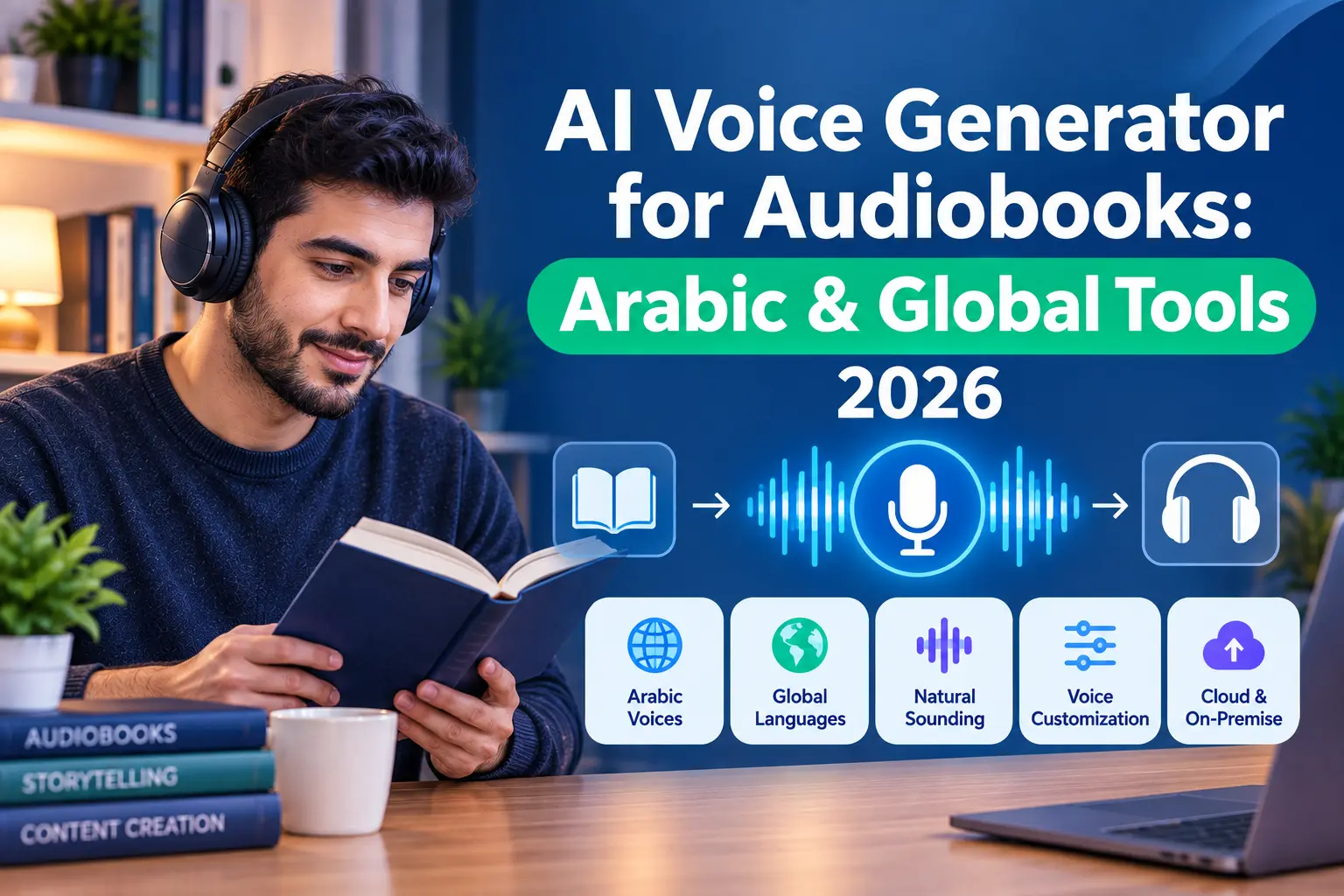
AI voice generators are making audiobook production more accessible, but long-form narration requires consistent voice quality, accurate pronunciation, and efficient chapter-based workflows. For Arabic audiobooks, additional challenges such as diacritization and the choice between MSA and regional dialects make platform selection especially important.
The guide explores key audiobook features, AI narration policies, Arabic-specific requirements, and how Munsit supports Arabic narration through dialect options, diacritization, voice cloning, and flexible deployment.


.webp)
.webp)






%20for%20Arabic%20Conversational%20AI%20%20%20.png)









.svg)
.svg)